Dr. J. Boveedods Imperial Wine Bitters

Dr. J. Bovee Dods’ Imperial Wine Bitters

25 April 2012 (R•072014) (R•122314)

Apple-Touch-IconAJohn Bovee Dods (1795 – 1872) was a spiritualist and former clergyman. He settled in Brooklyn, New York in 1850, and remained there until his death. His Imperial Wine Bitters were advertised in newspapers around the country from 1859 to 1861, first making an appearance for sale in December 1858. They sold for a $1 dollar a bottle or 6 bottles for $5 dollars.

From Civil War authority Jim Schmidt (Spring, Texas) (see Civil war Medicine (and Writing):

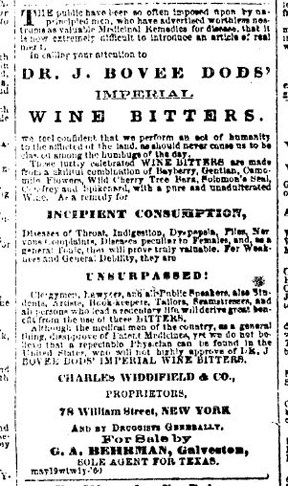
was “mining” some 1861 Galveston papers this evening and came across some bitters ads…

Wow, what was this New York bitters doing in a Galveston, Texas newspaper? The Dr. Bovee Dod’s is a great big, gorgeous aqua bottle that gets lost in Carlyn Ring and W.C. Hams Bitters Bottles and Supplement books because it was incorrectly given a ‘D’ designation for Doctor, I suppose. Some think it is unlisted. It is however a D 80 index.

I like when I get information like this because it allows me to connect it with a bottle and hopefully an example I own (see pictures below). Notice how the advertisement spells Bovee Dods’. It is also neat that the advertisement confirms the Ring and Ham Charles Widdifield & Co. NY address but also includes a G.A. Behrman, Galveston as Sole Agent for Texas.

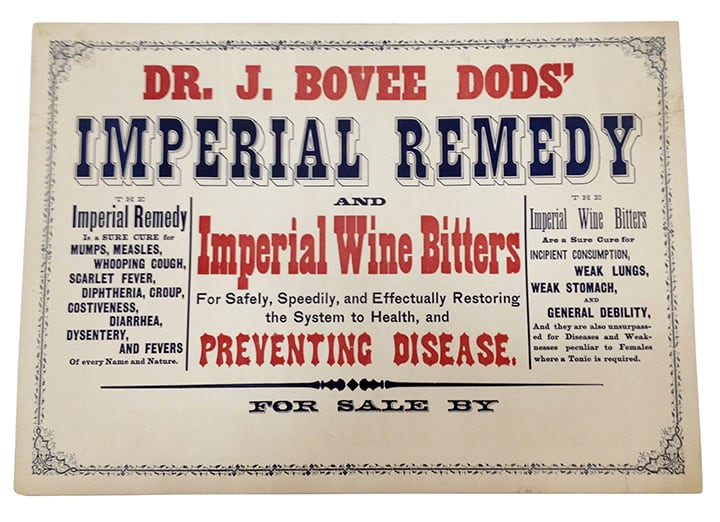
BoveedodsSign

 Dr. John Bovee Dods

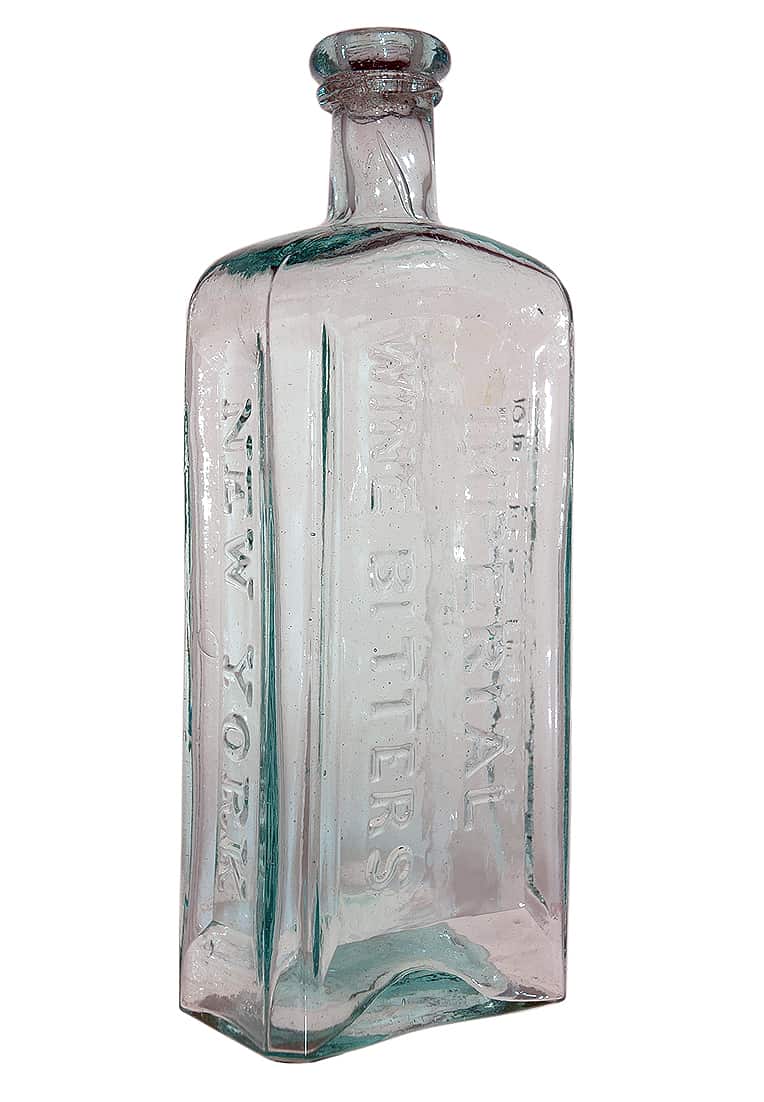
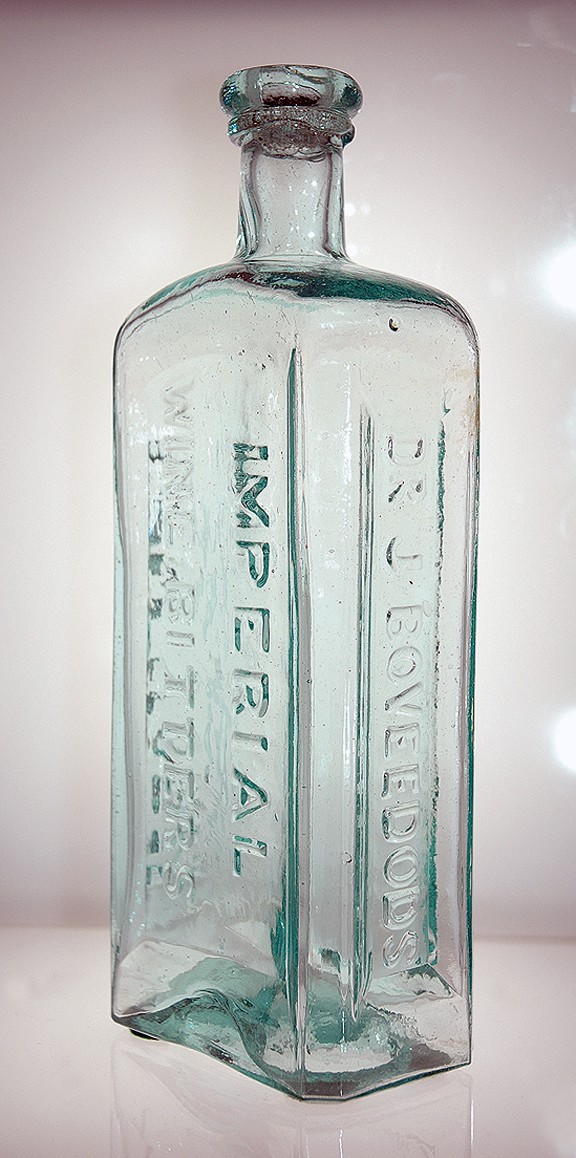
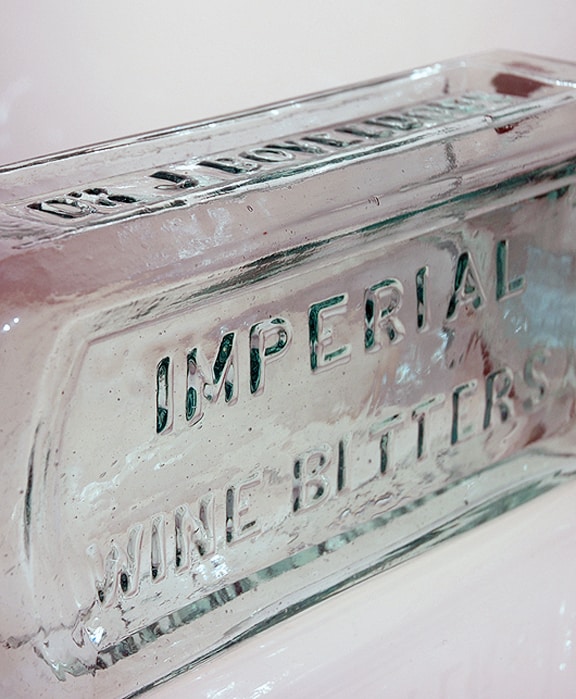
D 80  DR. BOVEE DODS’ IMPERIAL WINE BITTERS, Circa 1855 – 1865,
DR. J. BOVEEDODS // IMPERIAL / WINE BITTERS // NEW YORK // sp //
Charles Widdifield & Co.   Proprietors   78 William Street
10 x 3 3/4 x 2 1/4 (8) 3/8
Rectilinear, Aqua, DC, Applied mouth, 4 sp, Rare
New York Daily Times 1859, A delicious beverage and cures sore throat, consumption, paralysis, indigestion and pyles. Works like a charm!

“A delicious beverage and cures sore throat, consumption, paralysis, indigestion and pyles. Works like a charm!”

“Dr. J. Bovee Dods’ Imperial Remedy and Imperial Wine Bitters for safety, speedily, and effectually restoring the system to health, and preventing disease.”

DR. BOVEE DODS’ IMPERIAL WINE BITTERS – Meyer Collection

DR. BOVEE DODS’ IMPERIAL WINE BITTERS – Meyer Collection

BoveeDods_The_Plymouth_Weekly_Democrat_Thu__Sep_26__1861_-2

Dr. J. Boveedod’s Imperial Wine Bitters advertisement – The Plymouth Weekly Democrat, Thursday, September 26, 1861

Credit: Dr. J. Bovee Dod’s Sign from Henry Tankersley
Posted in Advertising, Article Publications, Bitters, Civil War, Collectors & Collections | Tagged , , , , , , , , , , , | Leave a comment

Small Inkwell Bottles Page

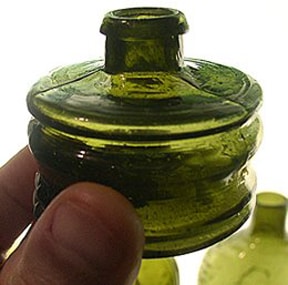
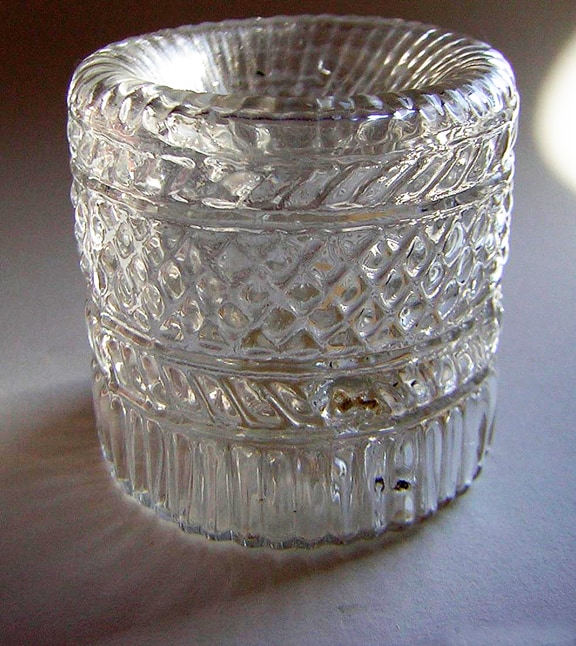
A stunning array of small inkwells has been posted on facebook over at Bottle Collectors of late.

(includes various additions of importance from elsewhere)

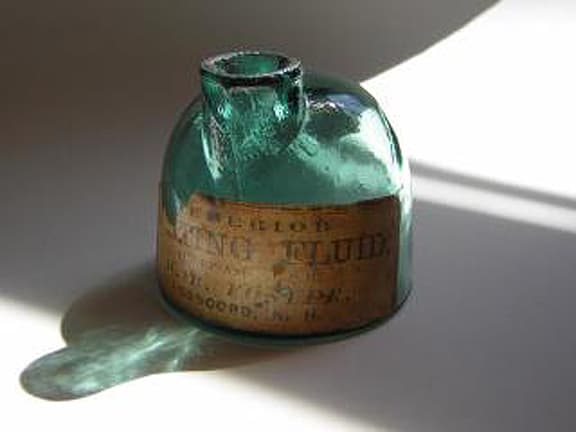
Discovered in the wall of a house in Northern NY state. Blown three mold construction inkwell. Suspected Mount Vernon Glassworks – Michael George

Small Inkwell Bottles Page

24 April 2012

Apple-Touch-IconAA stunning array of small inkwells has been posted on facebook over at Bottle Collectors of late. It is so exciting to see a collector post a great ink, and then someone else posts a picture of another ink. All with information! WOW. This is so exciting!. Our hobby is growing at so many levels and facebook is at the forefront of a new digital era that is linking collectors, research and great glass images. I am also seeing a trend of collectors taking more time to photograph their gems which is so very important.

I plan to add to this page and expand in specific areas as I did earlier with the “Star of Baltimore” post and the Umbrella Ink post. As noted in many posts previously, all images on Peachridge Glass, are being archived for the FOHBC Virtual Museum project.

Read More: Umbrella Inks in the News

Read More: The “Star of Baltimore”

Read More: Hinks Inks – Post 1 “This Guy collects Labeled Inks”

Read More: Hinks Inks – Post 2 “John hINKel”

Read More: Hinks Inks – Post 3 “Carter’s Ink Company”

Colorless BTM Inkwell – John April

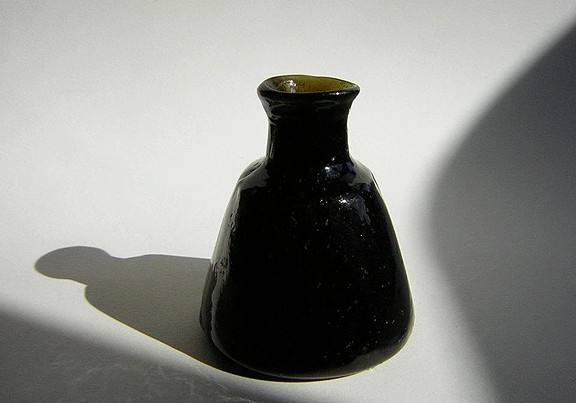
A couple of shouldered Cone Inkwells – Michael George

GII-15 Mt Vernon type Geometric Ink – John April

Monster XR blue Umbrella Ink – GreatAntiqueBottles.com

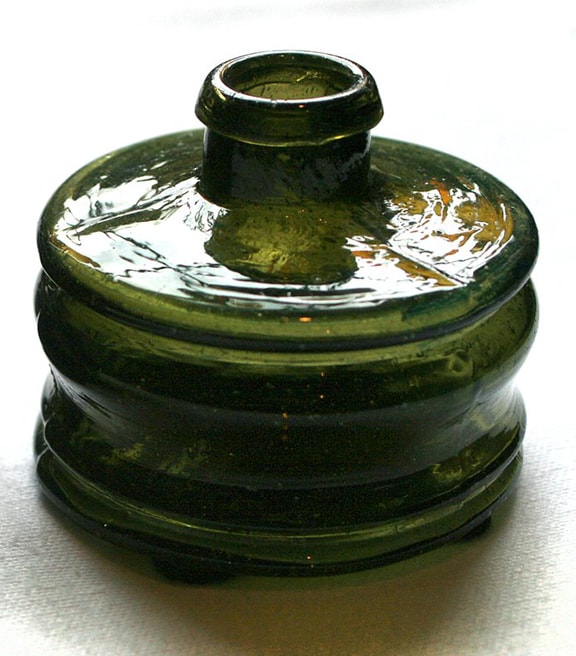
Very early Connecticut Annular Ring Inkwell – Michael George

Green labeled Igloo Ink – John April

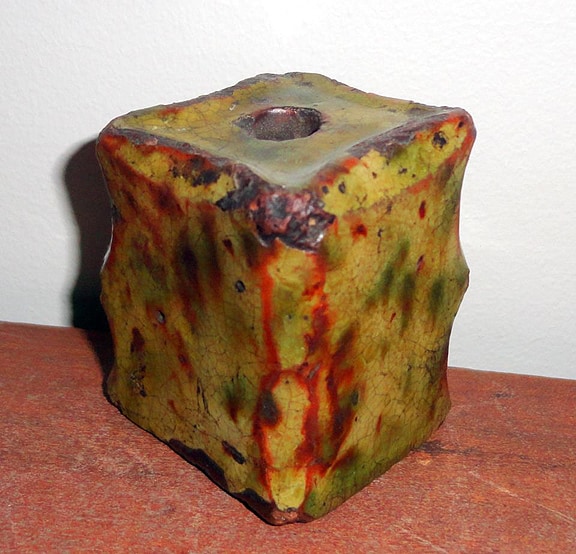
Redware Ink, Connecticut, circa: 1730’s – Charles Flint

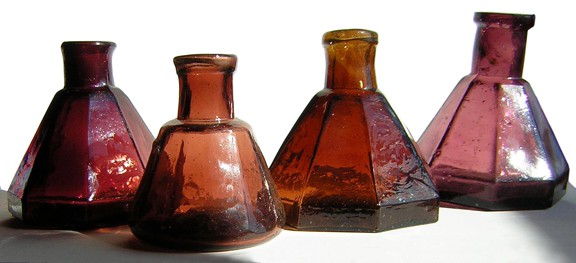
Left to Right – op purple/wine type tone, pink 12 sided op, op puce ink and a smooth based lilac purple that looks like watered down welch’s grape juice – John April

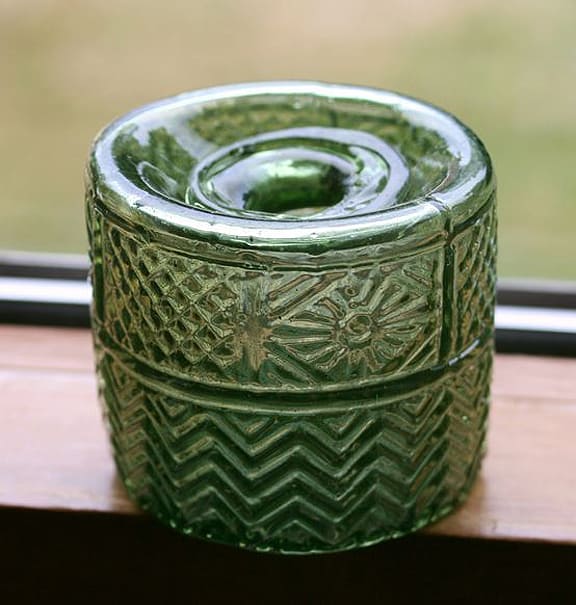
Geometric Ink in a spectacular shade of green, believed to be the GIII-25 mold attributed to the Boston & Sandwich Glass factory – Michael George

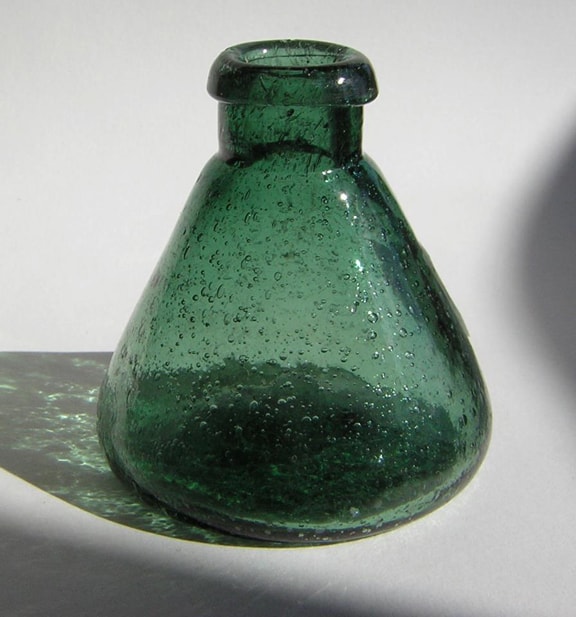
Bubbly open-pontil Cone Ink – John April

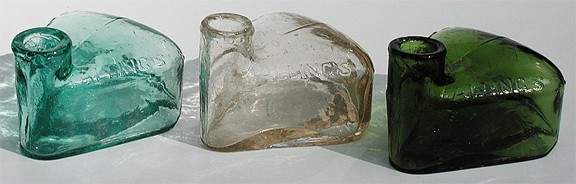
Ailings Ink Bottles posted by Lucy Faulkner

Pinkish puce ink recovered from a demolition near the Baltimore area. Expanded mouth, maybe a mucilage or for some other use – Michael George

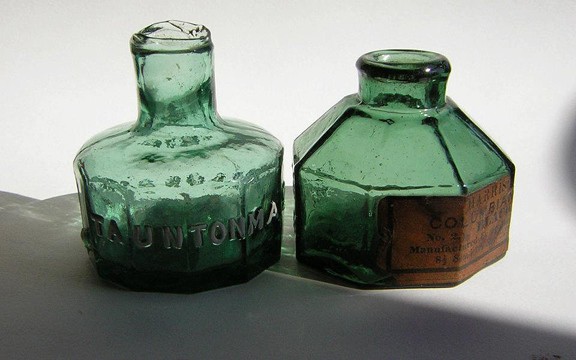
S.O. Dunbar, Taunton Mass & Harrison’s inks – John April

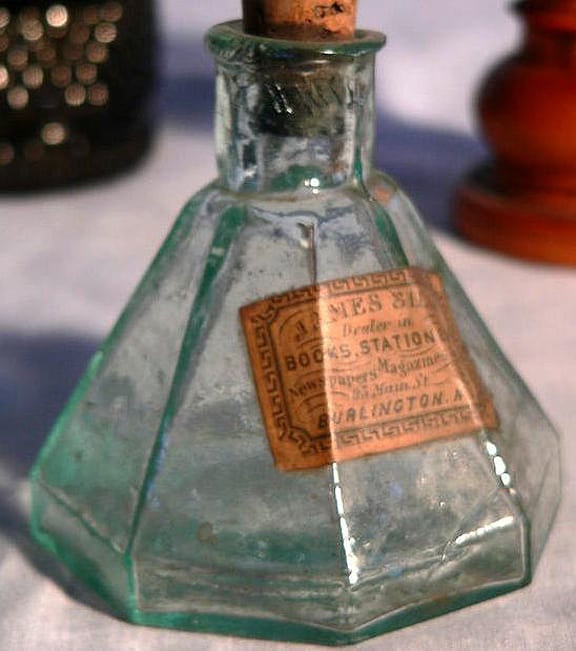
Labeled Umbrella that recently sold on e-Bay from Burlington NJ

New England Door Knob Ink with pontil – John April

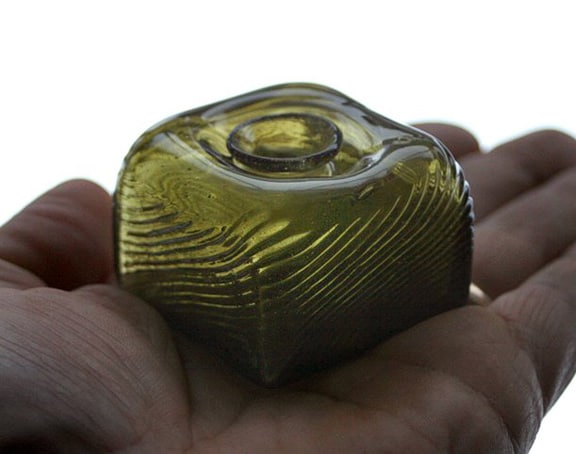
Diminutive-sized, light-colored Pitkin Square Ink – Michael George

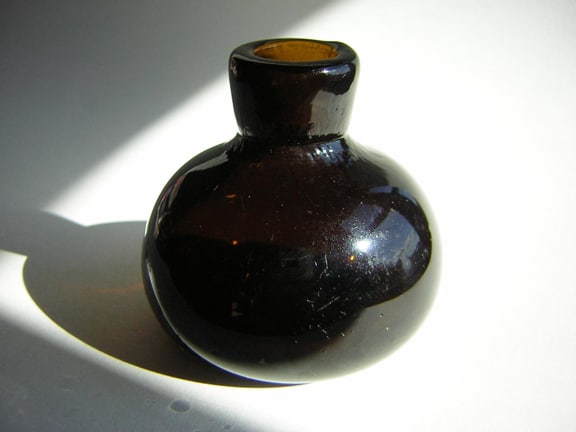
A really old and dark Cone Ink – John April

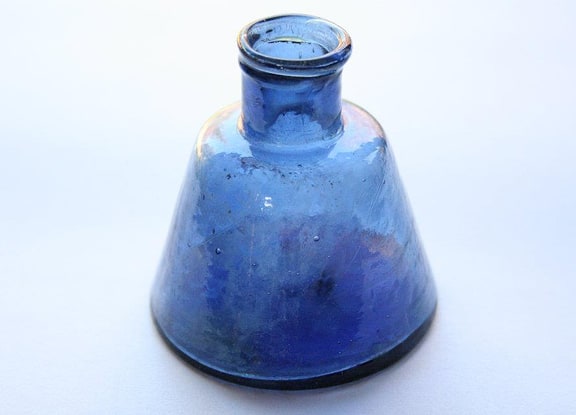
Beautiful blue Cone Ink dug in California – Matthew Tigue Levanti

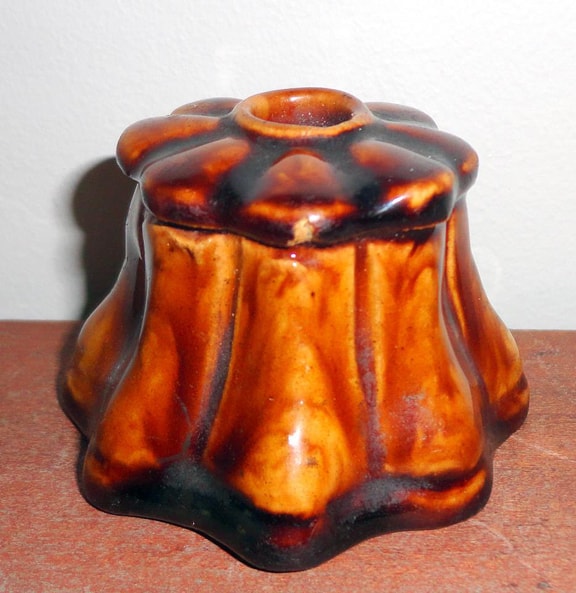
Bennington, Vermont Ink in a Rockingham glaze. circa1820-1840’s – Charles Flint

Connecticut Annular Ink – John April

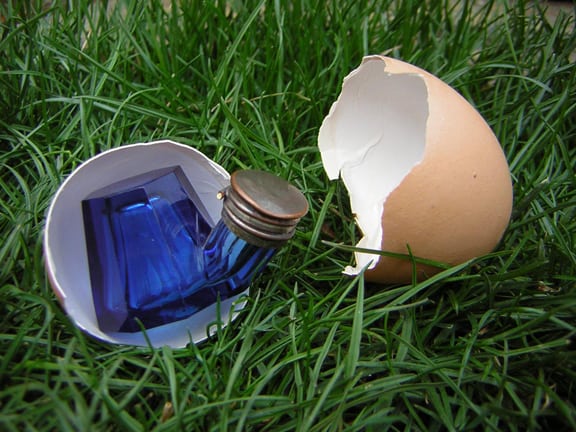
1 1/8″ tall ex-Covill cobalt blue Tea Kettle Ink – John April

Blown three mold Annular Ring Inkwell (also pictured at top of page) – Michael George

Beautiful yellow green Baltimore Star Ink – GreatAntiqueBottles.com

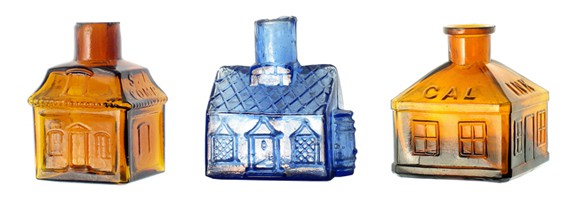
Three Cottage Inks – 2012 Glass Discoveries Auction

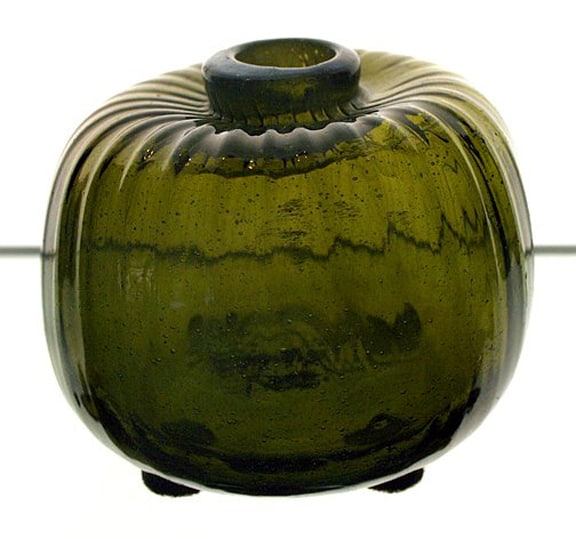
They are known as “melon” inks, and this one was made 28 rib dip mold. They are attributed to CT, 1780-1820 – Michael George

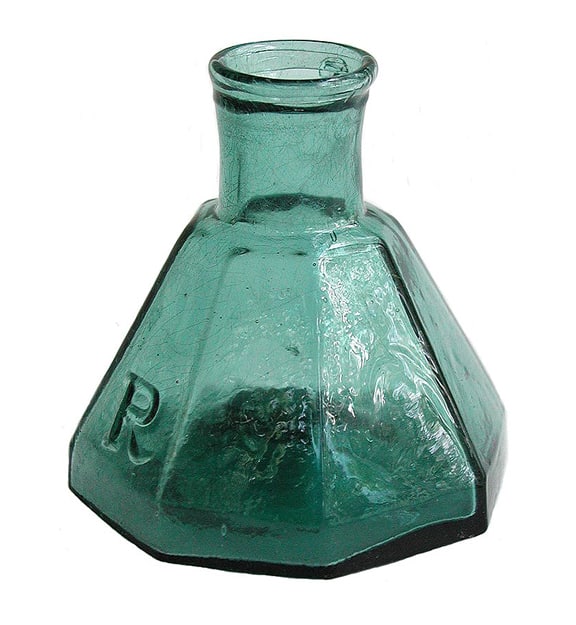
Umbrella Inkwell with “R” embossing – Lucy Faulkner

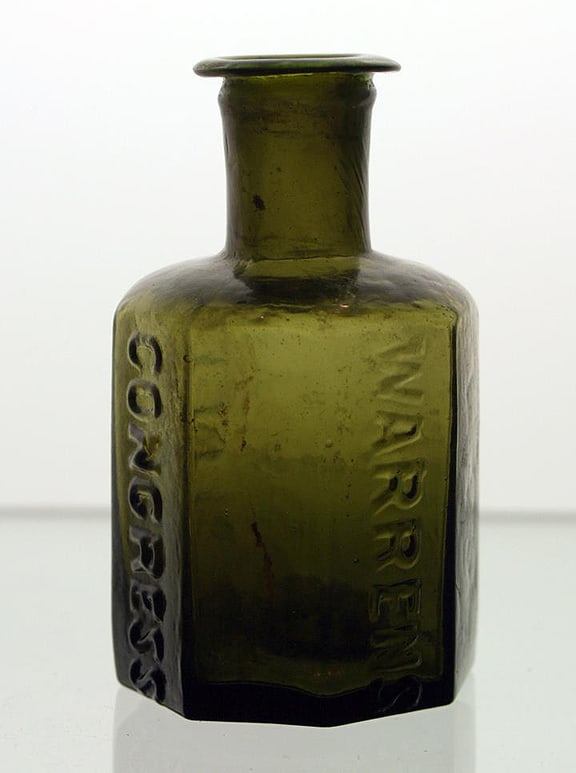
Warren’s Congress Ink – Michael George

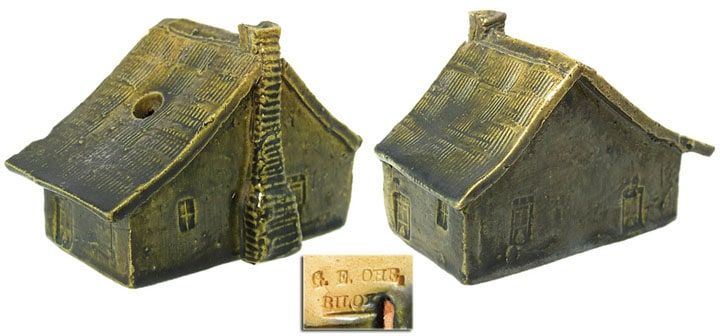
Ohr_Biloxi_Inkwell

George Ohr Pottery Cabin Inkwell, Mississippi, ca. 1880 – 1900, mottled olive green glaze, 3”h, ‘G.E. Ohr / Biloxi’ impressed on the base, perfect condition. A classic Ohr Pottery cabin inkwell with windows, doors, stone chimney and roof opening, typical of Southern Mississippi cabins of the late 1800’s. – Glass Works Auction #96

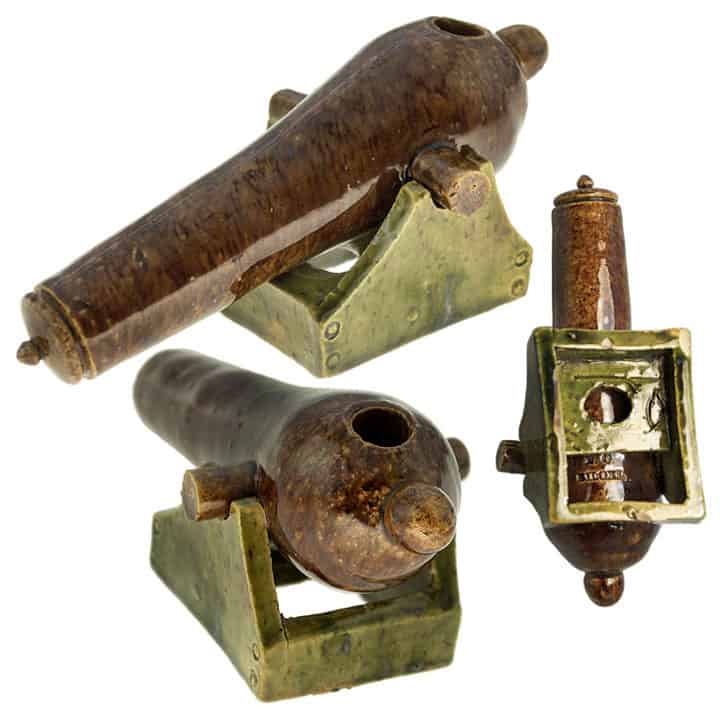
OHR_Cannon_GW96

George Ohr Pottery Cannon Inkwell, Mississippi, ca. 1880 – 1900, mottled brown glaze cannon on an olive green glaze mount, 2 1/4”h, 5” long, ‘G.E. Ohr / Biloxi’ impressed on the base, A tiny chip is off the edge of the base, otherwise in perfect condition. The cannon and mount are two separate pieces of clay joined together. Extremely rare, we have not seen another like it! – Glass Works Auction #96

Posted in Collectors & Collections, Facebook, Glass Companies & Works, Inks, Stoneware | Tagged , , , , , , , , , , , , , , , , , , , , , , , , , , , , , | 1 Comment

The “Star of Baltimore”

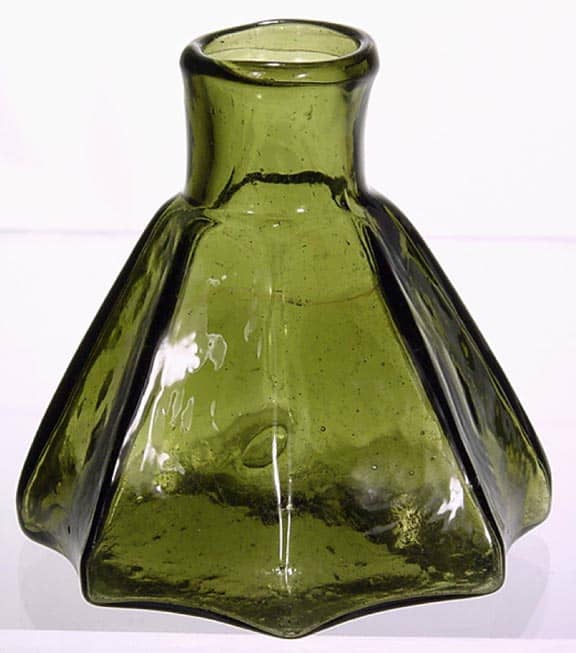
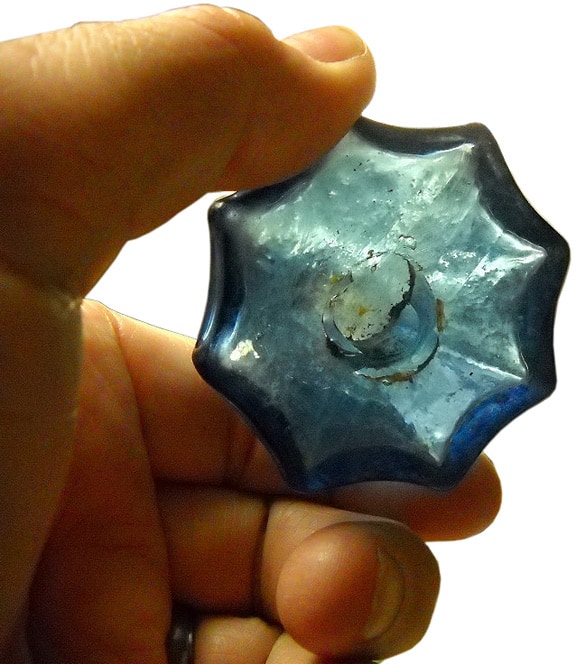
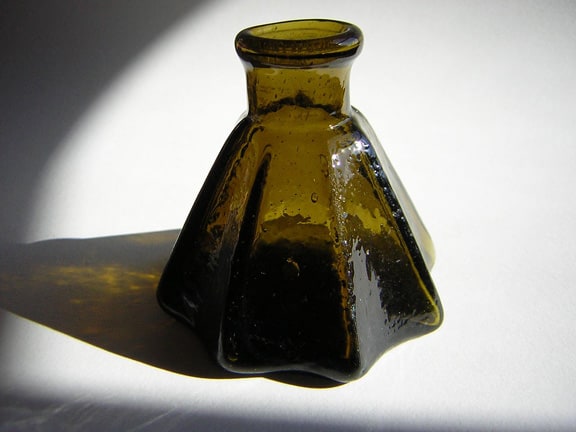
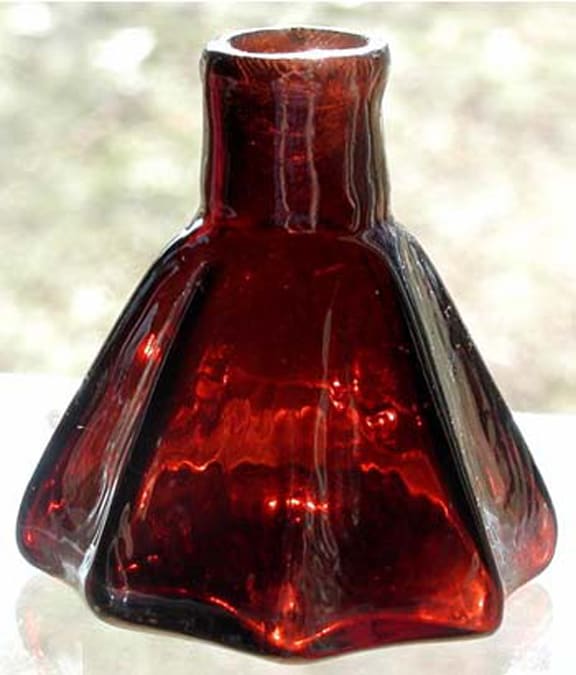
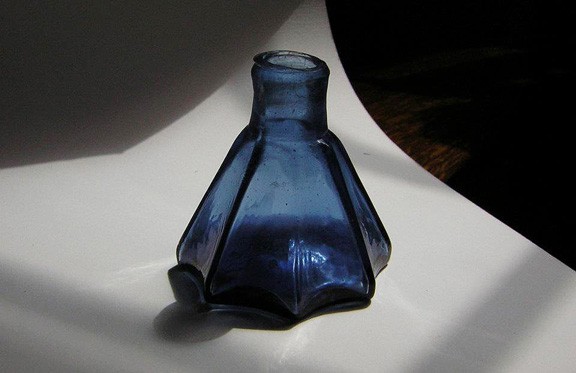
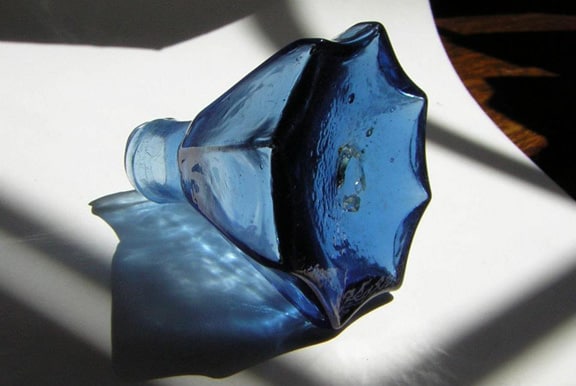
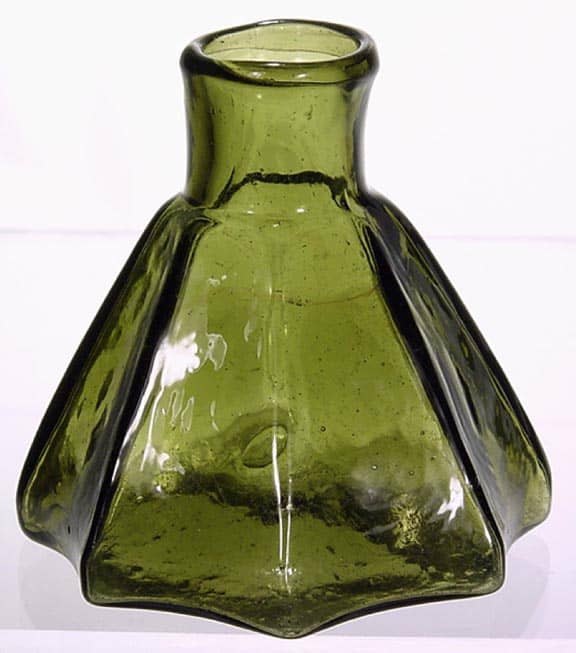
You just have to love these umbrella style inks called the ‘Star of Baltimore” or ‘Baltimore Star“. Different from an Umbrella Ink in that the sides are concave and create the form of a star when viewed from the bottom.

At a recent Baltimore Antique Bottle Club meeting, Phil Edmonds casually gestures with a small cornflower-blue bottle with a sunburst-shaped bottom, a mid-19th-century ink bottle type known as “The Star of Baltimore” that he found on a privy dig. “This is probably a $1,500 bottle,” he says.

Quote from Baltimore City Paper 29 February 2012

Typically pontiled (made by a glassblower by hand, and have a telltale mark on the bottom called the “pontil scar” where the rod that held the bottle in place as it was formed was snapped off) and dug primarily in the Baltimore area, the Stars were a product of Baltimore Glass Works which was known for producing glass in a variety of unusual colors, particularly from the 1840s to the 1860s. At its peak in the 19th century, glass production was Baltimore’s third-largest industry, in part because of the vast, varied output of Baltimore Glass Works, a factory based in Federal Hill.


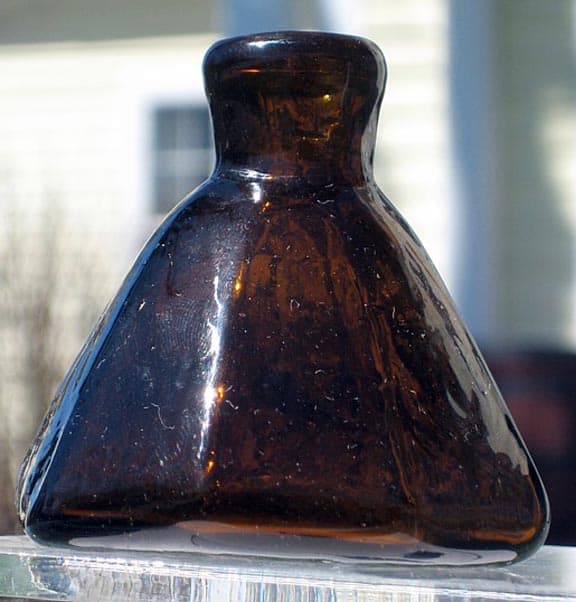
In their midst, he also found an amber open-pontil scalloped or star umbrella ink in perfect condition.

Quote from Christmas Isn’t Just for Kids!
But for dedicated bottle diggers, too!by Andy Goldfrank

A few great pictures to look at…..

Beautiful yellow green Baltimore Star Ink - GreatAntiqueBottles.com

Baltimore Star Ink Bottle in a rich olive green - April Collection

Similar to figures 139 and 140 in Covill's book. This Baltimore Star example is a blood amber/puce color - Antique Ink Bottle Hall of Fame

Dark Sapphire Blue Baltimore Star - April Collection

Pontil mark on the dark sapphire blue Baltimore Star - April Collection

Posted in Article Publications, Collectors & Collections, Color Runs, Digging and Finding, Glass Companies & Works, History, Inks | Tagged , , , , , , , , , , , | Leave a comment

Bennett’s Stomach Bitters – A real puzzler

In from my friend, Civil War authority Jim Schmidt:

see: CIVIL WAR MEDICINE (AND WRITING)

* Thanks to Rick DeMarsh for token, and newspaper submissions.

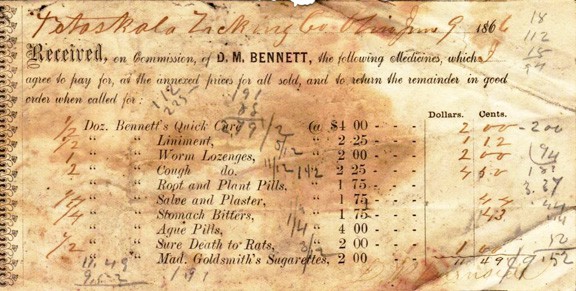
Stomach Bitters   1.75

Sure Death to Rats   2.00

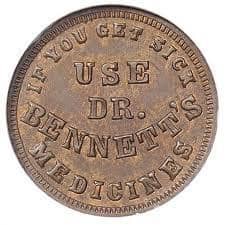
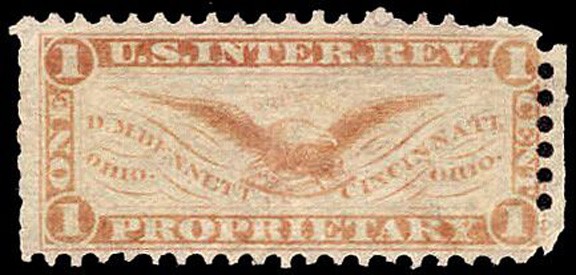
1866 D.M. Bennett bill-head from Cincinnati, Ohio…recently added to collection…see the Bennett’s Stomach Bitters listing!…”Sure Death to Rats” poison Love the name…D.M. Bennett did issue a Civil War Proprietary Medicine Stamp (re30)..Enjoy!

D. M. Bennett, Cincinnati druggist, produced one or more proprietary items. Private die stamps were issued for his firm from February, 1865 through August 17, 1871. 329,700 were issued on old paper.

This is a puzzle to me. There are two western Bitters squares, a BENNET’S CELEBRATED STOMACH BITTERS (B 73) and a BENNET’S WILD CHERRY STOMACH BITTERS (B 74) both with SAN FRANCISCO embossing. Note there is only one ‘T’  in BENNET on the western examples. What bottle is this billhead referring to when they say D.M. BENNETT and Cincinnati druggist. I need help on this one folks. I have come up with the following on D.M. Bennett:

DeRobigne Mortimer Bennett

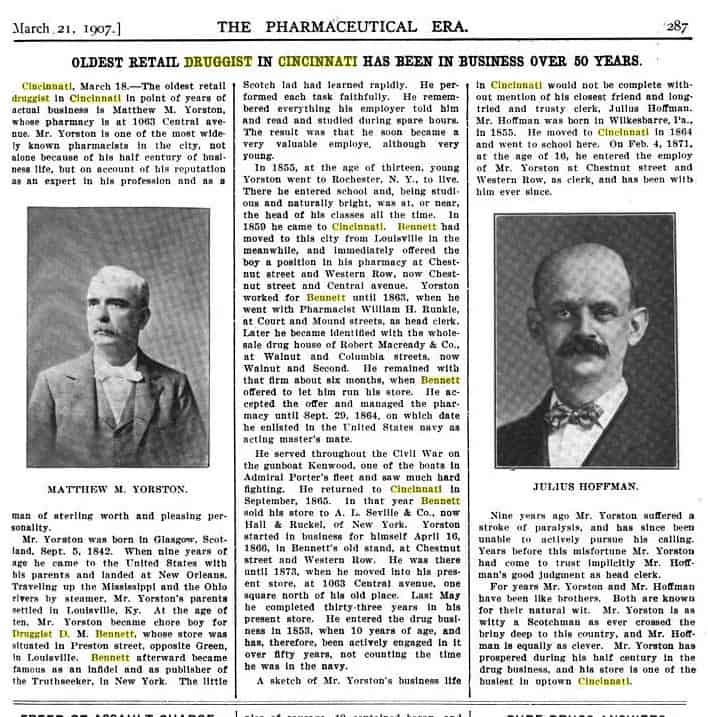
Dr. D.M. (DeRobigne Mortimer) Bennett compounded Dr. Bennett’s Family Medicines. Dr. Bennett learned to compound drugs while studying herbal medicine during the time that he was a member of the United Society of Believers in Christ’s Second Appearing (i.e. the Shakers). Bennett is probably most famous as “the founder, publisher, and editor of the Truth Seeker, the largest and most radical free thought and reform journal in the world” as described by as Roderick Bradford in his article titled “Theosophical Odyssey of D. M. Bennett”. 1856 Williams’ Cincinnati Directory: not found. 1859-1860 Hawes’ Ohio State Gazetteer and Business Directory: not found. 1860 Williams’ Cincinnati Directory: D.M. Bennett, druggist and apothecary, southwest corner of Chestnut Street and Western Row. 1860-1861 Hawes’ Ohio State Gazetteer and Business Directory: “Cincinnati . . . Bennett D.M., druggist, cor. Central Ave. and Chestnut.” 1861 Williams’ Cincinnati Directory: “Bennett D.M., druggist, 435 Central Av.”. 1862 Williams’ Cincinnati Directory: “Bennett Derobigne M., drug store, s.w.c. Chestnut and Central Av., h. 21 Chestnut.” 1863 Williams’ Cincinnati Directory: “Bennett Derobigne M., druggist and apothecary, proprietor of Bennett’s Family Medicines, and manufacturer of sealing wax, s.w.c. Central Av. and Chestnut, h. 21 Chestnut.” 1864 Williams’ Cincinnati Directory: “Bennett Derobigne M., druggust & apothecary, and manufacturer of sealing wax, & c., s.w.c. Chestnut & Central Av., h. 21 Chestnut.”

Posted in Bitters, Civil War, Druggist & Drugstore, Ephemera, History, Poison Bottles, Tax Stamps | Tagged , , , , , , , , , , , , | 1 Comment

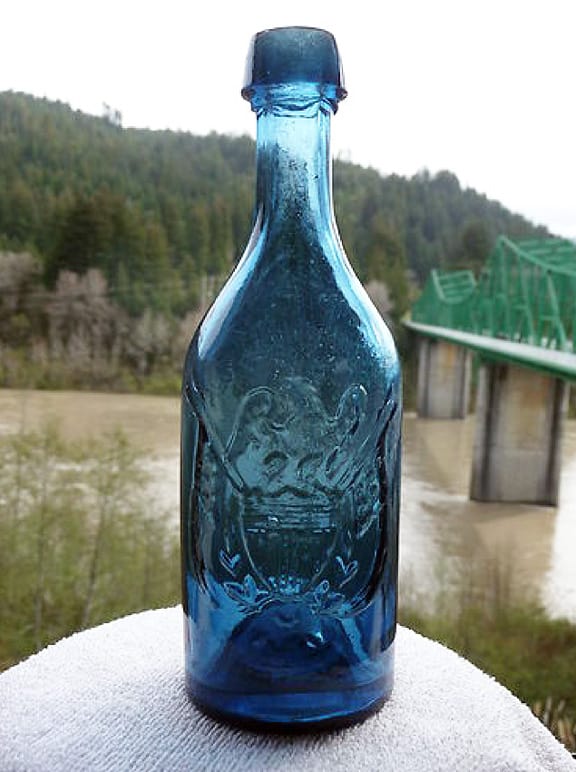
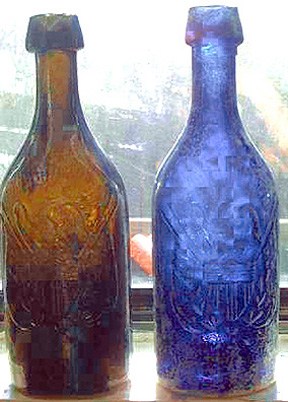
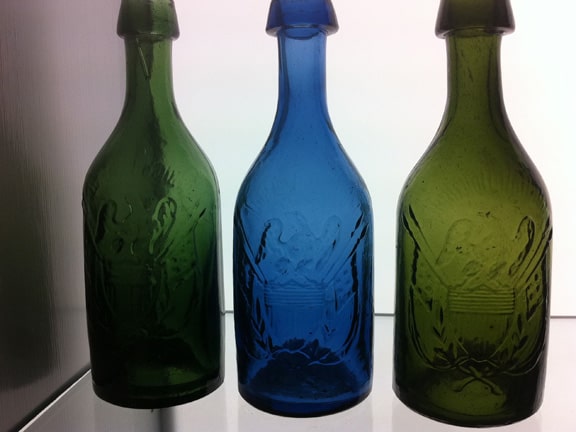
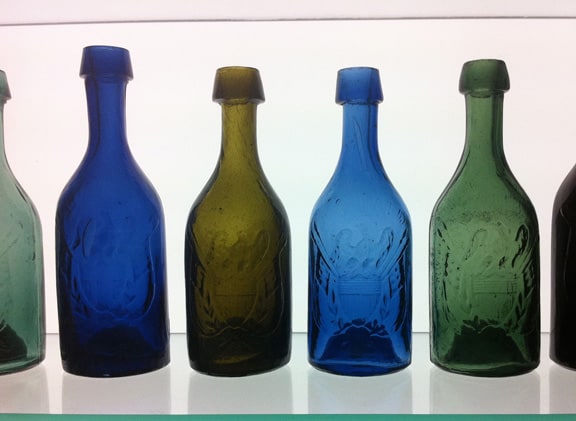
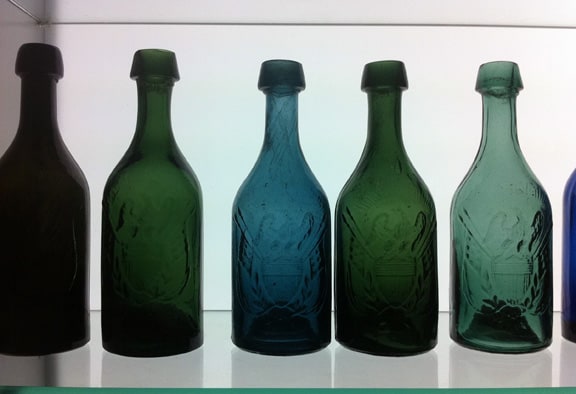
Really liking this “Charleston Shield” Superior Soda Water

Really liking this “Charleston Shield” Superior Soda Water

22 April 2012

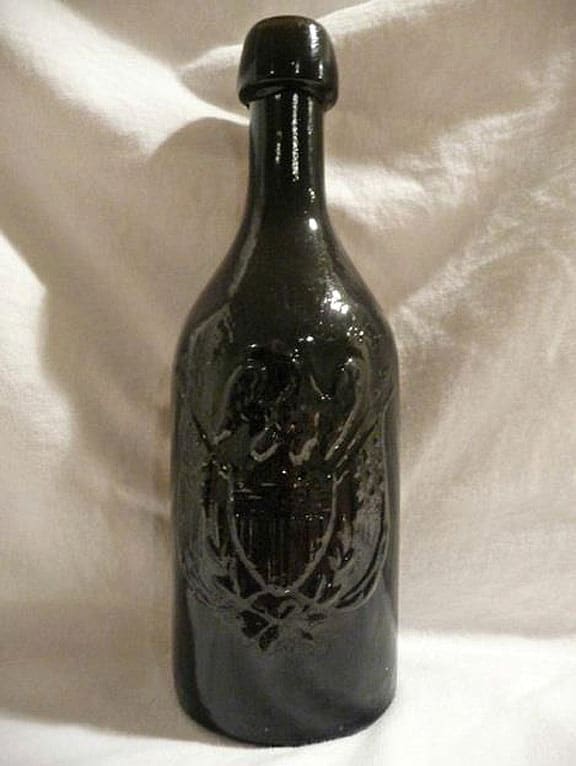
You can not miss this eBay listing for a blue Superior Soda Water or “Charleston Shield”. The bottle is drop dead gorgeous and is in great condition. This has to be one of my favorite sodas because of the embossing, locale and the various colors that I have seen.

I recently saw a run of these at Mike Newman’s (see pictures below) house in Augusta, Georgia. Anyway, the eBay listing is as follows:

Damage Free – Iron Pontil – Smokey Blue – 100% the real thing –  Charleston Shield

eBay: 9965ralph Huntley, Illinois

eBay description:

Voted as one of Charlestons top ten most famous bottles. Many of these have been tampered with replacing the missing tops, this one is 100% there, no repairs or any other real concerns, a dug bottle fresh to me from the privy and guaranteed to be original! Professionally cleaned by me, (and to use an over used phrase), to its original luster!!! All kidding aside it truly is a top shelf gem of soda deserving a prominent place on your shelf.

It is virtually stain free, save a small spot on one side of the interior upper most part of the neck, retaining some minor ground-ware mainly in the form of light sporadic scratching and a few mineral swirls, there are no chips, dings, cracks or any other form/s of damage!!!! It is a smokey blue in color almost having a tone of gray to it. The pictures are accurate and you get a real good idea of its true color!!! A knock out gotta have it soda in excellent shape!!!!

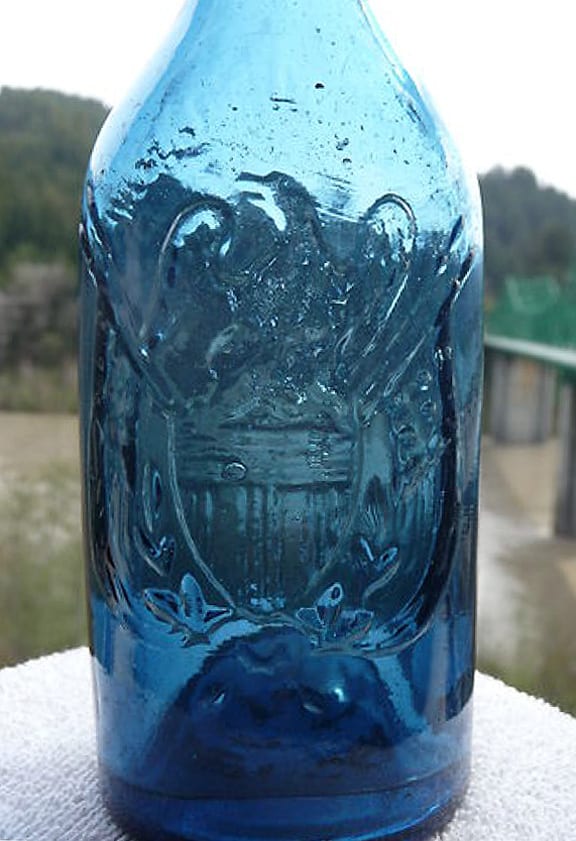
Iron pontiled with a thick grayish residue remaining. It has a super crude undamaged taper top and it is guaranteed not to have been repaired or altered in any way. There is no heavy ground-ware on the shield/eagle etc. Itself, and it is bodly embossed from the top of its sun-rays to the bottom of it’s branches and from flag to flag, in other-words a strong strike top to bottom as well as side to side on its front with the famous rays/pikes/ eagle/shield/flags and branches.

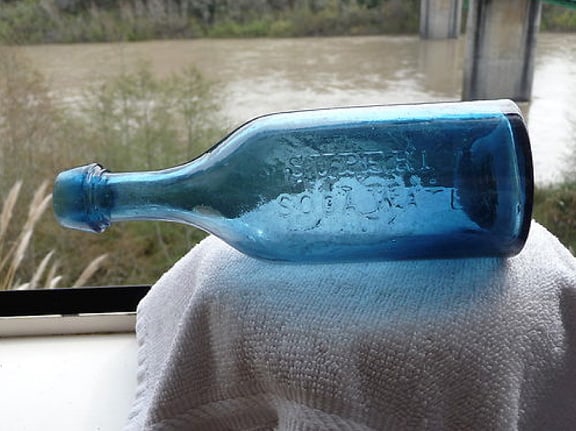
On it’s reverse and unlike most, this one is strongly embossed in the usual very thin print: superior/soda water with the ‘er’ in water being a bit weaker than the rest of the lettering but there is no problem reading them, or in other words they are all very legible and mentioned for complete accuracy only as this soda is a glow in the dark gem that displays well in any situation. The pictures are an accurate portrayal of it, my feedback speaks for itself, so please bid with confidence. 7-3/4” x  2-5/8″. Estimate: S1,700-2,300

Superior Soda Water “Charleston Shield” typography – eBay

Superior Soda Water “Charleston Shield” eagle and shield embossing – eBay

Within a minute Tom popped out another soda: an iron-pontiled Superior Soda Water with an embossed eagle, shield and crossed flags in cobalt!

Looking around on the internet I found a great digging story where many great bottles were found including a Superior Soda Water “Charleston Shield” Read further: Christmas Isn’t Just for Kids!
 But for dedicated bottle diggers, too!
 by Andy Goldfrank. The phrase “Within a minute Tom popped out another soda: an iron-pontiled Superior Soda Water with an embossed eagle, shield and crossed flags in cobalt!” really jumps out. I can only imagine the excitement of finding a bottle like this.

I have also posted some pictures of Mike Newman’s Superior Soda Waters which were spectacular when I saw them in Augusta on a visit to see his magnificent collection last year.

Read More: Mike Newman Bottles – Upstairs Sodas

Read More: Mike Newman Bottles – Upstairs Flasks

Read More: Mike Newman Bottles – Downstairs

Superior Soda Waters “Charleston Shield” – Newman Collection

Superior Soda Waters “Charleston Shield” – Newman Collection

Superior Soda Waters “Charleston Shield” – Newman Collection

blackish Charleston Eagle/Shield that recently sold on eBay for close to $5,000

Posted in Collectors & Collections, Color Runs, Digging and Finding, eBay, Soda Water | Tagged , , , , , , , | Leave a comment

AT & Co. means Asher S. Taylor & Company

AT & Co. means Asher S. Taylor & Company

21 April 2012

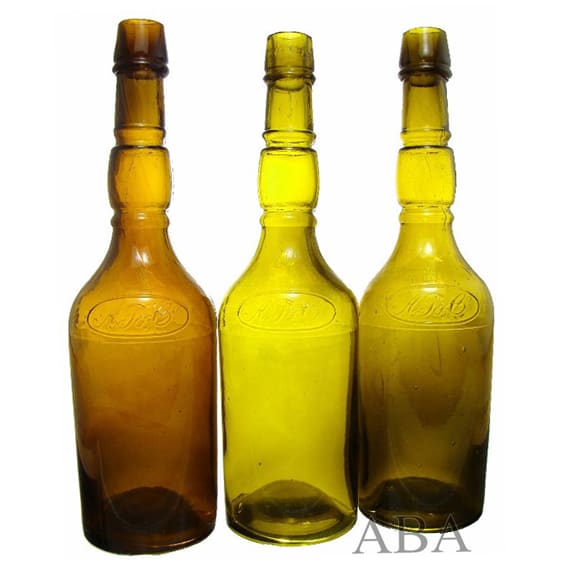
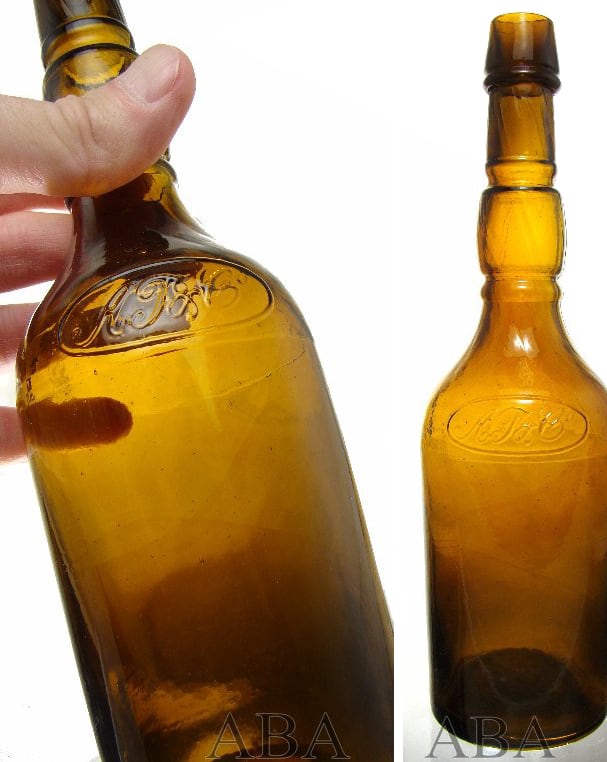
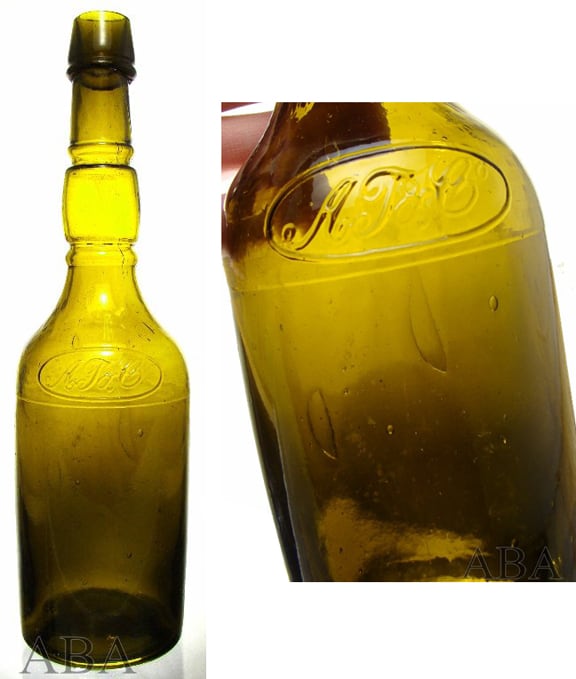
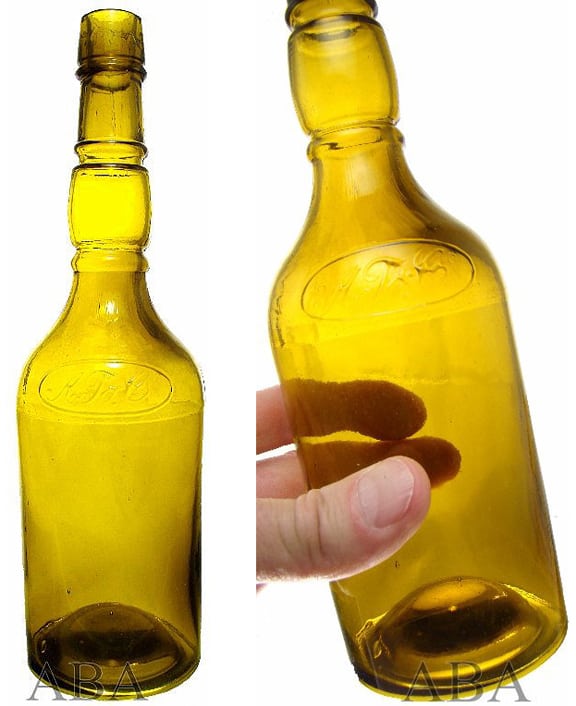
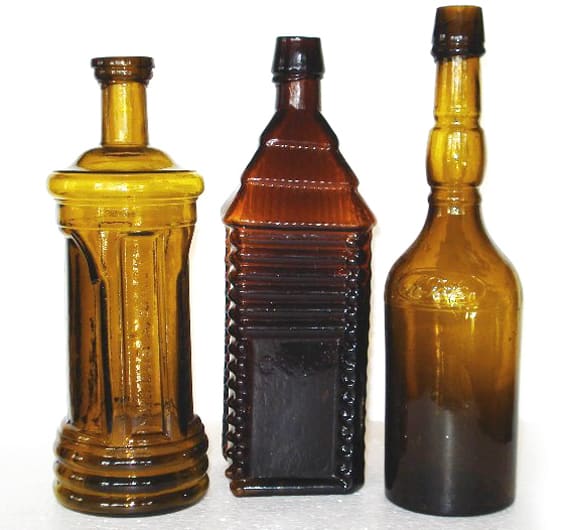
Apple-Touch-IconAAhh…what a nice trio of AT & Co bottles that are represented in the American Bottle Auctions | Auction 55 that is now on line. AT & Co. means Asher S. Taylor & Company.

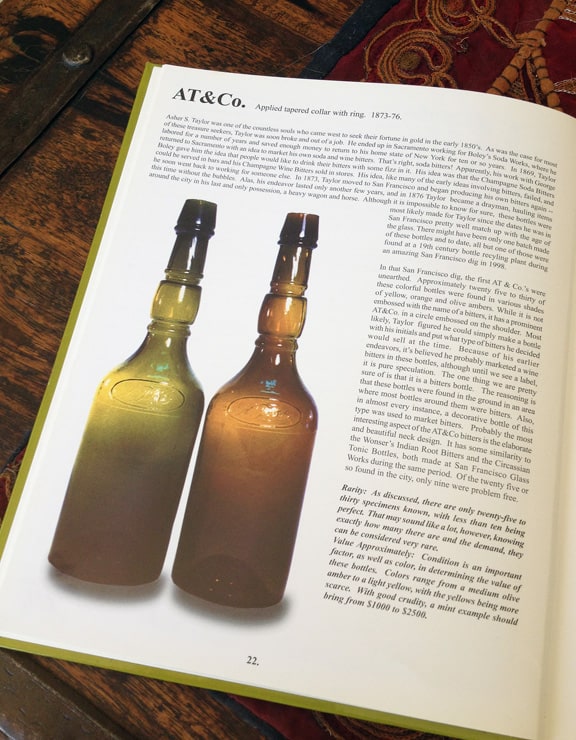
I first became aware of these bottles when I saw them pictured in Jeff Wichmann’s Antique Western Bitters Bottles which honestly, was instrumental in fueling my passion for collecting Bitters Bottles back when I started in 2002.

Interestingly enough, the AT & Co. is prominently embossed in an oval on the shoulder but does not have the word ‘Bitters’ embossed on the bottle. Most likely, the bottle was labeled with one of the Bitters products marketed by Taylor. This is an elaborately shaped bottle with a beautiful neck design that is like no other.

AT & Co pictured on Page 22 of Wichmann’s Antique Western Bitters Bottles book

Jeff notes in his book that many AT & Co. bottles, usually found in yellow, amber and olive amber,  were unearthed in the famous San Francisco dig in 1998 at the 19th century recycling plant.

For more information on Asher S. Taylor I reference Warren B. Friedrich’s landmark book Early Glassworks of California.

[referencing Early Glassworks of California by Warren B. Friedrich]

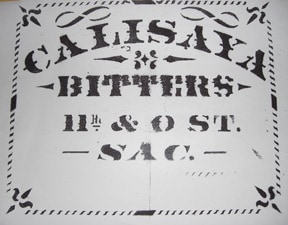
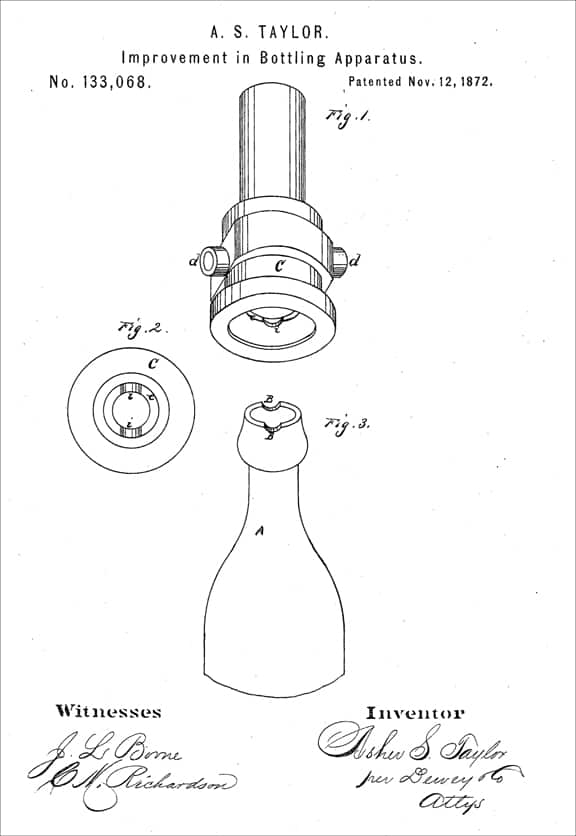
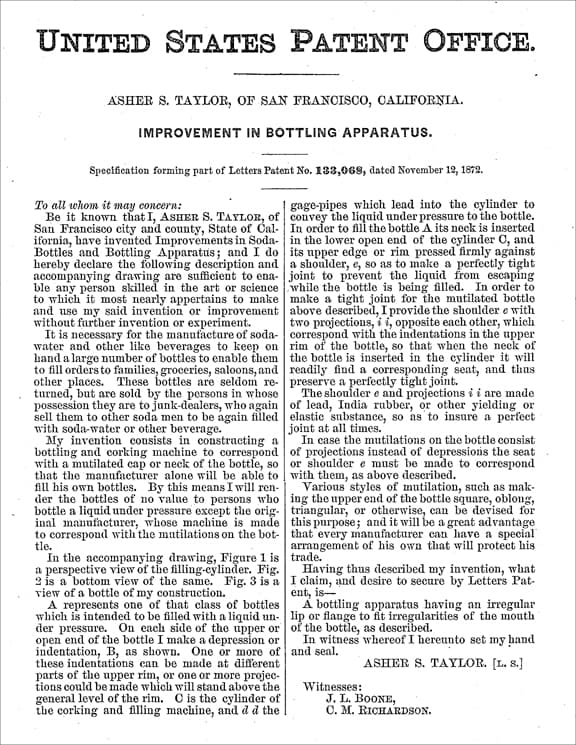
Asher S. Taylor is primarily know for operating a soda water factory (see bottle patent below) in San Francisco and Sacramento. Having his background in the soda water industry, Taylor may have concocted a bitters beverage for which he applied for two trademarks on January 17th, 1868: one for his Champagne Wine Bitters and the second for his Champagne Soda Bitters. After only s brief time of advertising his Champagne Wine Bitters, Taylor filed for a trademark of a Calisaya Bitters on July 22, 1869. In the 1871 San Francisco Directory, Taylor was listed as an agent for a Sparkling Medicated Gin Bitters.

The elegantly shaped bottles is most likely a product from the San Francisco Glass Works. The Pacific Glass Works was out of blast at the time Asher Taylor marketed the Champagne Wine Bitters, however the Pacific Glass Works was the only glassworks in operation at the time Taylor advertised the Calisaya Bitters in July 1869.


Read more: Asher Taylor’s Sacramento Connection at Western Bitters News

AT & Co | Lot 95 | American Bottle Auctions | Auction 55

Lot 95 AT & CO on shoulder with applied top. We are lucky enough to have three of these unusual western bottles in this sale. Until the San Francisco dig of 1990, there was only one of these bottles thought to exist. A number were found in that dig and they have been collected and treasured by western bitters collectors ever since. Through the work of Warren Friedrich and his exhaustive efforts in uncovering the Asher Taylor provenance, much more is now known about this interesting bottle. For more information please refer to Early Glassworks of California. This example is amber and a pretty one at that. As all of these examples are revealed, you’ll see three mint specimens in varying colors. Interestingly the three-piece mold accommodates a great deal of whittle in the upper section with some lesser crudity through the bottom. A terrific example in the hard to find amber. The top appears a little different color than the bottle. Grades 9.8.

AT & Co | Lot 96 | American Bottle Auctions | Auction 55

Lot 96 AT & CO on shoulder with applied top. And another of the Asher Taylor bottles, this one also in super condition in an olive coloration. Under high intensity light we are seeing some nice bubbles and crudity again mostly in the upper half. Maybe a few light scratches but generally a Grade 9.6.

AT & Co | Lot 97 | American Bottle Auctions | Auction 55

Lot 97 AT & CO on shoulder with applied top. This last example is a brilliant yellow and is one that will really stand out in any collection. Taylor started in New York in the 1850’s before coming to San Francisco in 1854 and then Sacramento. According to Friedrich, his Champagne Wine Bitters was marketed in Sacramento, he also filed for a trademark for Calisaya Bitters in 1869. The history is intriguing and very worthwhile for collectors of early western glass. We doubt a trio of these will be offered again for some time.

Asher S. Taylor patent for Soda Bottling Apparatus

Asher S. Taylor patent for Soda Bottling Apparatus

Just a nice group of three Bitters Bottles with the AT & Co on the right. The left is a Lacour’s and the center is a Drake’s.

Posted in Auction News, Bitters, Color Runs, Glass Companies & Works, History, Soda Water, Technology | Tagged , , , , , , , , , , , , | Leave a comment

Bitter Witch – What a great name!

Bitter Witch – What a great name!

21 April 2012 (R•043016)

Apple-Touch-IconAIn looking at the latest American Bottle Auctions | Auction #55 I was impressed, as usual, the the variety, depth and presentation of the bottles. That is expected. Next I was drawn to the BITTER WITCH flask which is usually passed by, by many collectors, because some say it did not contain a Bitters product nor does it have the ‘s’ on bitter.

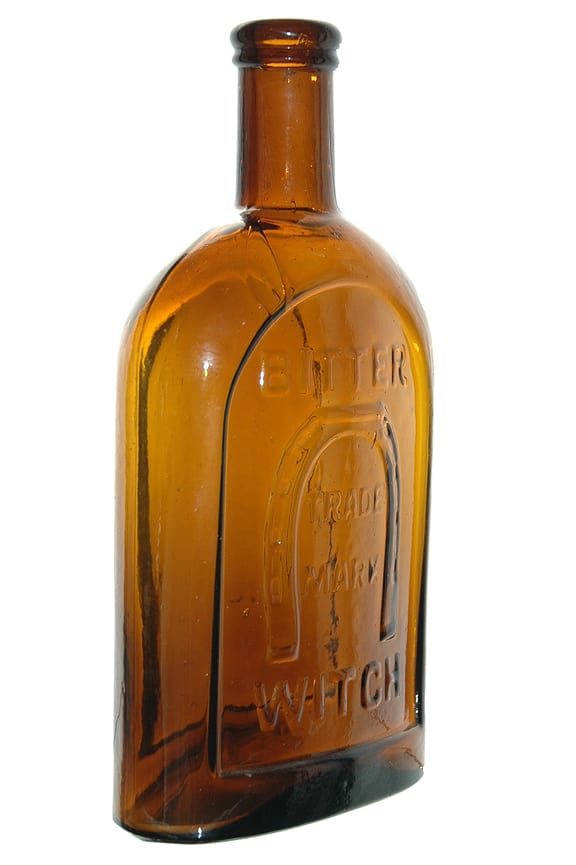
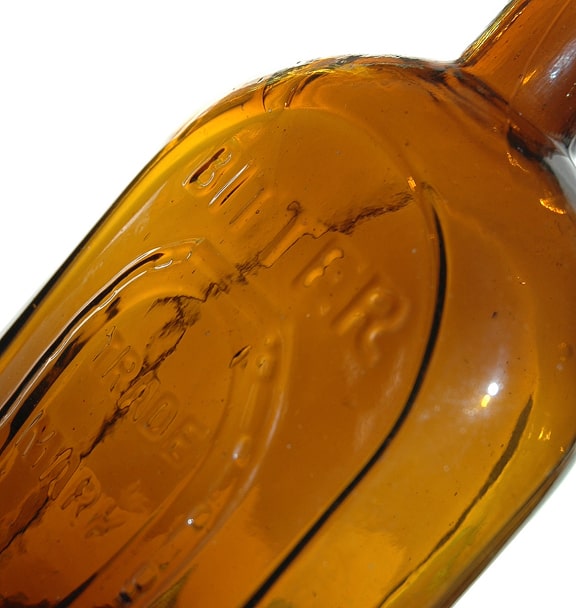
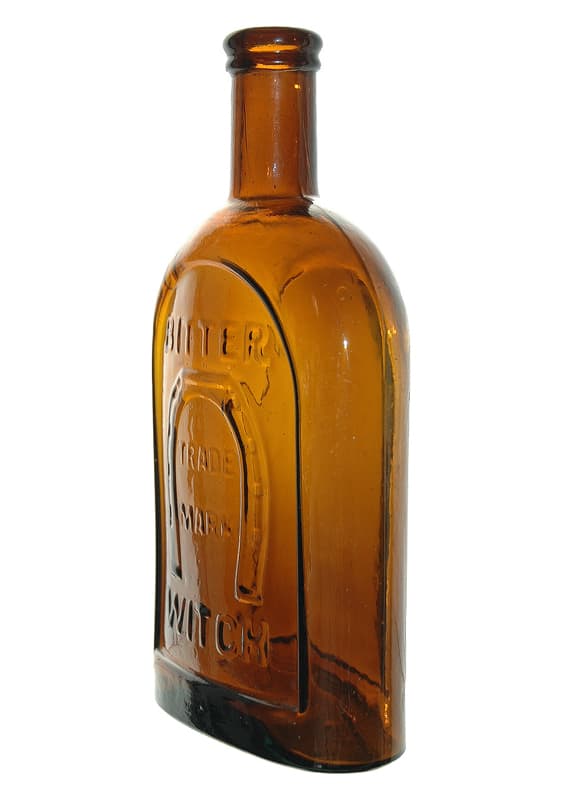
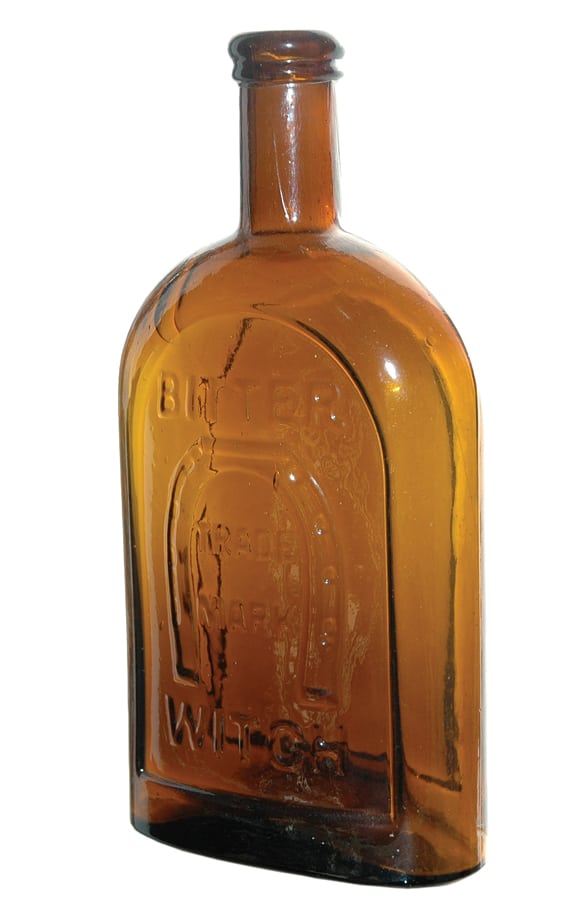
This really doesn’t concern me. This is still a neat flask to collect (you will see pictures of my amber one below). With a double rolled lip and the sensuous flask shape, it is propelled into greatness by the addition of the horseshoe which gracefully follows and compliments the contours of the bottle shape.

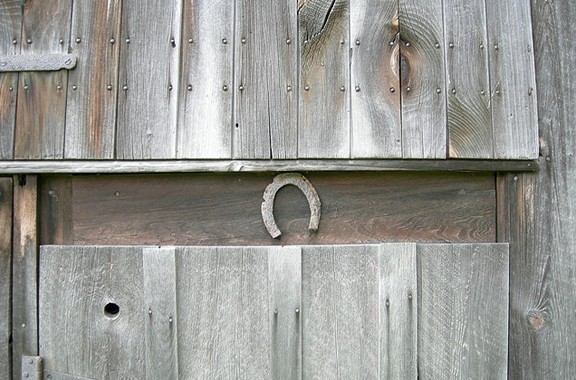
the horseshoe usually points downward and it is said that “no witch will pass under it.”

Now a little on the horseshoe. Without a doubt, the most commonly encountered lucky charm in modern North America is the horseshoe. In regions where the horseshoe is placed facing upward, folks believe the horseshoe must point up “or the luck runs out.” In places where it is hung facing downward they say exactly the opposite, “it must point down so the luck can pour onto you.” However, in its function as an amulet for magical protection, especially over the doorways of barns and stables, the horseshoe usually points downward and it is said that “no witch will pass under it.”

The Bitters Witch example in Jeff Wichmann’s auction is a great color as you will see.

First the Carlyn Ring and W.C. Ham Bitters Bottles listing:

B 112.5  BITTER WITCH, Circa 1870-1875
BITTER / motif horseshoe with TRADE / MARK / WITCH // sp //
8 x 4 x 2
Flask, Amber, DCM, Applied mouth, 2 sp
A Westeren brand.

The description in the American Bottle Auctions listing is as follows:

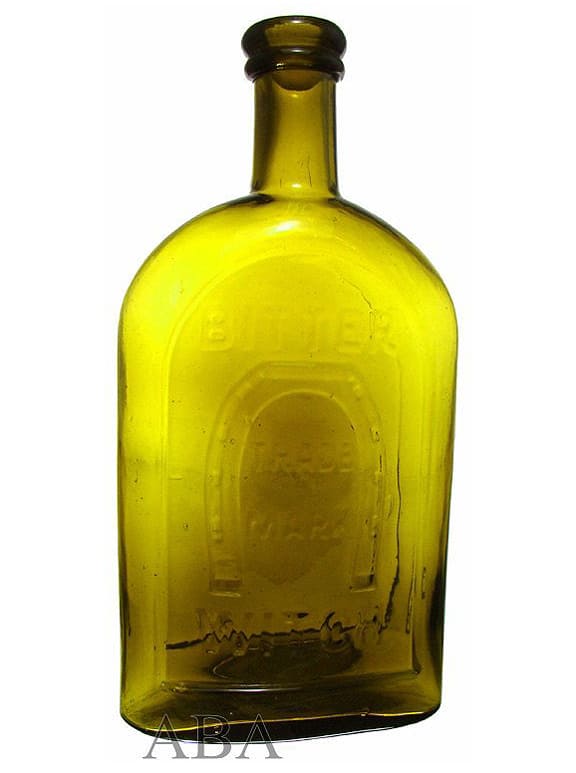
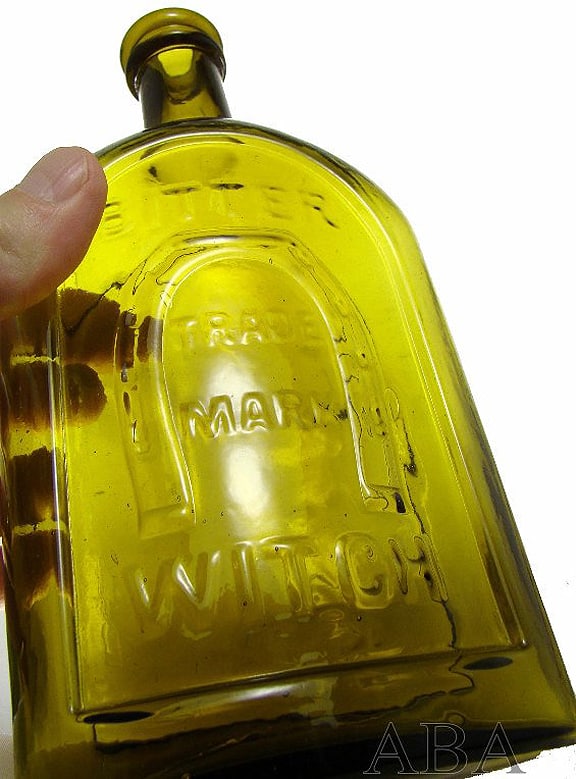
BITTER WITCH. Double roll applied collar. Here we have a western bottle that leaves some people scratching their heads. Although it has the name “Bitter”, it also has a horseshoe and is frankly a little odd. An old wives tale notes that witches were at one time afraid of horses and one could nail a horseshoe (open end down) onto their front door to prevent witches from entering their home. We’re not sure if this works, but it couldn’t hurt to try. Whatever the story, there’s nothing odd about the curved “R’s” and this beautiful yellow olive. In addition, it has some nice overall crudity with a double roll collar. A terrific San Francisco bottle, this is as good as they get. Grades a 9.8. See the great video of Jeff describing this bottle. Click Bitter Witch.

I did see some dialog over at Western Bitters News related to a Pratt’s New Life posting that I have noted below:

“I thought I saw an ad many years ago when I was reading an old 1870s Marysville newspaper at the Marysville library, showing Pratt as being the manufacturer or originator of the “Bitter Witch” product. Has anyone else seen something similar showing Pratt being involve with that product?”

“Interesting that you would bring that up. At the Anderson bottle show recently, I was talking to Tom Jacobs who mentioned a Bitter Witch with a full label was shown at the annual Ken Schwartz open house a few years ago. He mentioned that the manufacturer was indeed a well known medicine manufacturer in S.F. but could not recall exactly which one it was. he was going to send me a photo he had taken of the label. When and if I receive it, I will post it. From what he could recall, Bitter Witch was not a bitters or tonic, but a general remedy and cure all. Dale M.

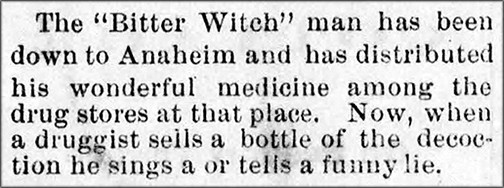
Bitter Witch Man_Los_Angeles_Herald_Tue__Mar_16__1875_

The Bitter Witch Man – Los Angeles Herald, Tuesday, March 16, 1875

Read: Mystery of the “Bitter Witch” finally solved.

Yellow olive BITTER WITCH – ABA Auction #55 – Lot 93

Yellow olive BITTER WITCH – ABA Auction #55 – Lot 93

Amber BITTER WITCH – Meyer Collection

Amber BITTER WITCH – Meyer Collection

Amber BITTER WITCH – Meyer Collection

Amber BITTER WITCH – Meyer Collection

Posted in Auction News, Bitters, Collectors & Collections, Flasks, Historical Flasks, History | Tagged , , , , , , , , , , , , , | Leave a comment

Antique & collecting hobby is under attack!

[Incoming PRG email…can this really be true?…anybody know anything about this? This could be a real mess..our Liberty as bottle and glass dealers may be at stake]

Dear Antique Faire shoppers, flea market enthusiasts and collectors everywhere,

Assembly Bill 391 is moving quickly with a priority status and is now in final stages at the Senate Public Safety Committee before being voted on by the State Senate and it threatens the future of our antique faire as well as all similar events statewide!

In the guise of creating an electronic reporting database to recover stolen property, it will force secondhand dealers, Pawnbrokers and coin dealers to report via an electronic database, (yet to be created and maintained with the fees that will be required) ALL secondhand tangible property — except firearms — which have been purchased, taken in trade, taken in pawn, accepted for sale on consignment or accepted for auctioning within 24 hrs of purchase. If you, as a collector, ever plan to resell anything, then this affects you as well.

Currently the Bill calls for all property to be reported. We believe the legislators do not understand how the antique business works or how dealers sell. Many do not have brick and mortar shops or a means of submitting electronic reports in the manner and timeline they are requesting. If AB 391 goes through, many of them will no longer be able to engage in the business of buying used goods and selling them at venues like our antiques faire and you will see the faire shrink in size until it closes down.

Antique dealers and secondhand dealers currently hold business licenses and pay fees, State Resale taxes and Income tax, so they are accountable too. We believe this class of sellers should be excluded, except for specific classes of high theft goods that are over a determined $ value. We also believe that auction houses should be exempted since they place all material to be sold on public display.

Passage of this Bill will require sellers of ALL secondhand tangible property to:

1) Obtain fingerprints and photo ID from anyone that sells them merchandise.

2) Report daily or on the first working day following the receipt or purchase of secondhand tangible personal property to a statewide electronic database. Full description, serial numbers and inventory of each item purchased.

3) Hold all merchandise for 30 days prior to selling anything.

4) Register as a Second Hand Dealer, submit fingerprints relative to a required criminal background check and pay an initial licensure fee & annual renewal fee of up to $300.

5) It appears the way the bill is written, they would be required to obtain the above licensure for each location in which they sell.

Needless to say this would devastate the antique industry and force a majority of dealers out of business. This would also lead to the end of events such as our faire, flea markets garage sales, and secondhand stores.

Please review the latest updates to Assembly Bill 391 using this link. We implore you to call the Governor’s office, your local State Senator and the Senators on the Public Safety Committee today. If it passes, it will take effect immediately.

AB 391 is very serious. Call the Governor’s office and as many State Senators as possible.  And please forward this email to your collector friends!

GOVERNOR JERRY BROWN

Use this easy link to send a letter to Governor Brown and tell him what you think:

Or send a letter:

c/o State Capitol, Suite 1173, Sacramento, CA 95814  Phone (916) 445-2841

SENATE STANDING COMMITTEE ON PUBLIC SAFETY:

Meets 1st & 3rd Tuesday, 9:30am, Room 4203

& 2nd & 4th Tuesday, 9:30am Room 3191

Senator Loni Hancock (Chair) 916-651-4009 (Capital Office) 510-286-1333 (Oakland)

Senator Joel Anderson (Vice Ch) 916-651-4036 (Capital Office) 619-596-3136 (El Cajon) or 951-676-1020 (Temecula)

Senator Ron Calderon 916-651-4030 (Capital Office) 323-890-2790 (Montebello)

Senator Tom Harman 916-651-4035 (Capital Office) 714-957-4555 (Costa Mesa)

Senator Carol Liu 916-651-4028 (Capital Office) 818-409-0400 (Glendale)

Senator Curren Price 916-651-4026 (Capital Office) 213-745-6656 (Los Angeles)

Senator Darrell Steinbert (Pro Tem) 916-651-4006 (Capital Office) 916-651-1529 (Sacramento)

When speaking with Representatives and Senators, please stress that this will turn honest dealers from being a taxpayer to someone needing assistance and force tens of thousands of citizens out of work statewide.

Stress that antiquing is pure recycling and a major GREEN activity. All the things that Antique Dealers will no longer be able to sell will go to the landfill. This Bill is anti-recycling.

Remind the Legislators there are millions of Californians that love going to antique fairs and will be very upset when their hobby is taken away from them.

Educate them on the thousands of variations in the merchandise.  What would a database be like that encompassed such a massive listing of items?

Do they really understand?  Even breaking it into categories would still leave hundreds of variations. Will the law enforcement officials have the time and wherewithal to search it?  Or will all the time and expense fall short and do nothing but force dealers out of business and end the fun and savings of buying vintage items?

Don’t let this happen!  Please speak up now. Your input will help them create a more viable solution.

Sincerest Regards,

Allen Michaan, President

Antiques By The Bay, Inc.

Posted in Advice, Bottle Shows, News, Questions | Tagged , , , , , | 4 Comments

Bottles from the Augusta Arsenal

Bottles from the Augusta Arsenal

19 April 2012

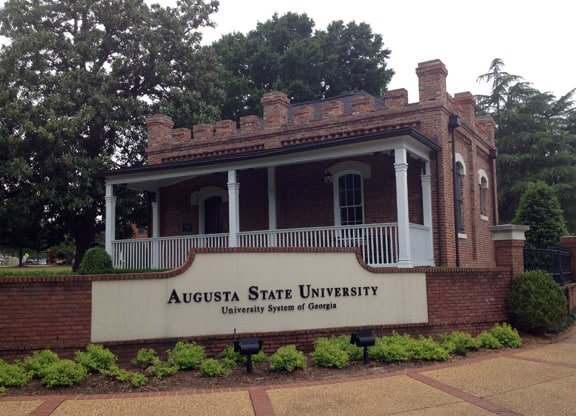
Apple-Touch-IconAI am at the Greenville-Spartanburg airport waiting for a flight back to Houston. I never know how I will be connected with bottles each day, so today was a surprise. I had business at Augusta State University and found a great cache of old bottles in the historic Guardhouse Museum on the corner of the campus.

Augusta State University (ASU) is a public university located in Augusta, Georgia, United States and is the oldest such institution in the state of Georgia (while the University of Georgia is the oldest state chartered university in Georgia and the United States). The University was founded as the Academy of Richmond County in 1783. It opened in 1785 and offered collegiate-level classes from its earliest days, and its classes were overseen by the state legislature.
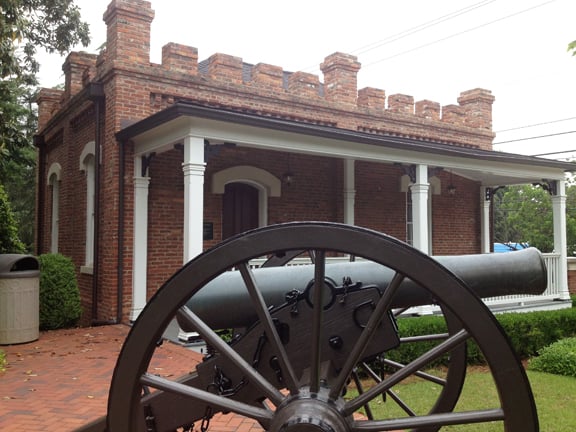
ASU 1866 Arsenal Guardhouse (now a small museum)

I met with the campus architect and we walked their new exterior ASU History Walk. The ASU History Walk is a 1.1 mile trail that invites walkers to enjoy a beautifully landscaped brick pathway around campus that includes rest areas and brick markers with text about the history of the university, the Augusta Arsenal, and the neighborhoods of Sand Hills and Summerville.
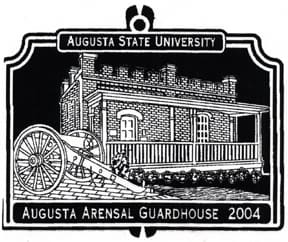
Anchoring the walk at the corner of Walton Way and Katherine Street is a restored 1866 Arsenal Guardhouse. Now a History Museum, it houses artifacts, photographs, and other memorabilia of their historic past. Most of the artifacts were discovered in archaeological digs on campus. The cell room was restored, complete with costumed figures, to portray prisoner life in the late 1800s. At the Walton Way and Arsenal Street History Walk is a military cemetery that holds the remains of U. S. and Confederate soldiers and their dependents.

Most of the artifacts were discovered in archaeological digs on campus. 

Originally, the U.S. Arsenal was on the banks of the Savannah River. However, the site proved to be unhealthy, with frequent fevers and deaths occurring among the soldiers and their families. The commandant, Capt. Matthew M. Payne, recommended the arsenal be moved to the healthier “hill” location, and in 1826 Congress authorized the purchase of 72 acres that were owned by Sen. Freeman Walker. Walker’s summer estate, called Belle Vue (beautiful vista) was purchased for $6,000, and a one-acre parcel was set aside as a cemetery for the Walker family.
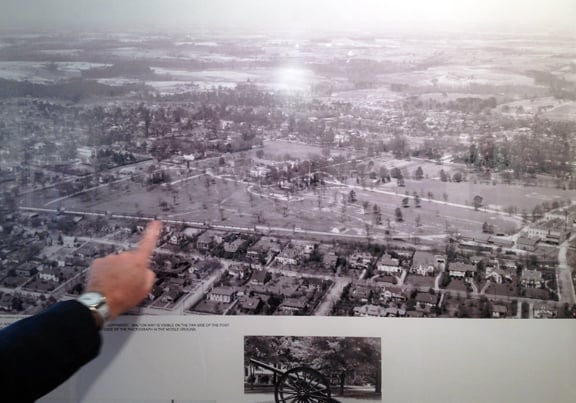
Early campus aerial photograph – circa 1931

The arsenal relocated the following year alongside the toll plank road that became known as Walton Way. With a $49,000 appropriation and some building materials from the original arsenal, four buildings (the present quadrangle) connected by a loop-holed wall were constructed. The buildings were completed in 1828 with the first occupants being Company C, Second Artillery. During the later part of that year, the arsenal was already supplying arms for the Georgia militia and for the Harper’s Ferry Armory.

The troops saw action in the Seminole War in 1835 and also in campaigns against the Creek Indians. Interestingly, Lt. William T. Sherman spent 6 months at the arsenal in 1844. He is remembered most for his later march through Georgia during the Civil War.
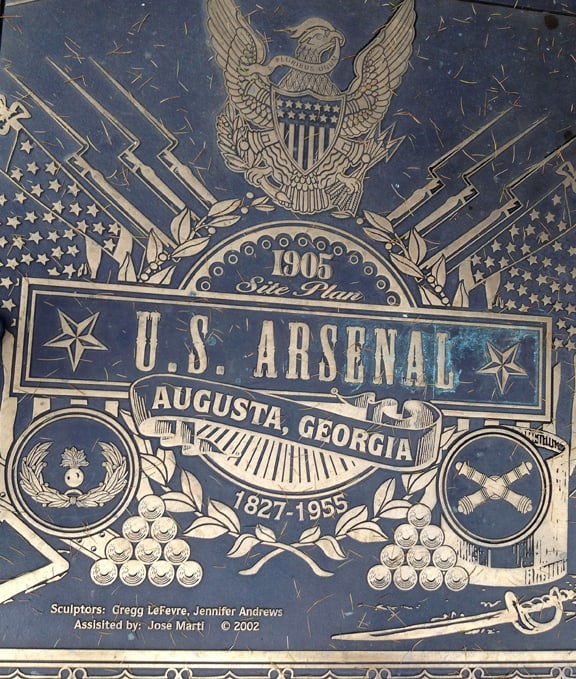
Embedded Arsenal historical plaque in the ASU History Walk

The August Arsenal was an established U.S. Arsenal at the time of the war however, it was the Confederates who greatly expanded its facilities and capacity. Captured by Georgia troops upon the session of that State in late January 1861, by the following summer Confederate Chief of Ordnance, Josiah Gorgas had decided to make it a “great arsenal”.
Soon after the organization of his department in July of 1861 Col. Gorgas sent Major George Washington Rains, a scientist, professor and graduate of West Point on a tour of the South to organize the components necessary for powder production and to locate a site suitable for erection of a first class powder mill. On July 20th, after careful consideration of a number of potential sites Rains chose Augusta which would also include a Confederate arsenal. Gorgas placed Rains in charge of erecting the Powder Works and chose Capt. W.G. Gill to command the Arsenal both of which he intended be built with the old U.S. Arsenal as its nucleus.
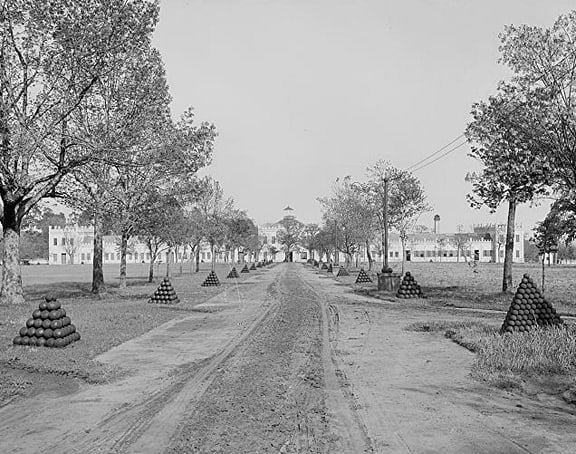
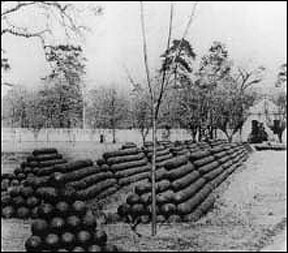
Early photograph

Augusta made a very favorable location for the Powder Works due to its location away from probable hostilities, its railways, its canal which provided transportation and power, its temperate climate and its location near enough to the city for a source of labor and supplies yet far enough for safety. More uniquely, Augusta afforded a water supply free from earthy lime salts to insure the purity of the powder and an abundant porous wood required in making charcoal, another requirement for the manufacture of gun powder. Such a location, conforming to all of these requirements could be found no where else in the Confederacy but Augusta. However, Augusta lacked nearly all of the necessary facilities and machinery required for such large scale military production. These would have to be built.
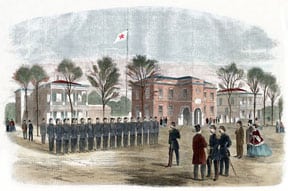
Rains began constructing his Powder Works on the grounds of the old U.S. Arsenal between the Savannah River and the canal, just west of the city in the fall of 1861. Possibly due to poor health Gill was however, slow in getting production underway. Though he did have constructed a large castellated brick building, as late as the winter of 1862 the Arsenal still had produced only 30,000 rounds of small arms ammunition, some cartridge bags and knapsacks. In April 1862, Gorgas relieved Gill of his post and placed Rains, now a Colonel, in command of both the Powder Works and Arsenal. On April 10, 1862, in only seven short months official operation of the Augusta Powder Works began.

The Confederate Powder Works at Augusta would become one of the most amazing success stories in the history of American manufacturing. Armed with only a pamphlet describing the processes and machinery of the Waltham Abbey Powder Works in England, then the best in the world, Col. Rains in less than a year remarkably forged a complete powder production facility. This complex of twenty-six buildings, including refineries, laboratories, rolling mills and test ranges grew, by war’s end, to rival if not surpass Europe’s best facilities to produce, arguably, the finest grade of powder in the world.
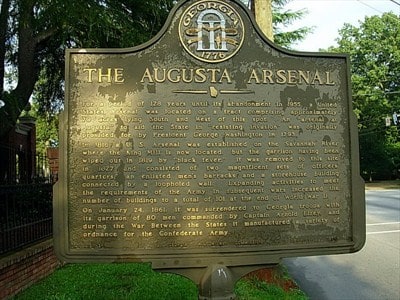
Over the next three years came to be the central gun powder making plant in the South and an important western arsenal. Threatened by Sherman in his “March to the Sea”, Augusta Arsenal production fell dramatically in the late fall and winter of 1864. Although never destroyed, by early spring 1865 it had become largely ineffective due to the crumbling Southern infrastructure, labor and material shortages. Throughout the war Augusta was a prolific supplier of all kinds of arms and equipment including horse equipment particularly curry combs and brushes and, arguably produced the finest grade of gun powder in the world!

Horse Equipment: During the war period, the Augusta Arsenal routinely issued horse equipment in “sets”, consisting of mostly the Jenifer saddle until the fall 1863, then the McClellan. The complete set included a bridle, halter, saddle bags and probably a saddle blanket, although it did not always have a full compliment of every item. Additional equipment like the nose bag, curry comb and brush were often issued separately and usually in mass to various commands. In fact, Augusta was the Confederacyís single largest producer of curry combs and brushes. Descriptions in arsenal records of Augusta’s horse equipment are vague but those of commercial contractors supplying equipment to the arsenal are more revealing.
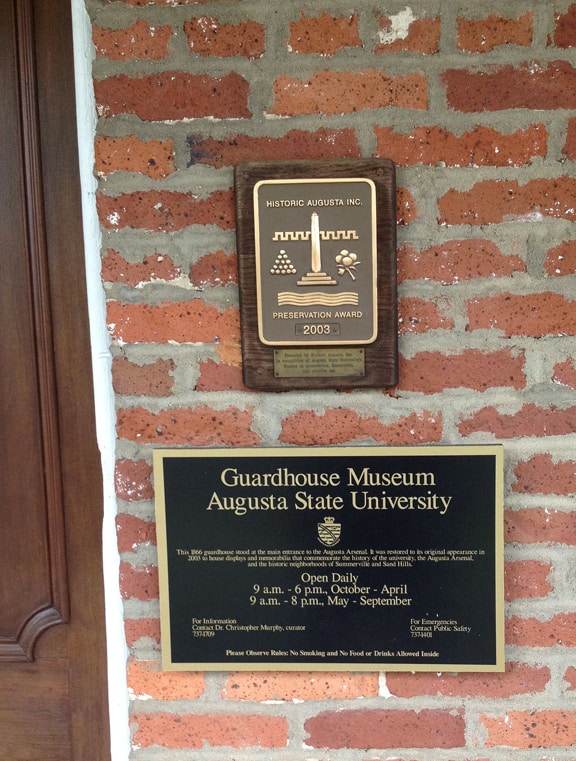
Guardhouse Museum Dedication Plaque
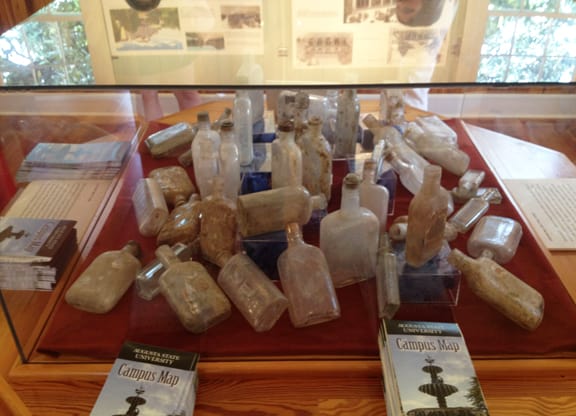
Bottles found on campus during various excavation projects
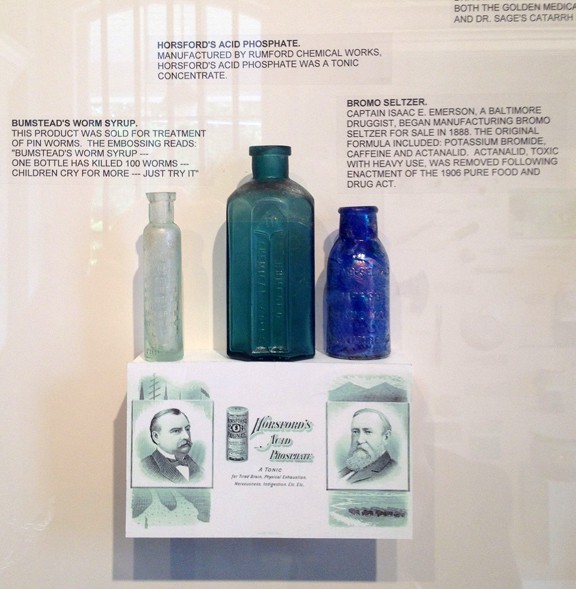
Bumstead’s Worm Syrup, Horsford’s Acid Phosphate & Bromo Seltzer bottle
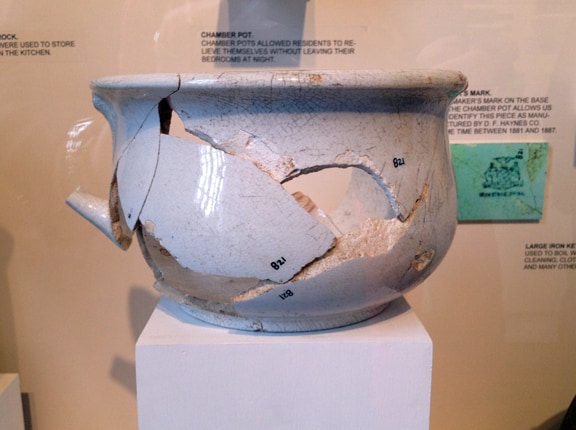
Reconstructed Chamber Post found at the Arsenal
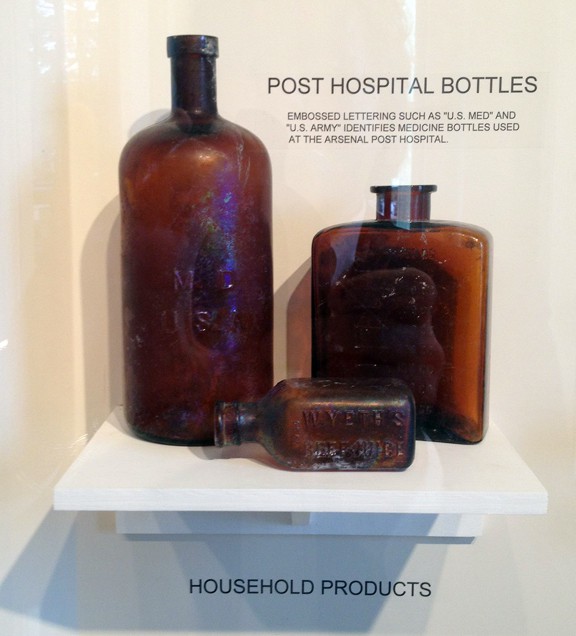
Post Hospital Bottles found at the Arsenal
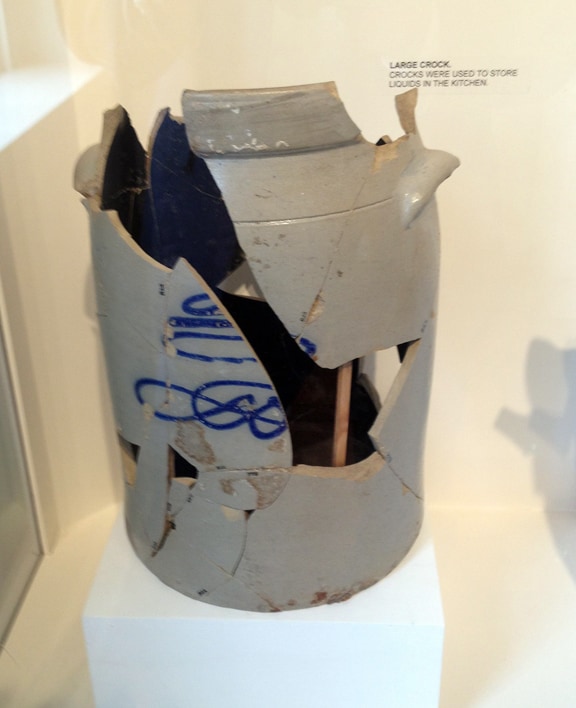
Large Crock found at Arsenal
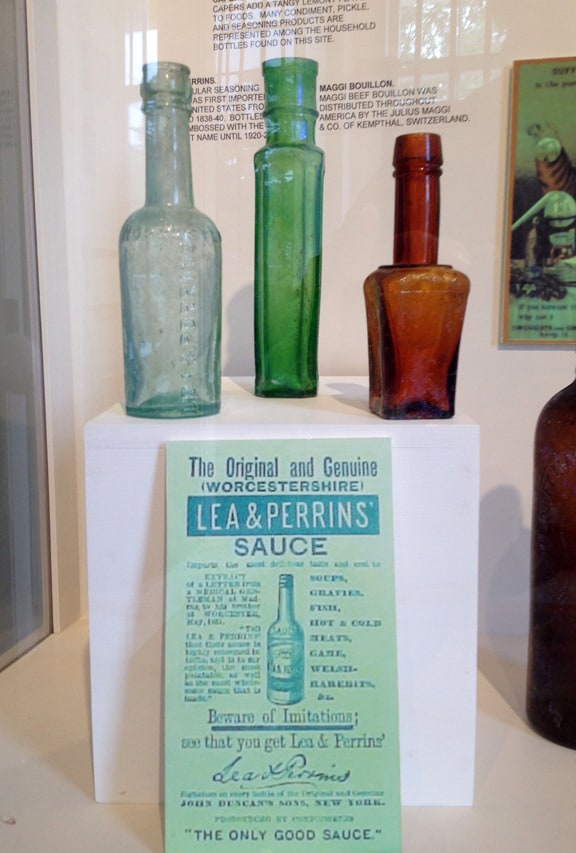
Food sauce bottles
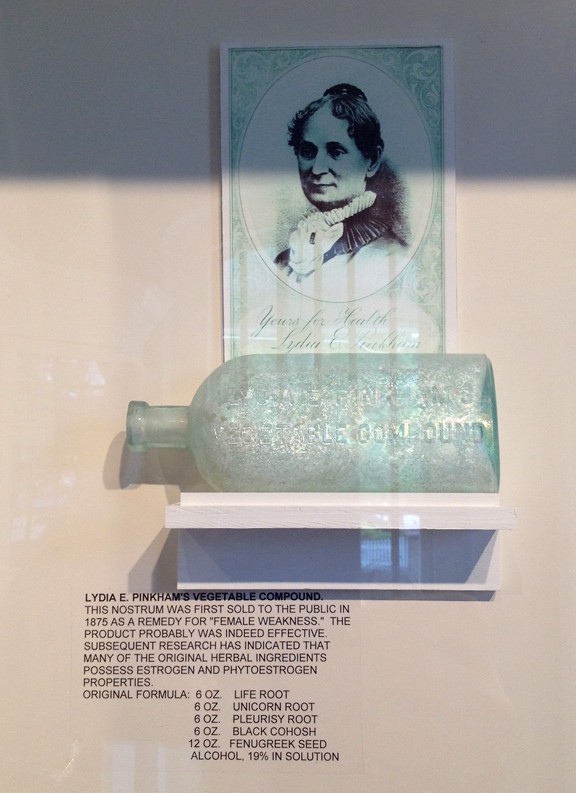
Lydia E. Pinkham’s Vegetable Compound
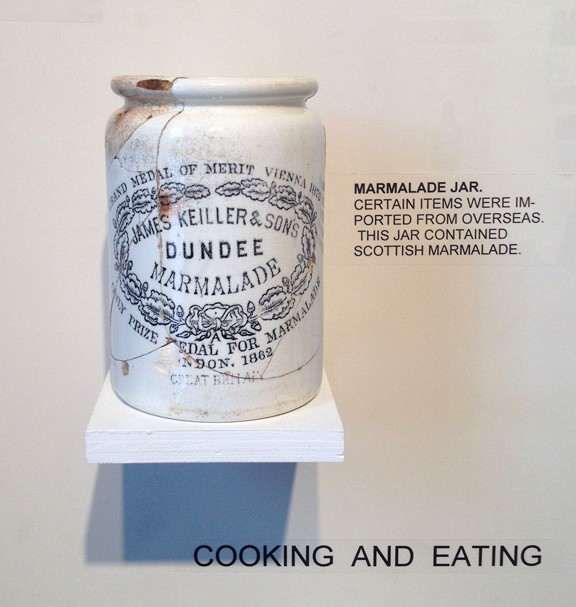
Scottish Marmalade Jar
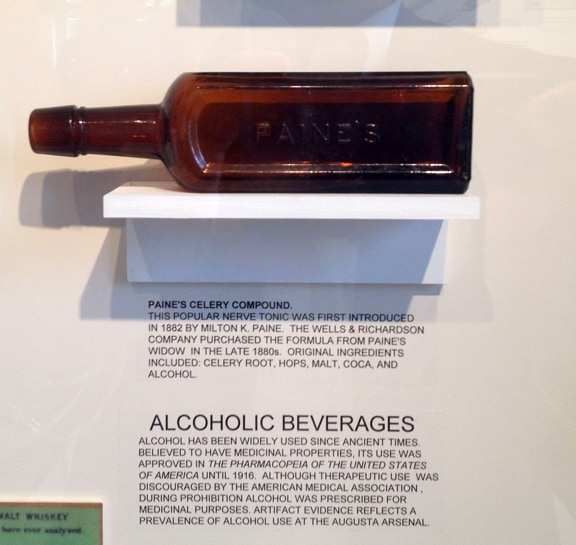
Paine’s Celery Compound
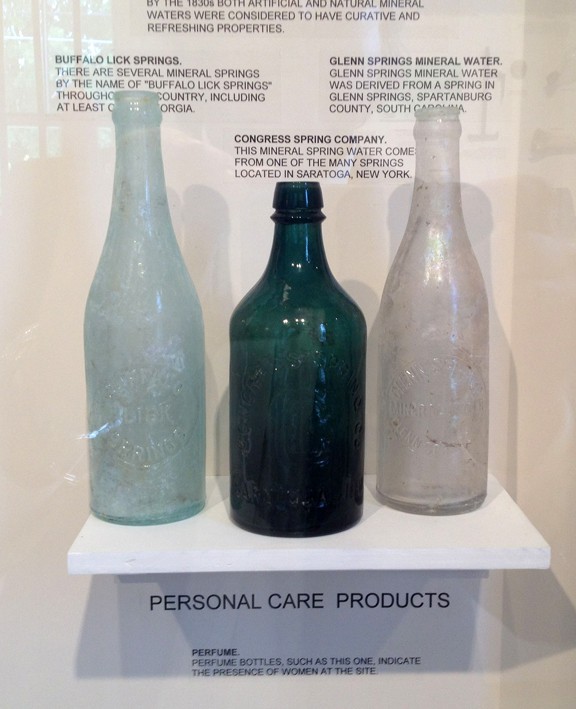
Buford Lick Springs, Congress Spring Company & Glenn Springs Mineral Water
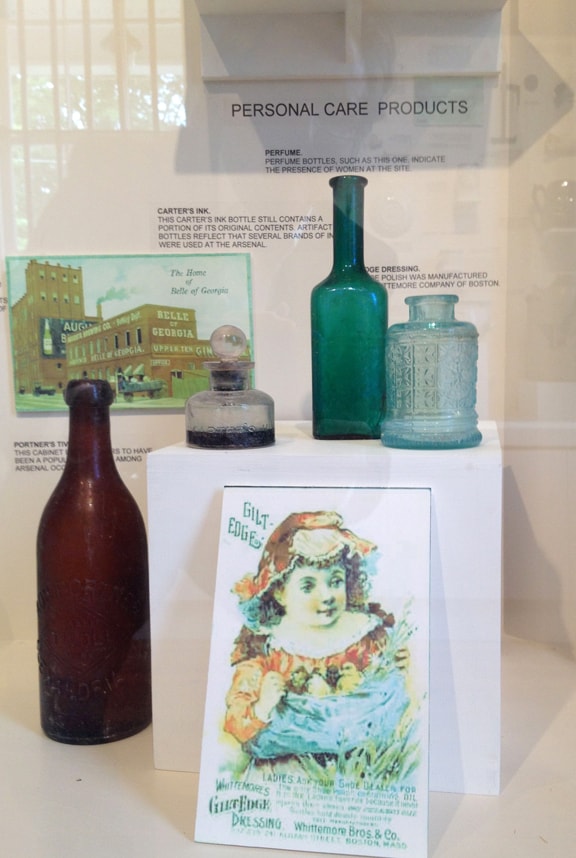
Personal care products including Carter’s Ink
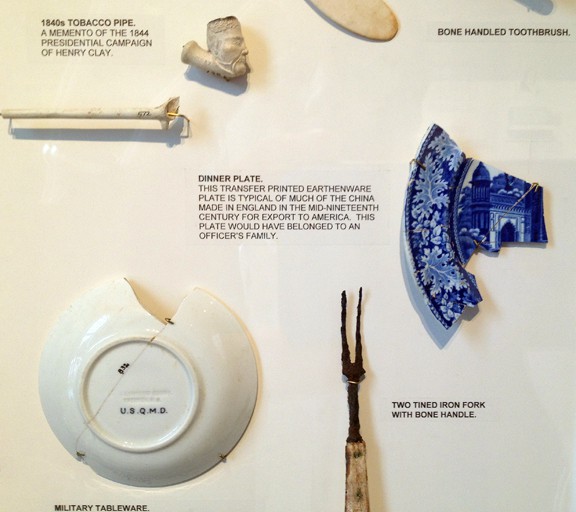
Military Tableware found on site
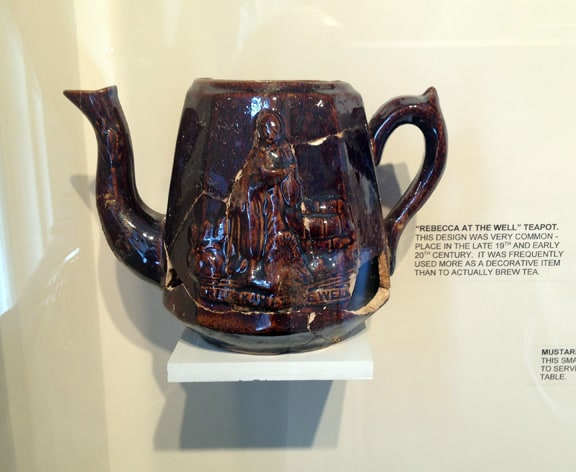
“Rebecca at the Well” Teapot

Related Posts on Augusta collectors and rare Augusta bottles

Read More: Bill & Bea Baab Visit in Augusta

Read More: 2 XR Augusta and Charleston Square Bitters Spotted

Read More: Mike Newman Bottles – Upstairs Sodas

Read More: Mike Newman Bottles – Upstairs Flasks

Read More: Mike Newman Bottles – Downstairs
Posted in Civil War, Digging and Finding, History, Medicines & Cures, Museums, Stoneware, Utility Bottles | Tagged , , , , , , , , , | Leave a comment

Umbrella Inks in the News

Umbrella Inks in the News

17 April 2012 (R•091515)

Apple-Touch-IconAUmbrella Inkwells have been in the news lately with the announcement of the FOHBC Reno Expo 2012 shoot-out including Drakes Plantation Bitters, Circle Cutter Whiskies and Umbrella Inks. Read Further: Shoot-out Update – FOHBC Reno Expo 2012. There has also been some great pictures posted on the Bottle Collectors facebook page by John April that have been simply stunning.
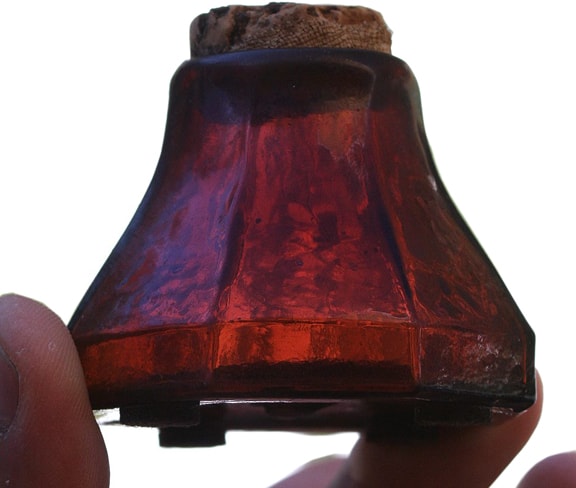
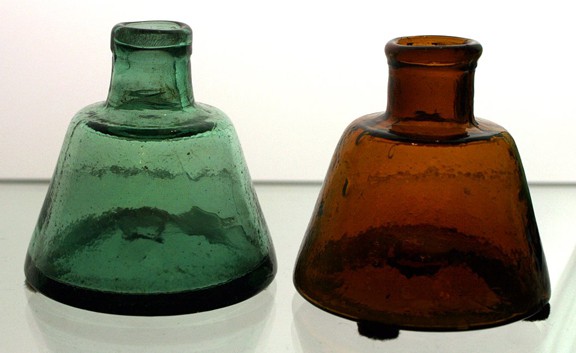
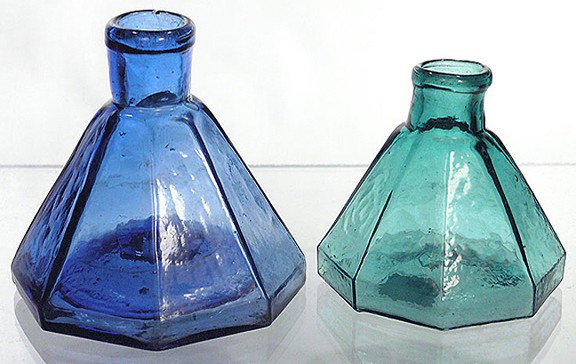
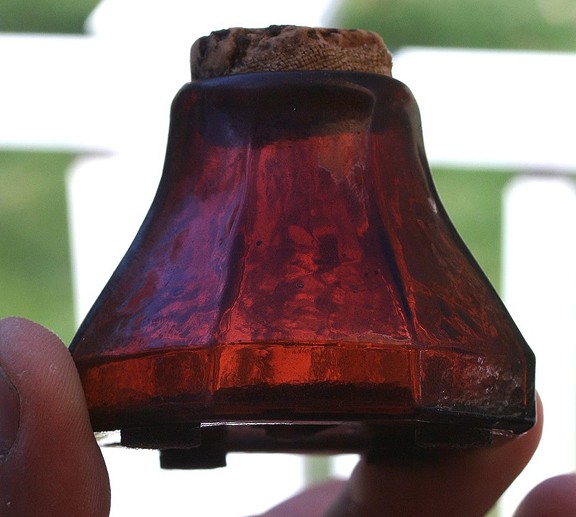
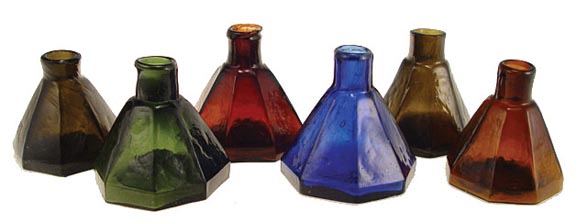
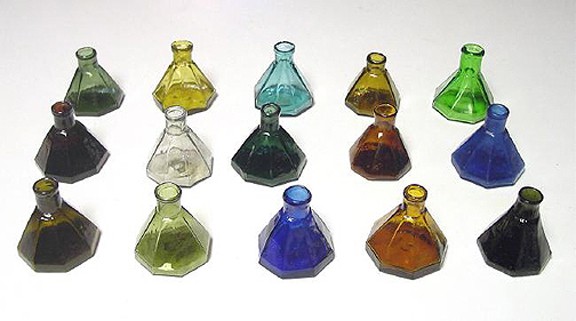
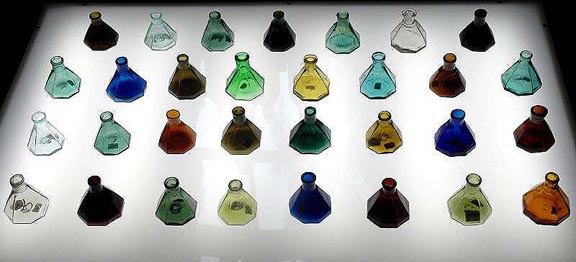
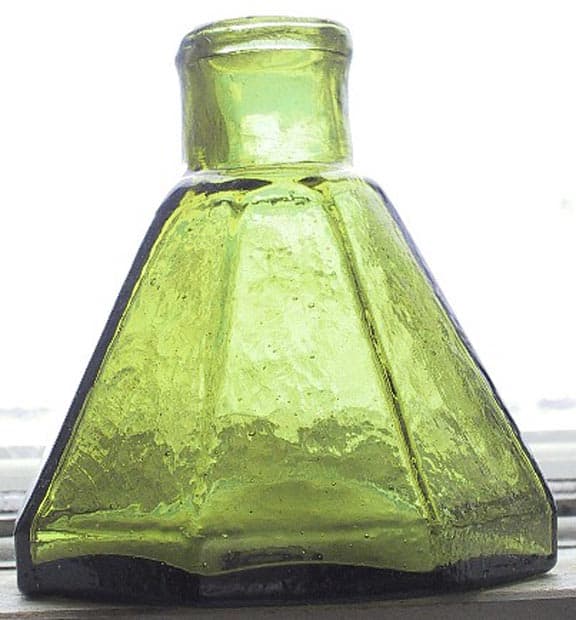
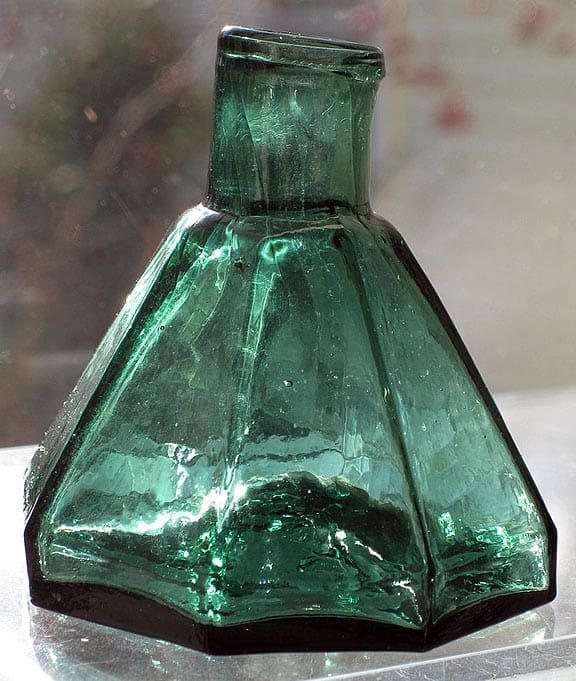
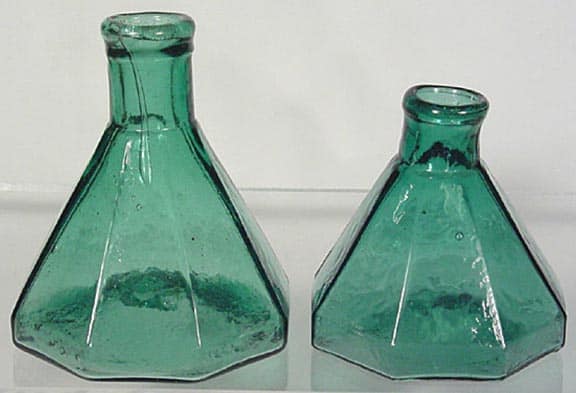
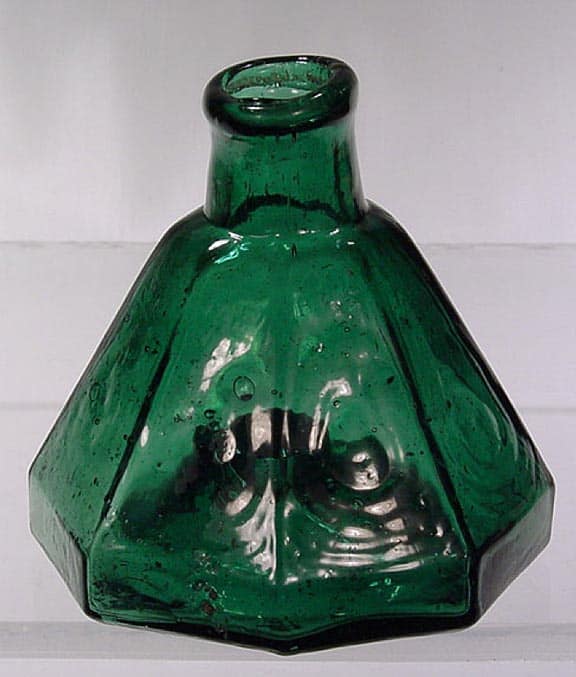
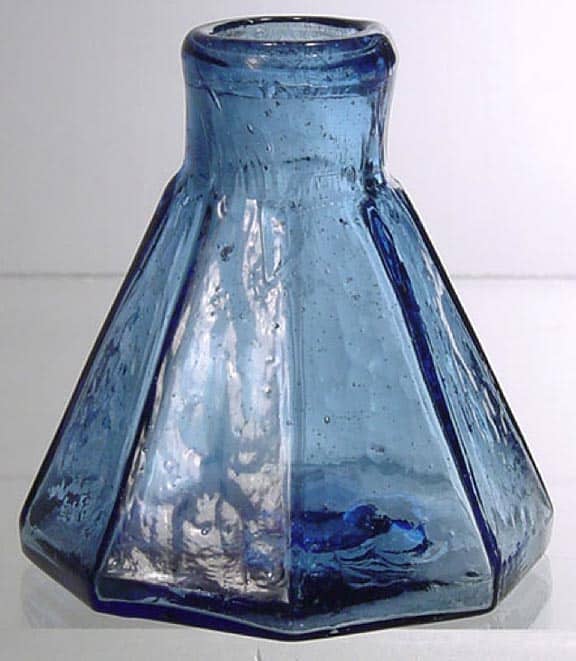
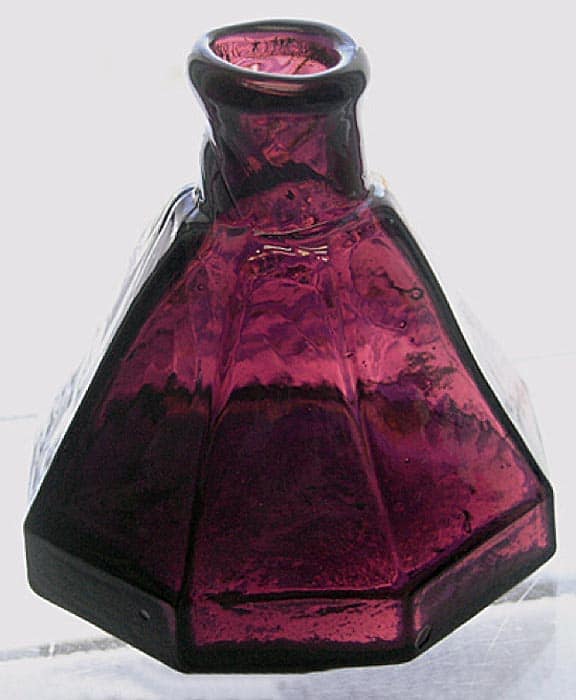
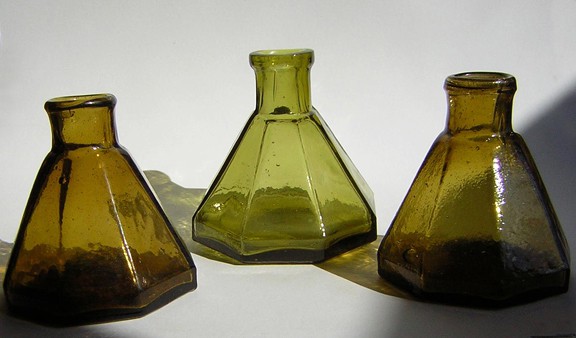
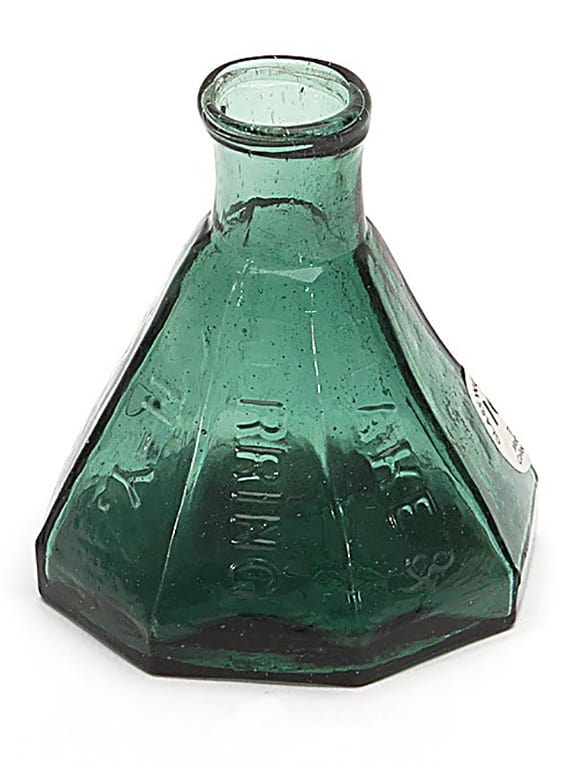
Always a crowd and collector favorite, Umbrella Inkwells are typically a “fluted-cone stand”, with eight connecting panels to form the sides. They were used from the 1820’s to 1880’s. The pontiled and smooth base Umbrella Inks come in many fantastic colors and are some of the most sought-after inks by collectors.
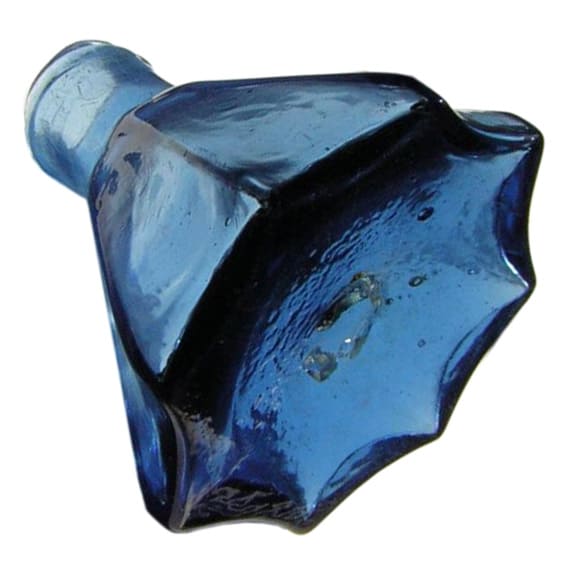
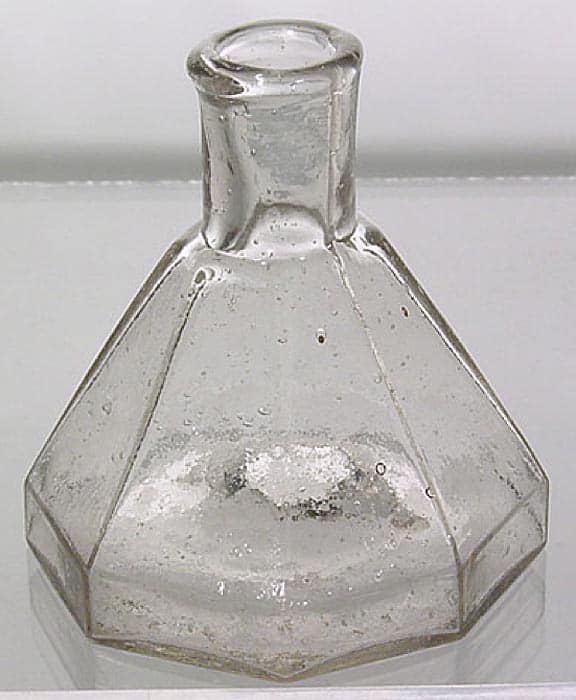
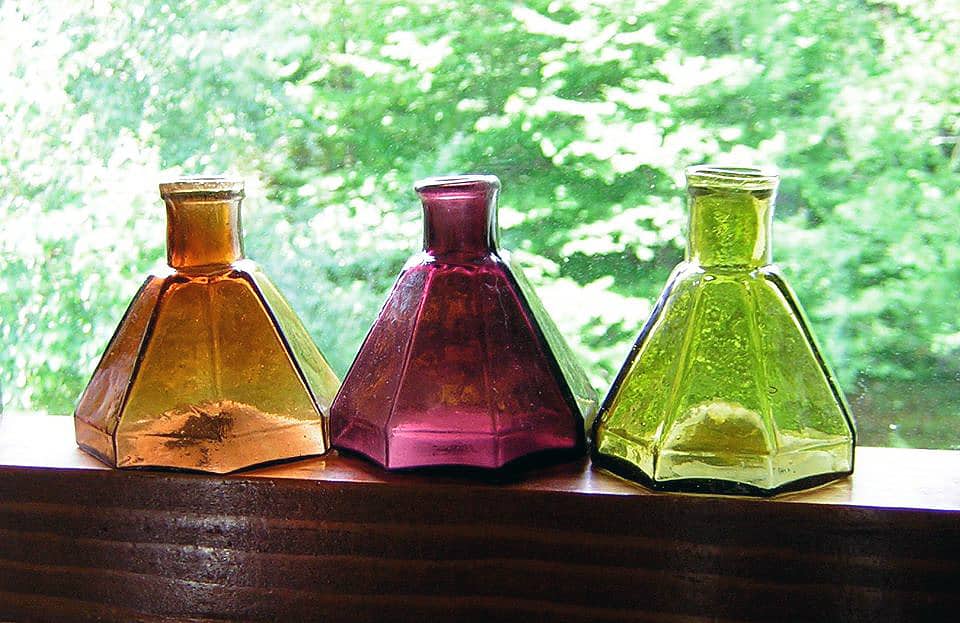
The Umbrella Inks come in a assortment of types. While most are eight sided, others can be twelve, sixteen, 
ten, or even six sided. These inks are rarely embossed. Most umbrella ink bottles are found in a light blue-green color called aqua. Assembling the many different colors can be quite a challenge. The available mineral (coloring agent) was limited. Bottles would only come in various shades of green, yellow, amber, clear, blue, and sometimes, but rarely amethyst. Finding all these different color variations can be quite a challenge. Some ink bottles even had the ink company name embossed on the side which would add to its rarity, as this would involve another step in the mold making process and not often done. Paper labels were applied instead, a much simpler and cheaper production process.

I have compiled some pictures from dealers, collectors and other sources for your enjoyment and comparison.

Nice color run of Umbrella Inks

Umbrella Ink collection – Southeast Bottle Club 2005 – Mike Newman

Cov #137, Giant Umbrella Inkwell, medium cobalt blue, deep tubular Open Pontil, 3 1/8″ high. Extremely rare with only a few known examples in a blue color, America, circa 1840 to 1850. Previously sold by GreatAntiqueBottles.com (Ed and Kathy Gray)

Left to Right – open pontil purple/wine type tone, pink 12 sided op, op puce ink and a smooth based lilac purple that looks like watered down welch’s grape juice – John April

Umbrella Ink in citron green – Antique Ink Bottle Hall of Fame

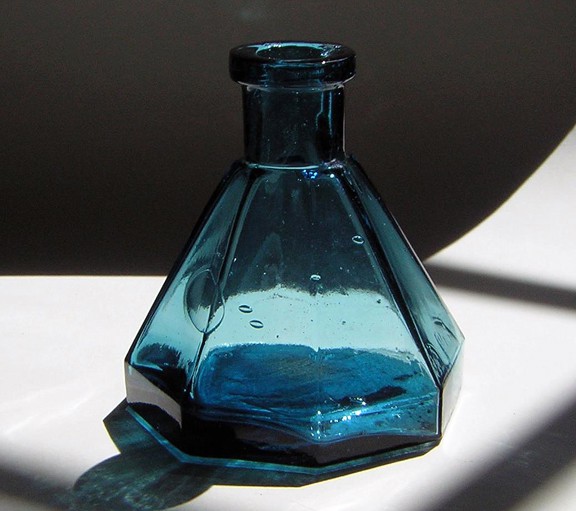
Umbrella Ink, medium to deep teal green, octagonal, pontil scar, 2 5/8″H, inwardly rolled mouth, mint. American, C. 1850 – photo Jeff & Holly Noordsy

Smooth based umbrella ink in a peacock / prussian blue type color – John April

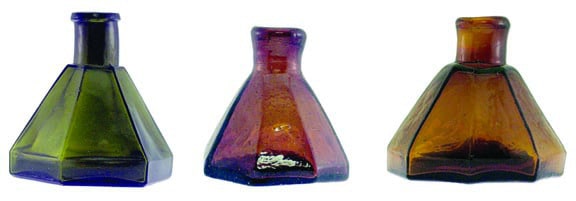
Three Umbrella Inks – Meyer Collection

Open pontil puce umbrella – John April

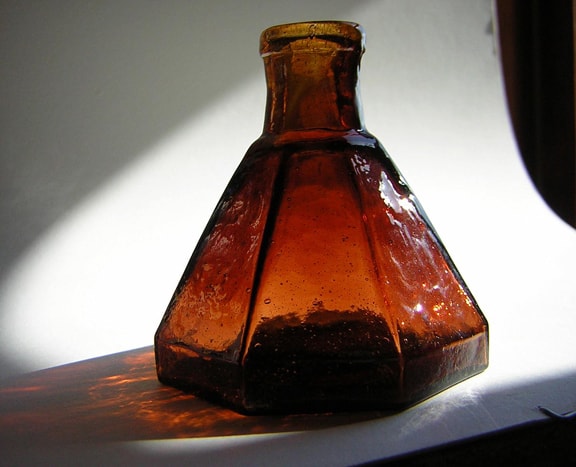
Umbrella Ink, golden amber, octagonal, pontil scar, 2 ¼”H, inwardly rolled mouth, mint. New England, probably blown at a Stoddard Glass Works, Stoddard, NH, C. 1850 – photo Jeff & Holly Noordsy

Very rare, large Umbrella Ink with long neck in a rich, blue green color – GreatAntiqueBottles.com

Similar to Cov #143, deep emerald green, open tubular pontil – GreatAntiqueBottles.com

Cov #139 – Umbrella Inkwell with 8 concave sides – GreatAntiqueBottles.com

Eight sided Umbrella Ink in sapphire blue – GreatAntiqueBottles.com

Umbrella Inkwell in a deep amethyst – GreatAntiqueBottles.com

Green Umbrella Inks – John April

Very rare clear Umbrella Inkwell with an open pontil – GreatAntiqueBottles.com

Some fruity Umbrella Inks – John April

Blake&Herring

Lot: 6 “Blake & / Herring / N-Y.” Umbrella Inkwell, America, 1840-1860. Octagonal, medium blue green, inward rolled mouth – tubular pontil scar, ht. 2 7/8 inches, greatest dia. 2 3/4 inches. Similar in form and construction to C #137 Rare size and embossing. Beautiful bright color. Fine condition. Ex Robert Mebane collection. – Heckler Auction 128

Posted in Bottle Shows, Collectors & Collections, Color Runs, Facebook, FOHBC News, Inks | Tagged , , , , , , , , | 1 Comment