A. Vogeler & Company, Baltimore, Md. – March 1881 Scientific American Illustrations

V_ArticleSpread

A. Vogeler & Company, Baltimore, Md. March 1881 Scientific American Illustrations

AMERICAN INDUSTRIES – No. 68

PROPRIETARY SPECIALTIES

13 January 2014

Apple-Touch-IconAYesterday, while working on the post for the wholesale druggist, A. C. Meyer & Company in Baltimore, Maryland, I became pretty impressed and interested in the company that Adolph C. Meyer joined, partnered with and eventually took over, that being A. Vogeler & Company.

ScientificAmericanMasthead

August Vogeler was born in Minden, Germany in 1819, and emigrated to the United States to Baltimore when 20 years old and entered the employ of the wholesale drug firm Smith & Atkinson. Five years later he established the firm of A. Vogeler & Company manufacturing drugs and chemicals and eventually built up a drug business and manufactured products such as St. Jacob’s Oil, Dr. August Koenig’s Hamburg Drops, Koenig’s Hamburg Breast Tea, Diamond Vera-Cura and Dr. Bull’s Family Medicines.

Vogeler & Company was located for a long period of time at Liberty and German Streets in Baltimore City and had an impressive multi-block operation. Charles A. Vogeler, August’s son, grew the business and was one of the pioneers of progressive patent medicine advertising and employed many novel schemes. Another son, Jerome Vogeler was also engaged in the drug business. Previously, in 1873, August Vogeler acquired the medicinal compounds of Reverend Dr. Bull (not the Dr. Bull in Louisville). Eventually in 1877, with the help of his partner, Adolph Meyer, the company promoted and sold Dr. Bull’s Family Medicines until shortly after the death of Charles Vogeler in 1882. In 1883, A. C. Meyer purchased all interests of his Vogeler partners and remained in business until his death 0n 4 February 1914.

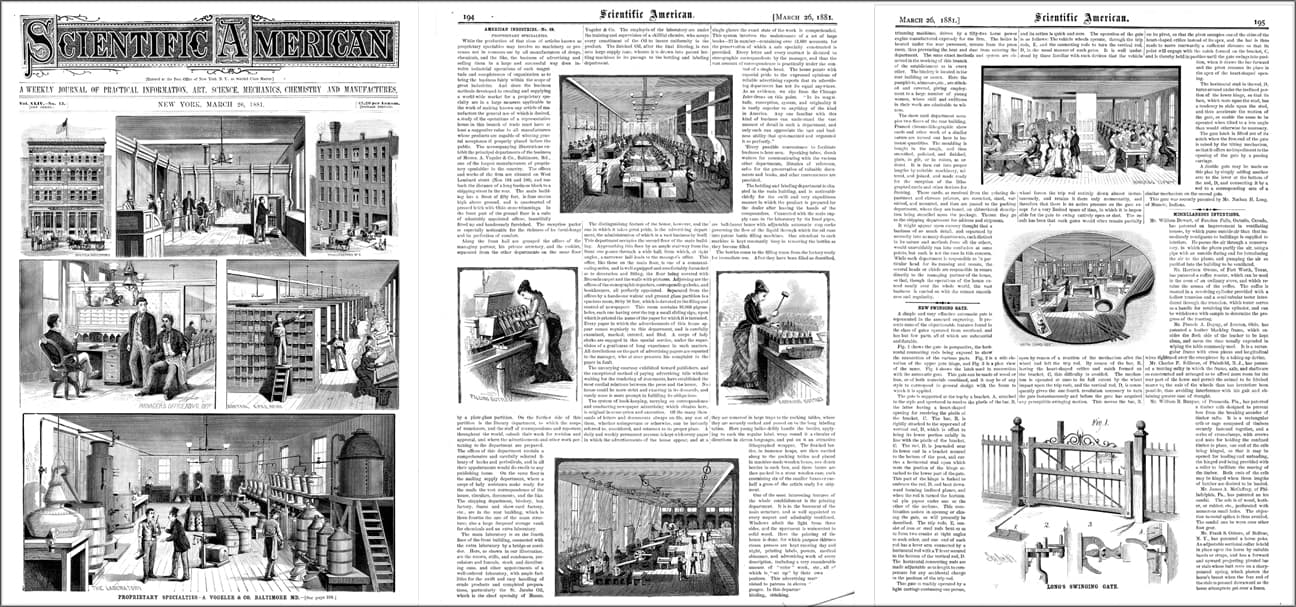
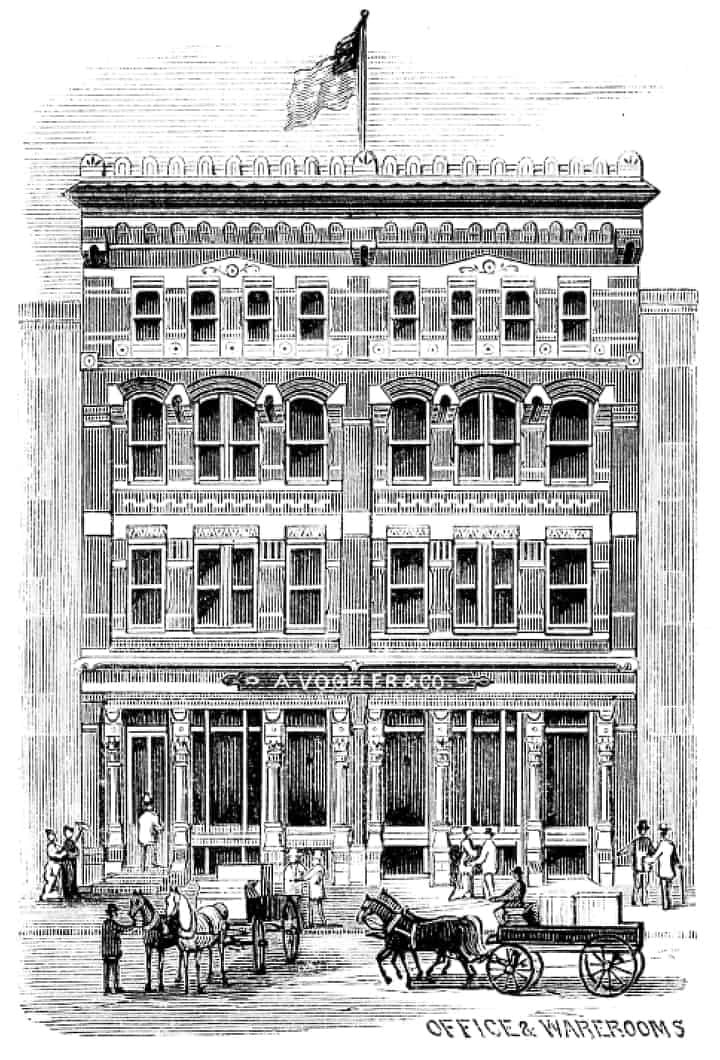
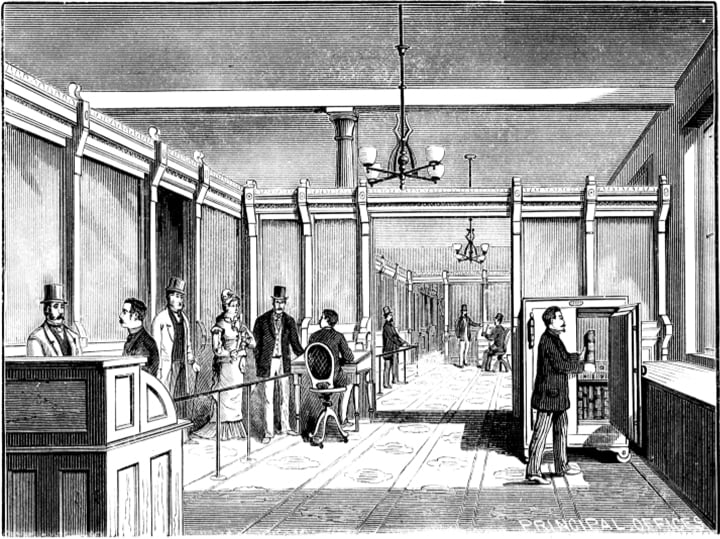
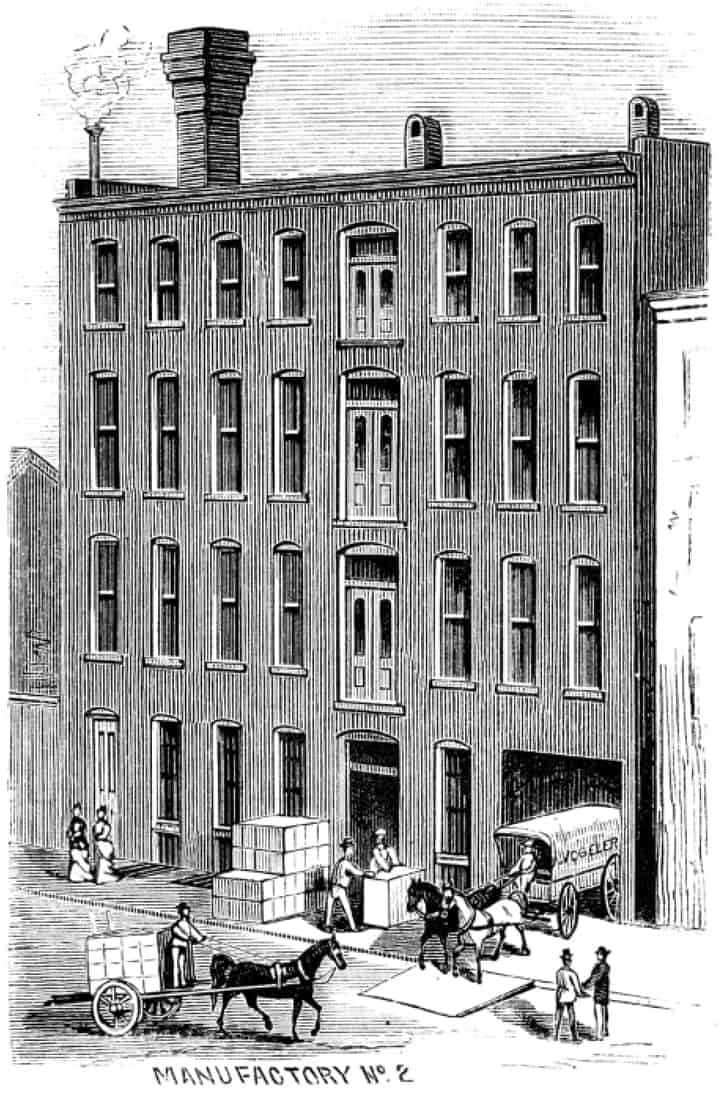
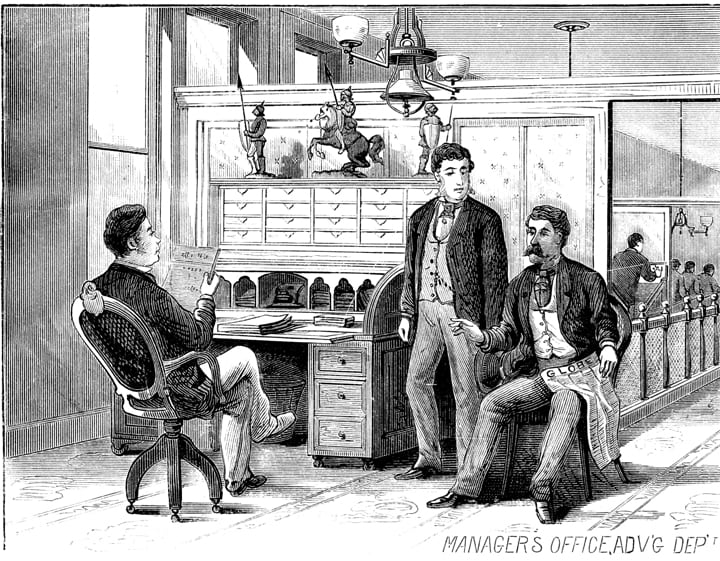
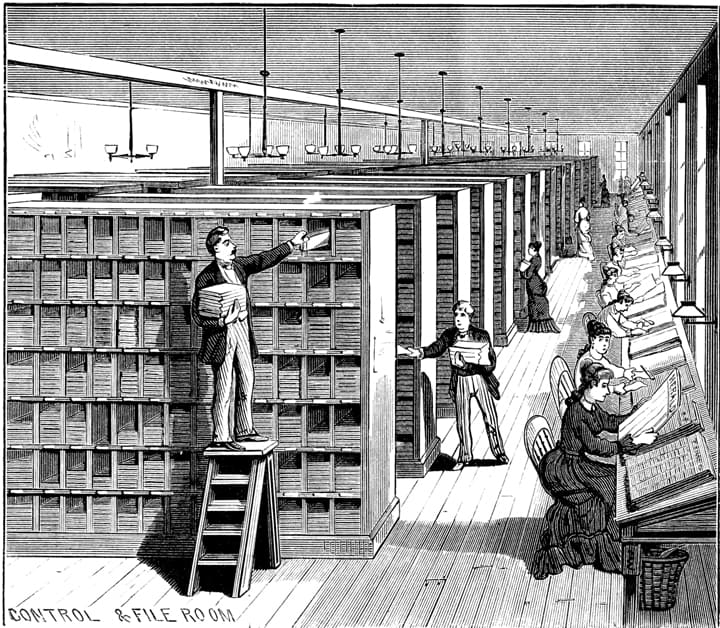
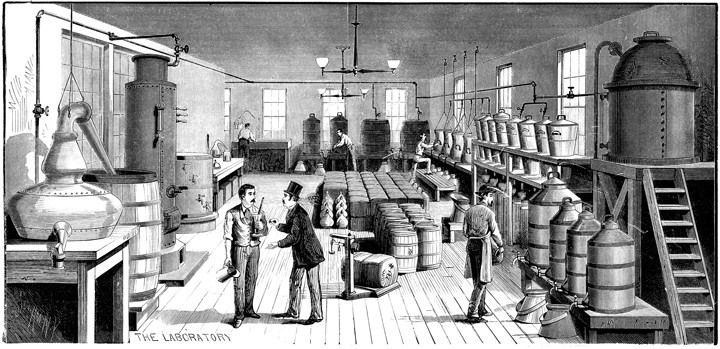
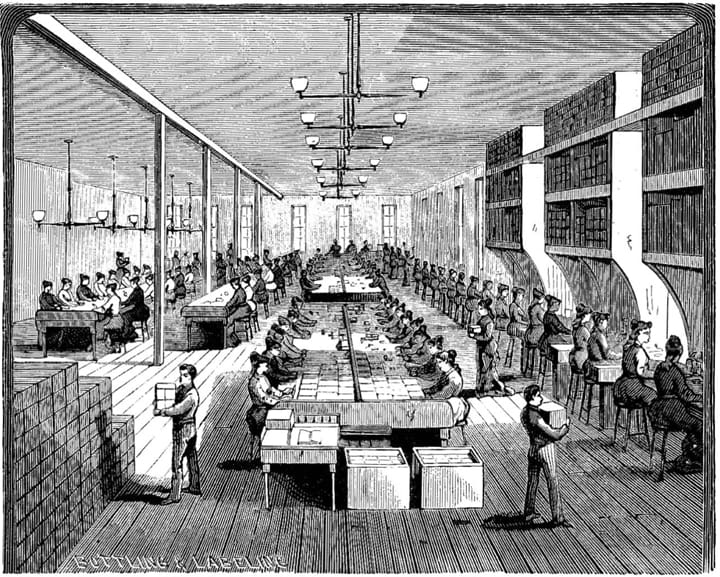
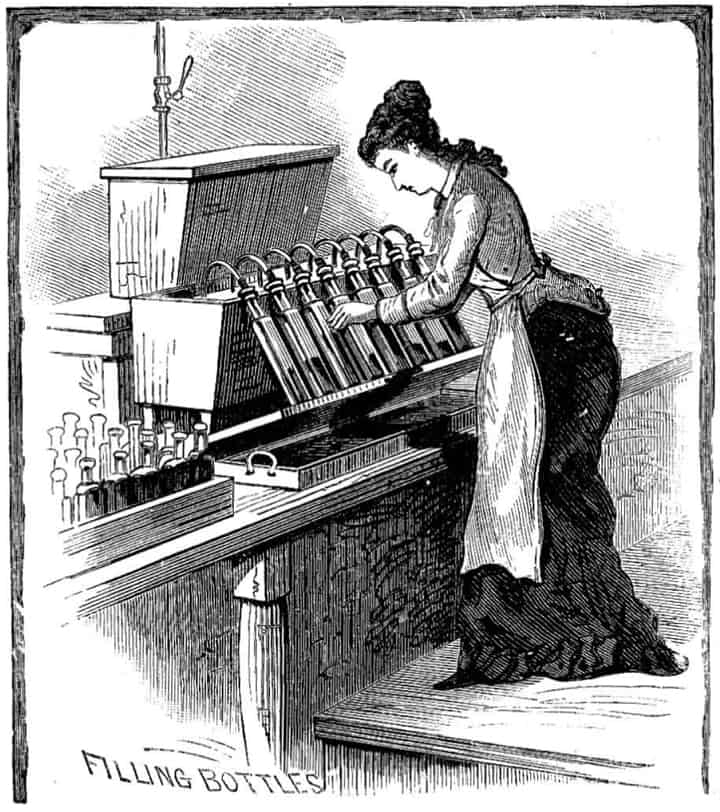
I was able to locate, purchase for download and read a wonderful article within the 26 March 1881, Scientific American that, as the article puts it, had a “series of illustrations exhibiting the principal departments of Messrs. A. Vogeler & Co., Baltimore, Md., one of the largest manufacturers of proprietary specialities in the country.”

Read Article: 

AMERICAN INDUSTRIES – No. 68 – PROPRIETARY SPECIALITIES – Page 4

AMERICAN INDUSTRIES – No. 68 – PROPRIETARY SPECIALITIES – Page 5

V1_OfficeElevation

A. Vogeler & Co. – Office & Warerooms – Scientific American, 26 March 1881

V2_PrincipalOffices

A. Vogeler & Co. – Principal Offices – Scientific American, 26 March 1881

V3_Manufactory#2

A. Vogeler & Co. – Manufactory No. 2 – Scientific American, 26 March 1881

V4_ManagersOffice

A. Vogeler & Co. – Managers Office, Advertising Department – Scientific American, 26 March 1881

V5_File&ControlRoom

A. Vogeler & Co. – Control & File Room – Scientific American, 26 March 1881

V6_Laboratory

A. Vogeler & Co. – The Laboratory – Scientific American, 26 March 1881

V7_Bottling&Labeling

A. Vogeler & Co. – Bottling & Labeling – Scientific American, 26 March 1881

V8_FillingBottles

A. Vogeler & Co. – Filling Bottles – Scientific American, 26 March 1881

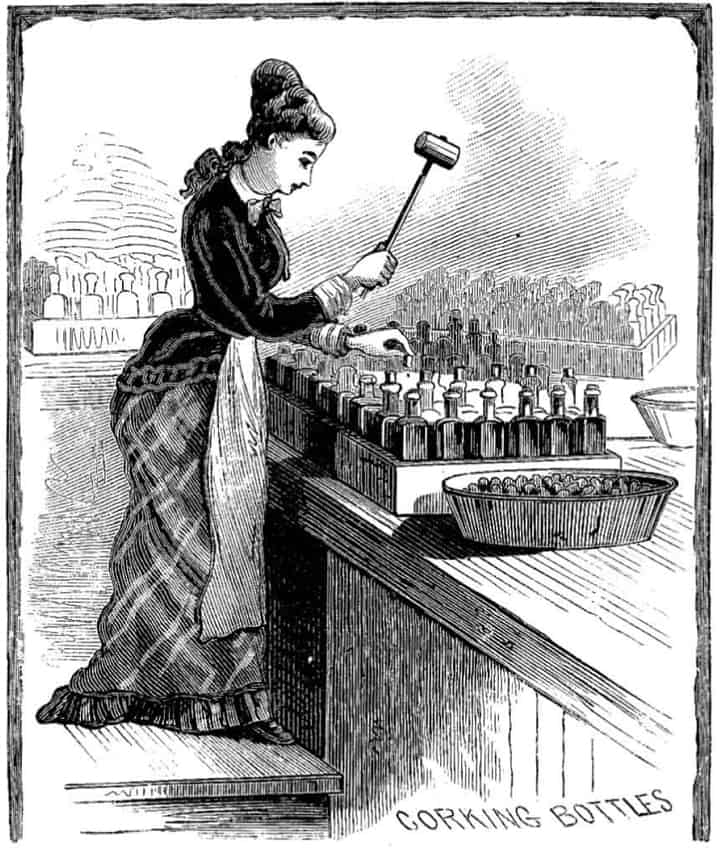
V9_CorkingBottles

A. Vogeler & Co. – Corking Bottles – Scientific American, 26 March 1881

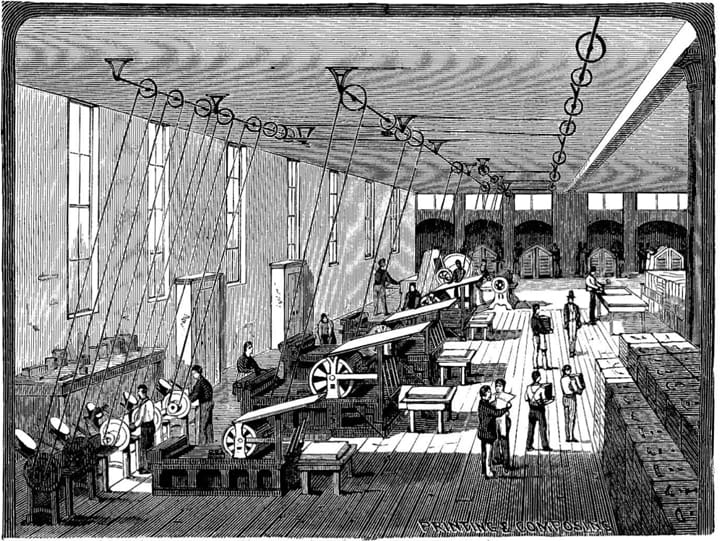
V10_Printing&Composing

A. Vogeler & Co. – Printing & Composing – Scientific American, 26 March 1881

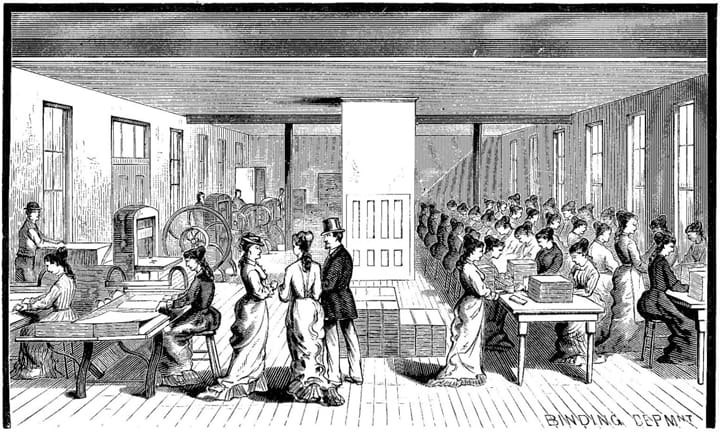
V11_BindingDept

A. Vogeler & Co. – Binding Department – Scientific American, 26 March 1881

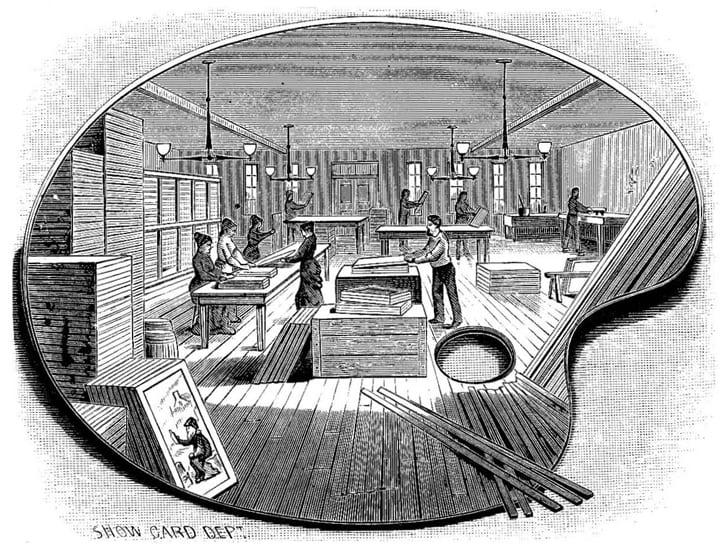
V12_ShowCardDept

A. Vogeler & Co. – Show Card Department – Scientific American, 26 March 1881

Posted in Art & Architecture, Article Publications, Bottling Works, Druggist & Drugstore, History, Medicines & Cures, Technology | Tagged , , , , , , , , , | Leave a comment

New bottle club in Wisconsin!

WisBotClubHeader

Hello Ferdinand,

In the frozen tundra up here in Wisconsin we are starting a NEW club. We tried for the better part of a two years to create value and bring in new members. We reached an all time high of membership in the Milwaukee Antique Bottle and Advertising Club last year with incredible ankle biting the whole way. It took new value, new events, new members and a ton of energy. That is more than a lot of people wanted. We love the hobby and most of the people…change had to come.

So, Jon Steiner Jr. decided to start a new club founded on inclusion, promoting the hobby, sharing information and welcoming new people in. He and I, with a few others, were the driving force taking the old club from ten members to 53. Obviously, I am joining with Jon as are at least a couple of dozen others.

This is only a temporary site until we finish and put the site live. Still, there is an interesting feature I think you and all collectors will love. It’s called Spinners. See Link to Site & Spinners. Love to know what you think of the Spinners. We will be adding them all the time. Use Firefox to see them. The site is not universally browser complaint yet.

Does the Federation, by chance, have a standard set of bylaws we can work from?

Excited to build the biggest, most energetic and positive bottle club in the country!

Steven R. Libbey

Wisconsin Antique & Advertising Club Member

FOHBCVirtualMuseumLogo

Apple-Touch-IconASteve and I have talked and corresponded about his new club and all of the exciting things that are planned. He definitely understands the new direction of our hobby and our audience of younger and more technology driven collectors. I have even joined as a Wisconsin bottle club member myself and look forward to being part of and watching closely the clubs development.

As the project manager and designer of the FOHBC Virtual Museum of Historical Bottles and Glass, I have had my eye on emerging technology on how to display bottles. I was also on the verge of purchasing software to use to create spinners. See 3D Rotate Tool. It looks like Steve and I may be working together to further this massive project which will be an anchor for growth, new membership and new direction in our hobby. Please stay tuned as I believe there will be a Virtual Museum announcement within the coming weeks of major importance.

I also wanted to answer Stevens question, “Does the Federation, by chance, have a standard set of bylaws we can work from?” Yes, it does, please follow this link FOHBC Bylaws and this link to the FOHBC Code of Ethics.

Posted in Advice, Club News, Display, FOHBC News, Museums, News | Tagged , , , , , , , , , | 1 Comment

So who is A. C. Meyer?

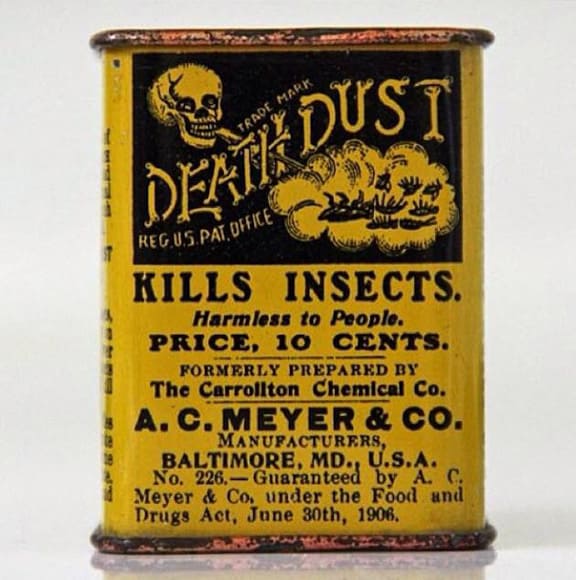
MeyerDeathDust

Death Dust sold by A. C. Meyer & Co., Baltimore, Maryland

So who is A. C. Meyer?

12 January 2014 (R•012514 – Salvation Oil Trade Card added)

Apple-Touch-IconAI have wondered before, with the last name Meyer, and being from Baltimore, if I was related in any way to A. C. Meyer who was a druggist in Baltimore. I have seen bottles, fielded questions and generally just scratched my head when the topic came up. I have done some pretty deep ancestry research with my family and I have not found the connection but I am reasonable sure it is there. That is another story. The other day I started thinking about A. C. Meyer again when Collectors Weekly posted the above image of A. C. Meyer’s Death Dust. “Harmless to People”. Uh roger that, Adolph.

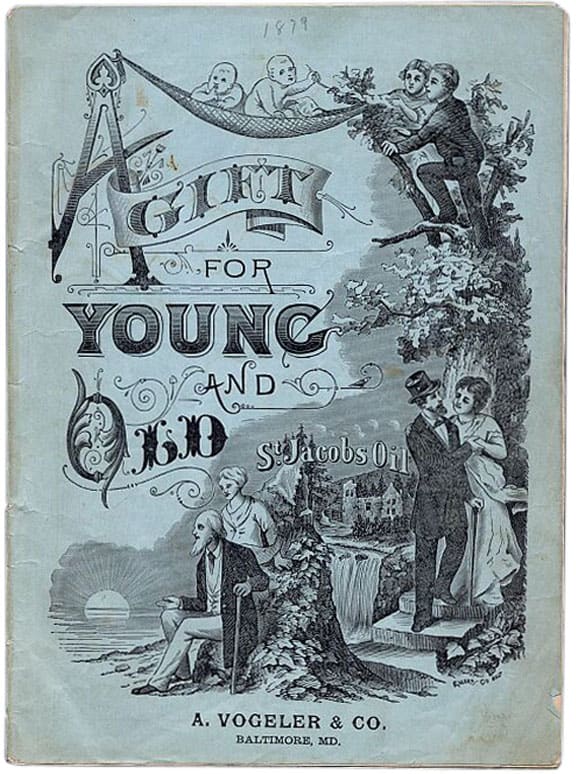
VogelerStJacobs

A Gift for Young and Old, St. Jacob’s Oil, A. Vogeler & Co., Baltimore, Maryland –  rdhinstl.com

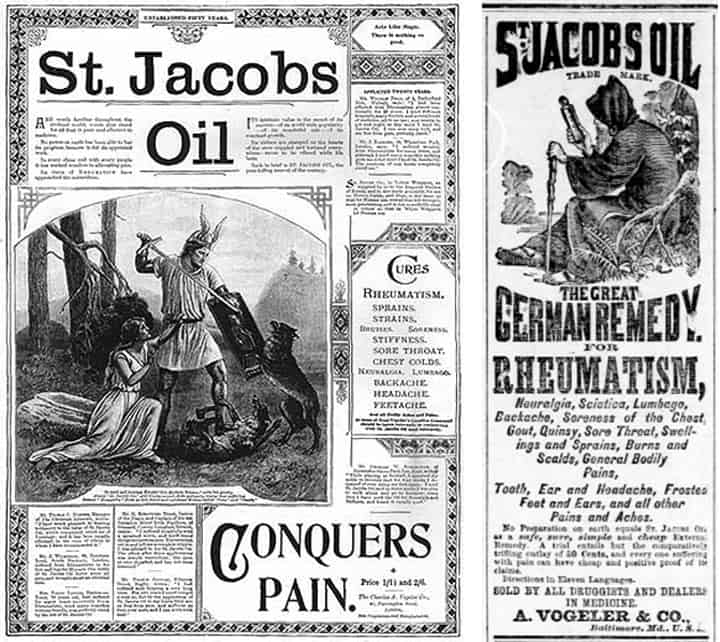
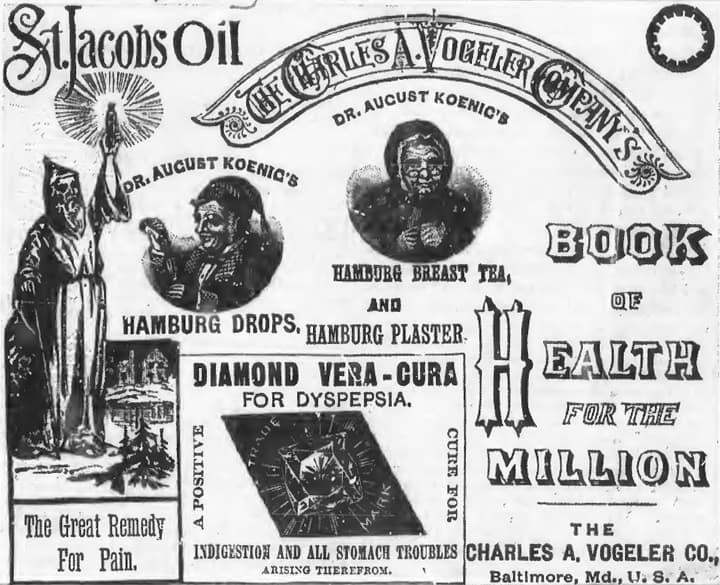
The drug story with A. C. Meyer starts with August Vogeler who was born in Minden, Germany in 1819, and emigrated to the United States to Baltimore when 20 years old and entered the employ of the wholesale drug firm Smith & Atkinson. Five years later he established the firm of A. Vogeler & Company manufacturing drugs and chemicals and eventually built up a drug business and manufactured products such as St. Jacob’s Oil (see above and below) and Dr. August Koenig’s Hamburg Drops, Koenig’s Hamburg Breast Tea, Diamond Vera-Cura and Dr. Bull’s Family Medicines which will be addressed further below.

StJacobs_Advert2

St. Jacob’s Oil advertisements – Left from Illustrated London Times, Right from Sacramento Daily Union, 31 August 1882

CharlesAVogelerAd

Charles A. Vogeler & Company advertisement – The Charles A. Vogeler Company’s book of health for the million, 1889

Vogeler & Company was located for a long period of time at Liberty and German Streets in Baltimore City. Charles A. Vogeler, August’s son, grew the business and was one of the pioneers of progressive patent medicine advertising and employed many novel schemes. Another son, Jerome Vogeler was also engaged in the drug business.

VogRev

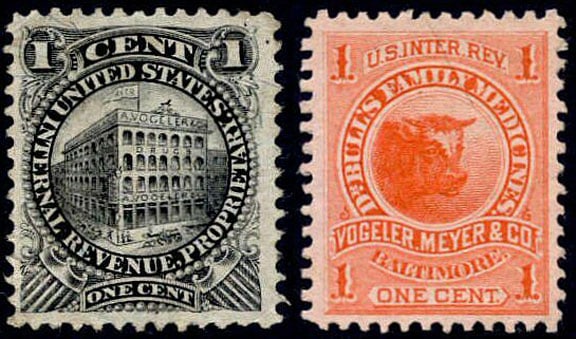
The one-cent black stamp (left) for A. Vogeler & Company was issued from June of 1874 until May 3, 1883. The Vogeler, Meyer private proprietary was issued from 1877 until April 6, 1883. A bull’s head was chosen to be on the stamp representing Dr. Bull’s Family Medicines. – rdhinstl.com

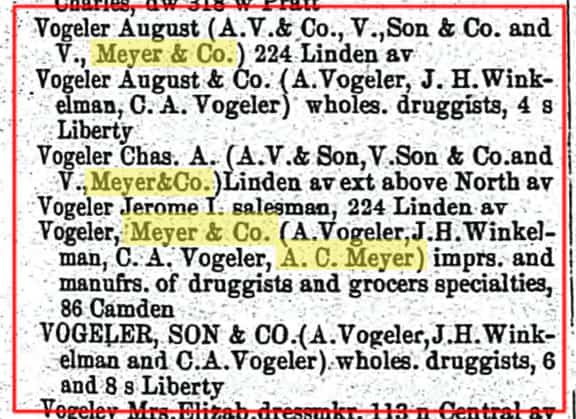
Adolph Carl Meyer, our “A. C.” was born in Bremen, Germany (where my family came from) on 31 May 1852 and emigrated to the United States in 1869. On 16 May 1877, Adolph married Florence Emily Jacobina Stellman. There was eventually an Adolph Jr. who worked with his father as he shows up in 1900 and later directory listings. In his early business years in Baltimore, Meyer was listed as a clerk, presumable at a drug store and probably Vogelers. During this time, he became a friend and business associate of Charles Vogeler, August’s Vogeler’s son. From 1878 to 1883, Vogeler and Meyer had various business relationships and were primarily wholesale druggists and importers and manufacturers of druggists and grocers specialities. The directory listing below certainly represents the various relationships.

ACM_Mess

Typical City of Baltimore Directory listing showing various business listings for Vogeler and Meyer.

Previously, in 1873, August Vogeler acquired the medicinal compounds of Reverend Dr. Bull (not the Dr. Bull in Louisville). Eventually in 1877, with the help of his partner, Adolph, the company promoted and sold Dr. Bull’s Family Medicines until shortly after the death of Charles Vogeler in 1882.

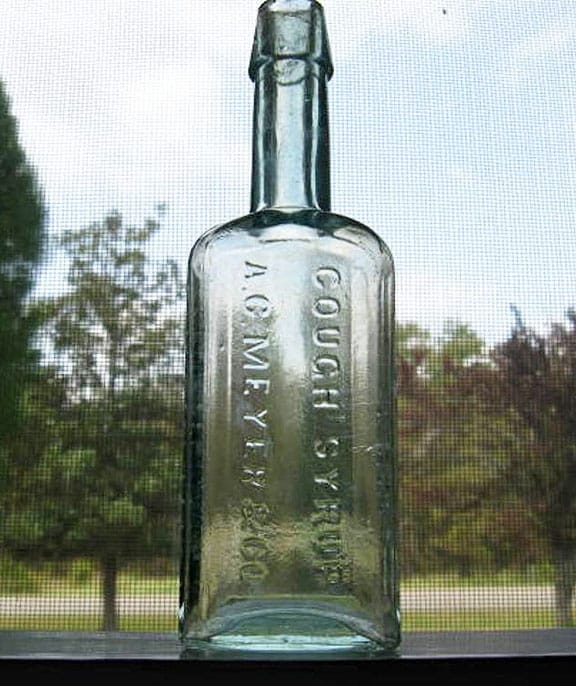
MeyerCoughSyrupBottle

DR. J. W. BULL`S on right side. COUGH SYRUP. A. C. MEYER & CO. on front panel. BALTIMORE MD, U.S.A on left side. Almost 6″ tall, BIM tooled Sloping Collar. – bottlediggers

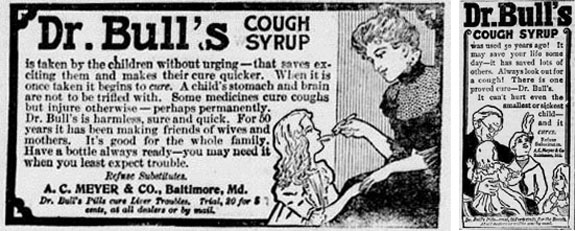
DrBullsCoughSyrup2

Two Dr. Bull’s Cough Syrup advertisements emphasizing the appropriateness of the medicine for children.

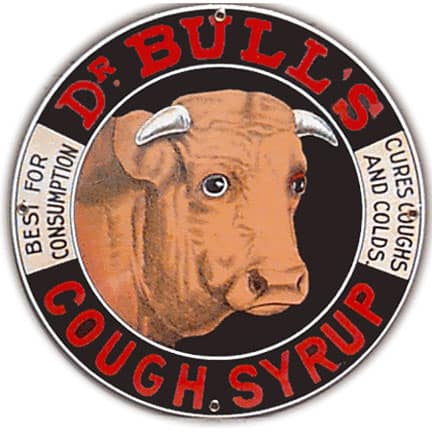
drbullssignThe Dr. Bull acquisition included a cough syrup, Compound Pectoral, Pain Drops, and a blood mixture. While newspaper advertisements claimed that Dr. Bull’s was gentle and affective for children, The Great American Fraud: Articles on the nostrum evil and Quackery reprinted from Collier’s (October 1905) asserted that Dr. Bull’s original formula contained morphine (later replaced by codeine) resulting in several deaths. In follow-up advertisements around 1900, the safety of Dr. Bull’s was continually emphasized in illustrations of children receiving the medicine. A picture of a young mother giving her little girl Dr. Bull’s reads “A child’s stomach and brain are not to be trifled with. Some medicines cure coughs but injure otherwise-perhaps permanently. Dr. Bull’s is harmless, sure and quick.” Another advertisement shows a proud grandfather with his brood of vigorous grandchildren, “It may save your life some day – it has saved lots of others. . . it can’t hurt even the smallest or sickest child—and it cures.”

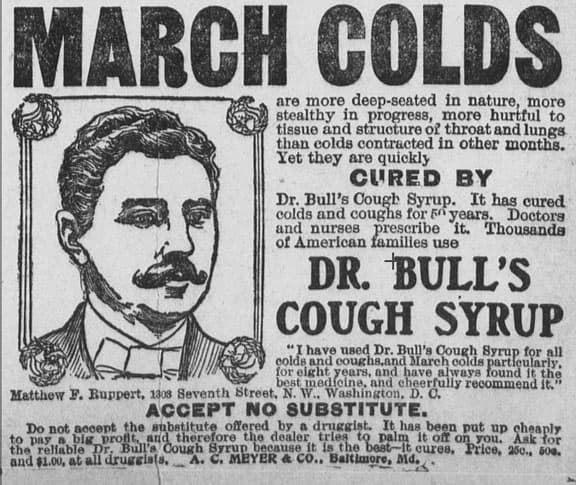
BullsCoughSyrup_LAHerald032106_

a later Dr. Bull’s Cough Syrup advertisement – Los Angeles Herald, March 21, 1906

In 1883, A. C. Meyer purchased all interests of the partners and remained in business until his death 0n 4 February 1914.

DrBullsTC_IA

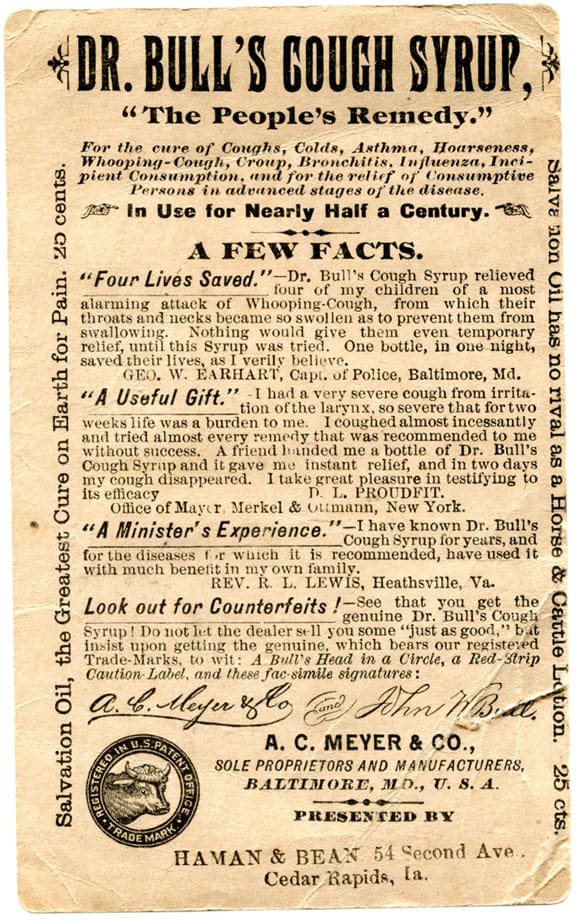
Dr. Bull’s Cough Syrup “The Peoples Remedy” trade card

SalvationOil_Meyer

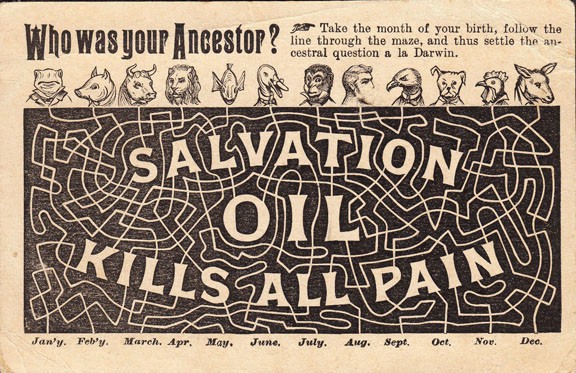
Trade Card front by A. C. Meyer for Salvation Oil – Dave’s Great Cards Galore

Meyers_BellCologneTC

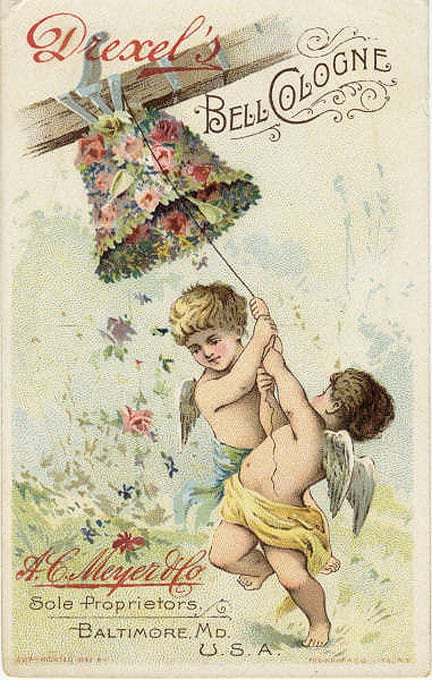
Drexel’s Bell Cologne trade card sold by A.C. Meyer & Co., Baltimore, MD

Meyer_Cover

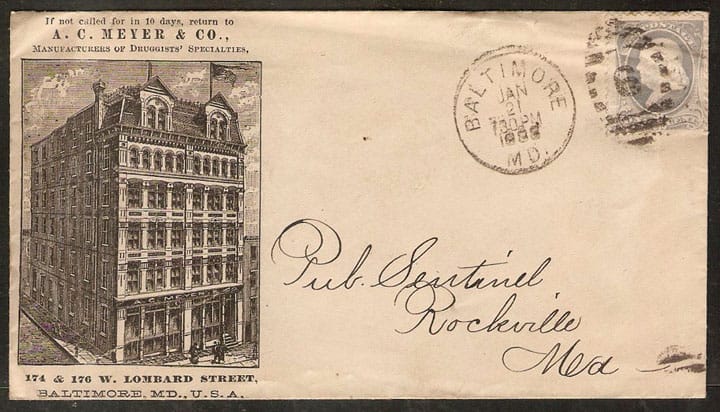
1888 A. C. Meyer Druggist Advertising Cover, Baltimore Maryland to Rockville, Maryland – ebay

Select Milestone Dates: 

1852: Adolph Carl Meyer, born in Bremen, Germany on 31 May 1852

1870 – 1874: Adolph C. Meyer, clerk, 30 n. Greene, Baltimore City Directory

1877: A. C. Meyer & Co. (Adolph C. Meyer), druggists’ and grocers’ specialists, 86 Camden, Wood’s Baltimore City Directory

1877: Marriage to Florence Emily Jacobina Stellman on 16 May 1877

1878 -1883: Various relationships with August Vogeler, wholesale druggist. A. C. Meyer, importer and manufacturer of druggists and grocers specialities (see above)

1883: A. C. Meyer purchased all interests of the partners in 1883

1883 – 1914: A. C. Meyer & Co. (Adolph C. Meyer), druggists’ specialities, 116 & 120 W. Lombard, Son, with same name later work at same company – City Directories for Baltimore

1914: death 4 February 1914, Baltimore, New Cathedral Cemetery

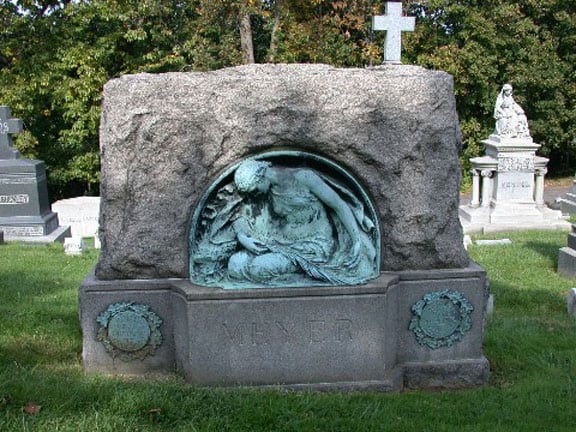
AdolphCMeyerMarker

Adolph Carl Meyer died on 4 February 1914 in Baltimore. Marker at New Cathedral Cemetery pictured

Posted in Advertising, Druggist & Drugstore, Ephemera, History, Medicines & Cures, Poison Bottles, Syrup, Tax Stamps, Trade Cards | Tagged , , , , , , , , , , , , , , , , , , , | Leave a comment

Looking at Austen’s Forest Flower Cologne Ephemera

AFFC_11

Looking at Austen’s Forest Flower Cologne Ephemera

11 January 2014

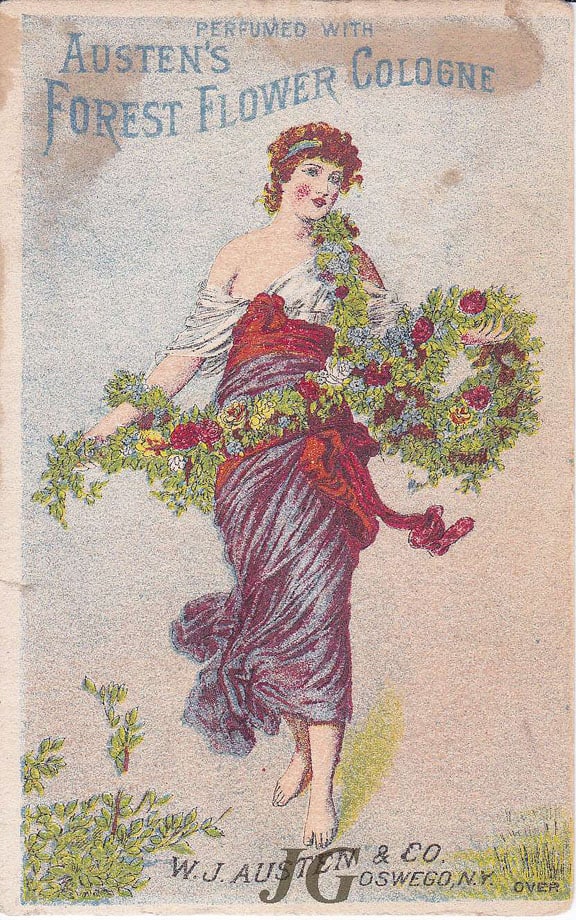
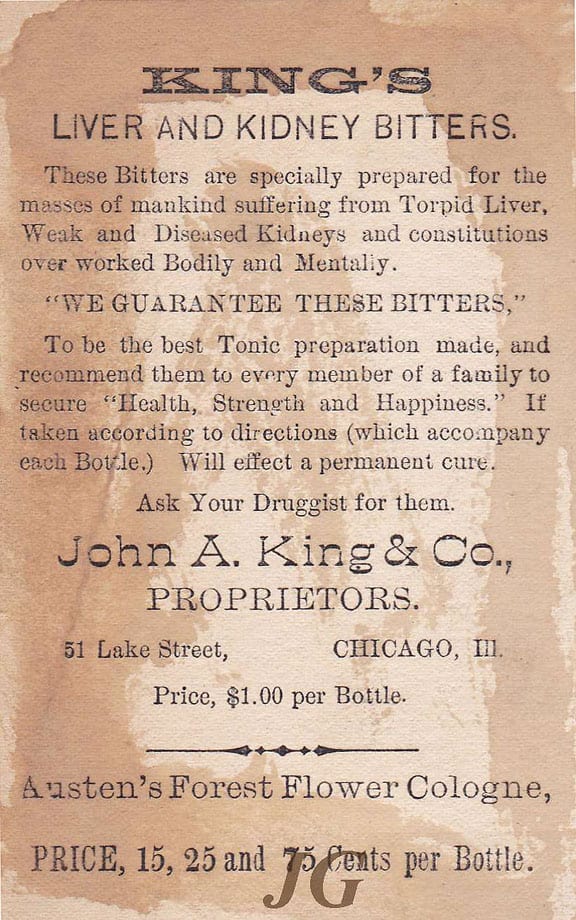
Apple-Touch-IconAWhile working on the post yesterday for the King’s Liver and Kidney Bitters, based on the below trade card from Joe Gourd, I said I would circle back and look at the advertisement for Austen’s Forest Flower Cologne that dominated the card. As this was the only trade card I could find for the King’s Bitters, I thought I would find little on the Austen name. Well I was wrong. Austen’s was a major brand based out of Oswego, New York with plenty of ephemera. The Gourd trade card was kind of like an old 45 record. One side had the major piece of music, while the other side pushed a little known and many times, less desirable song.

AustensForestFlowerF&B_Gourd

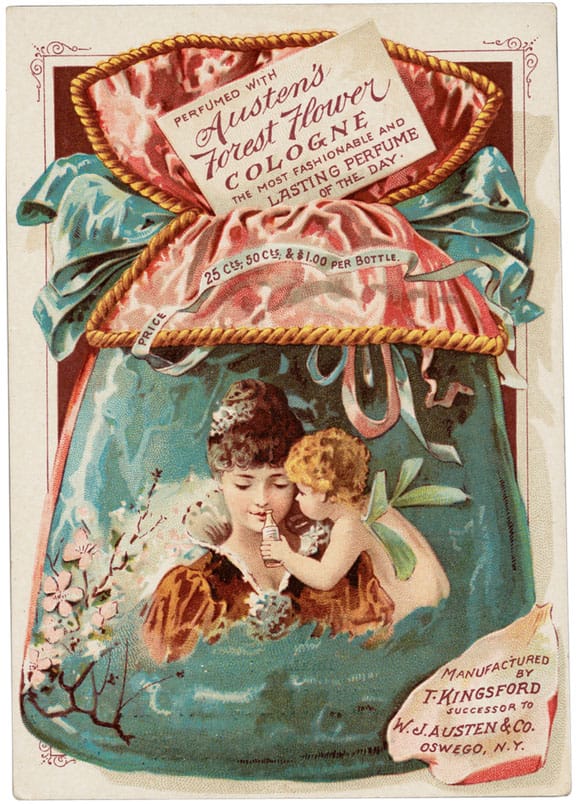
Austen’s Forest Flower Cologne trade card (front & back) – Gourd Collection (note King’s Liver and Kidney Bitters advertisement)

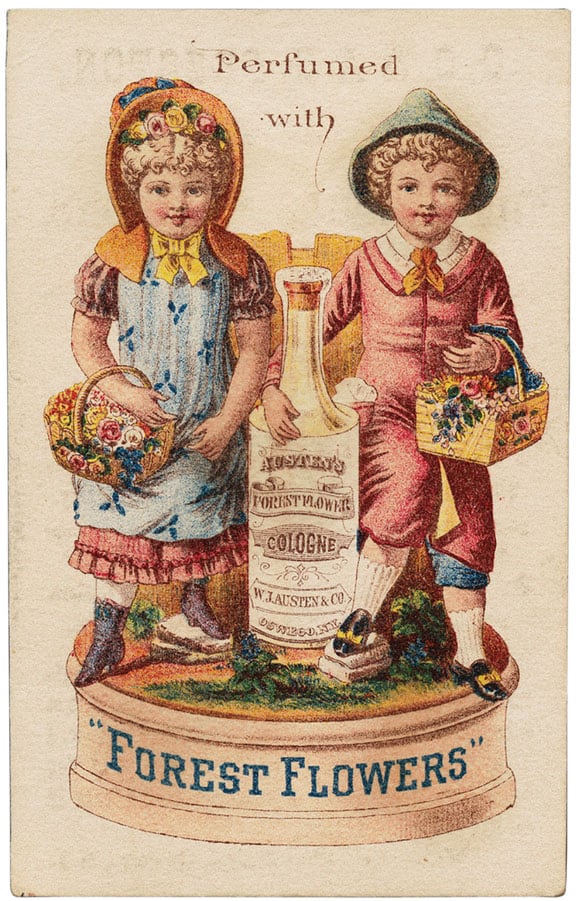
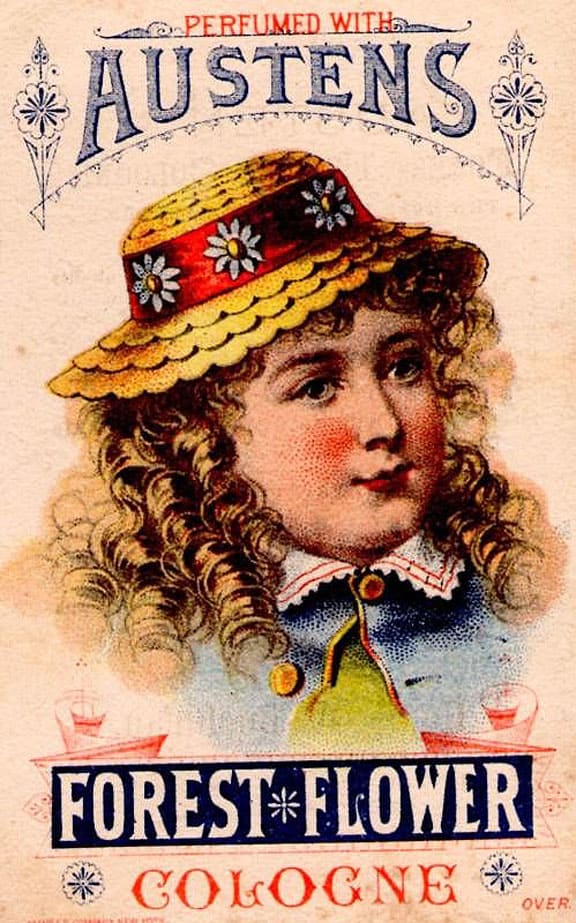
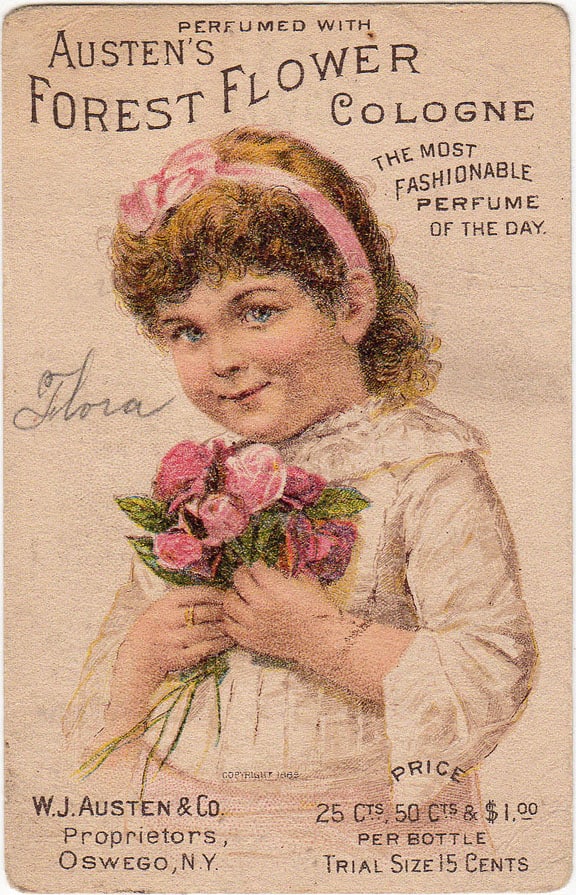
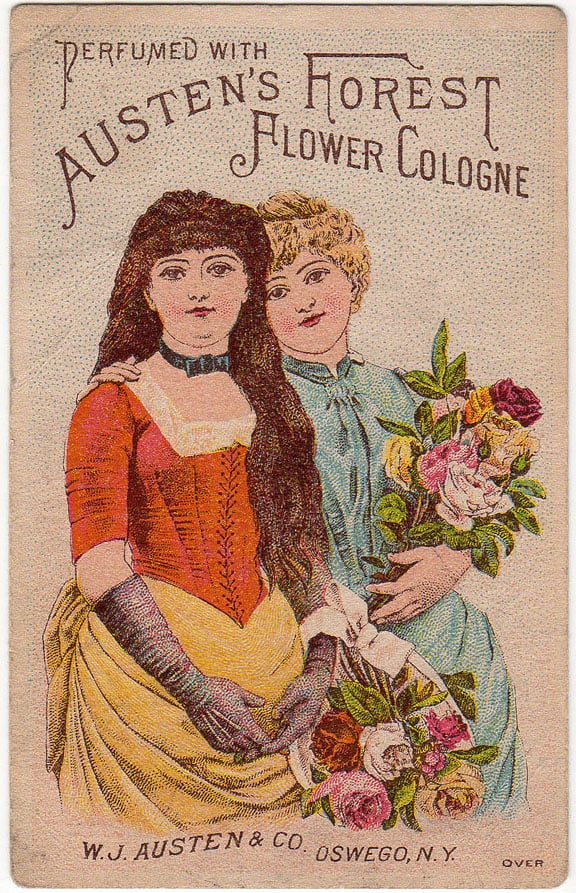
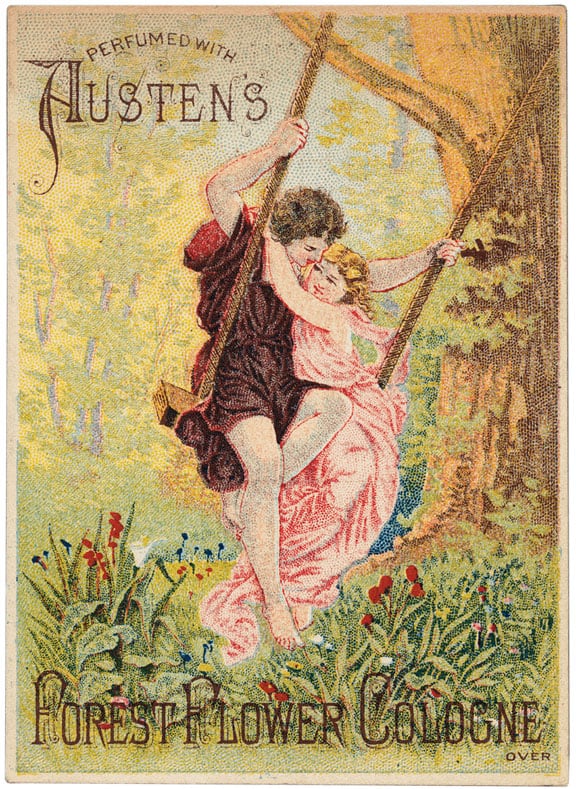
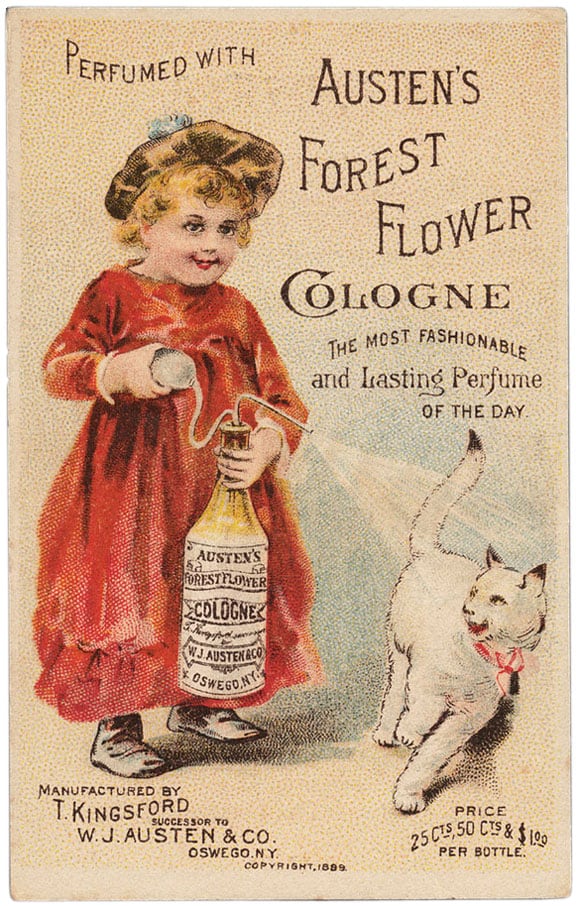
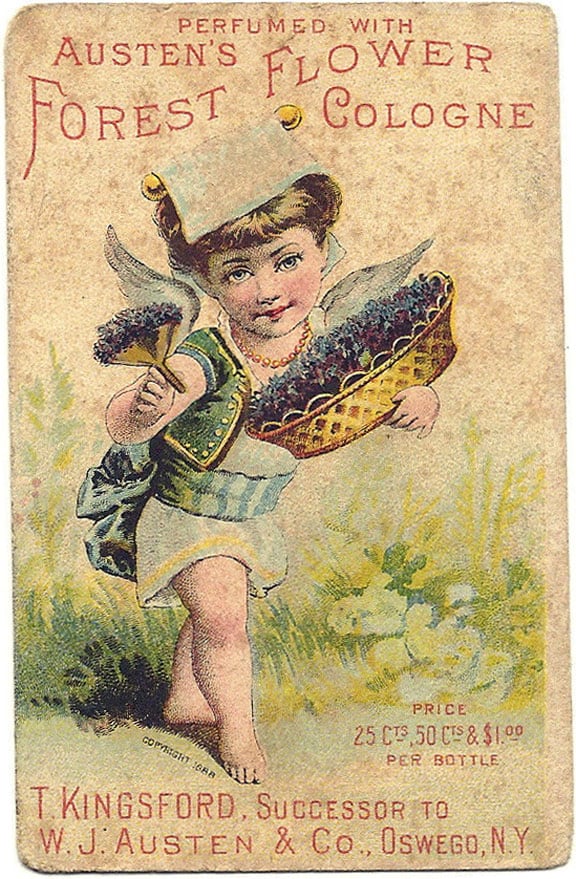
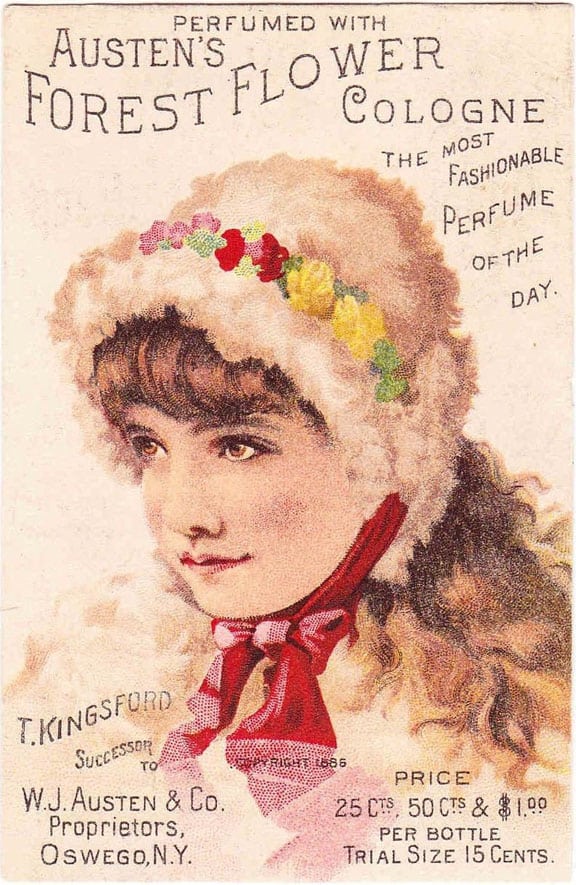
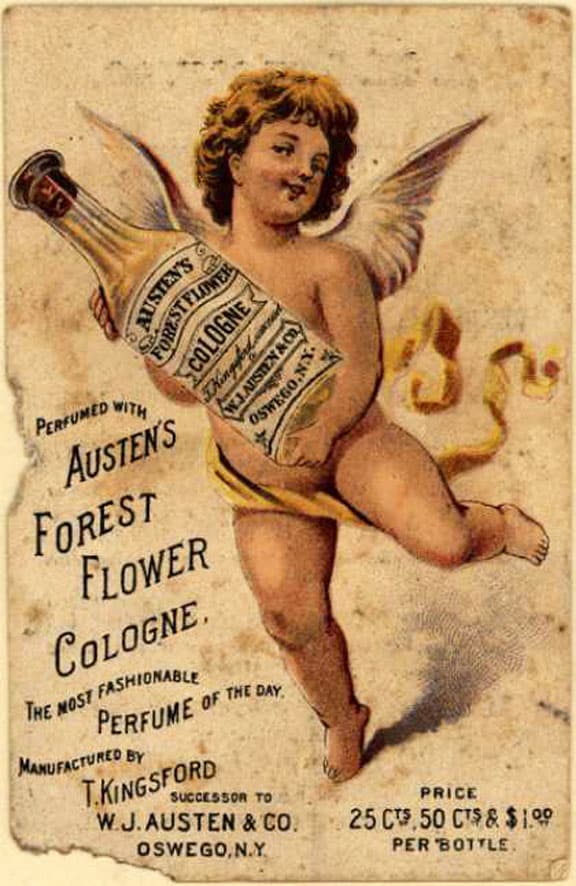
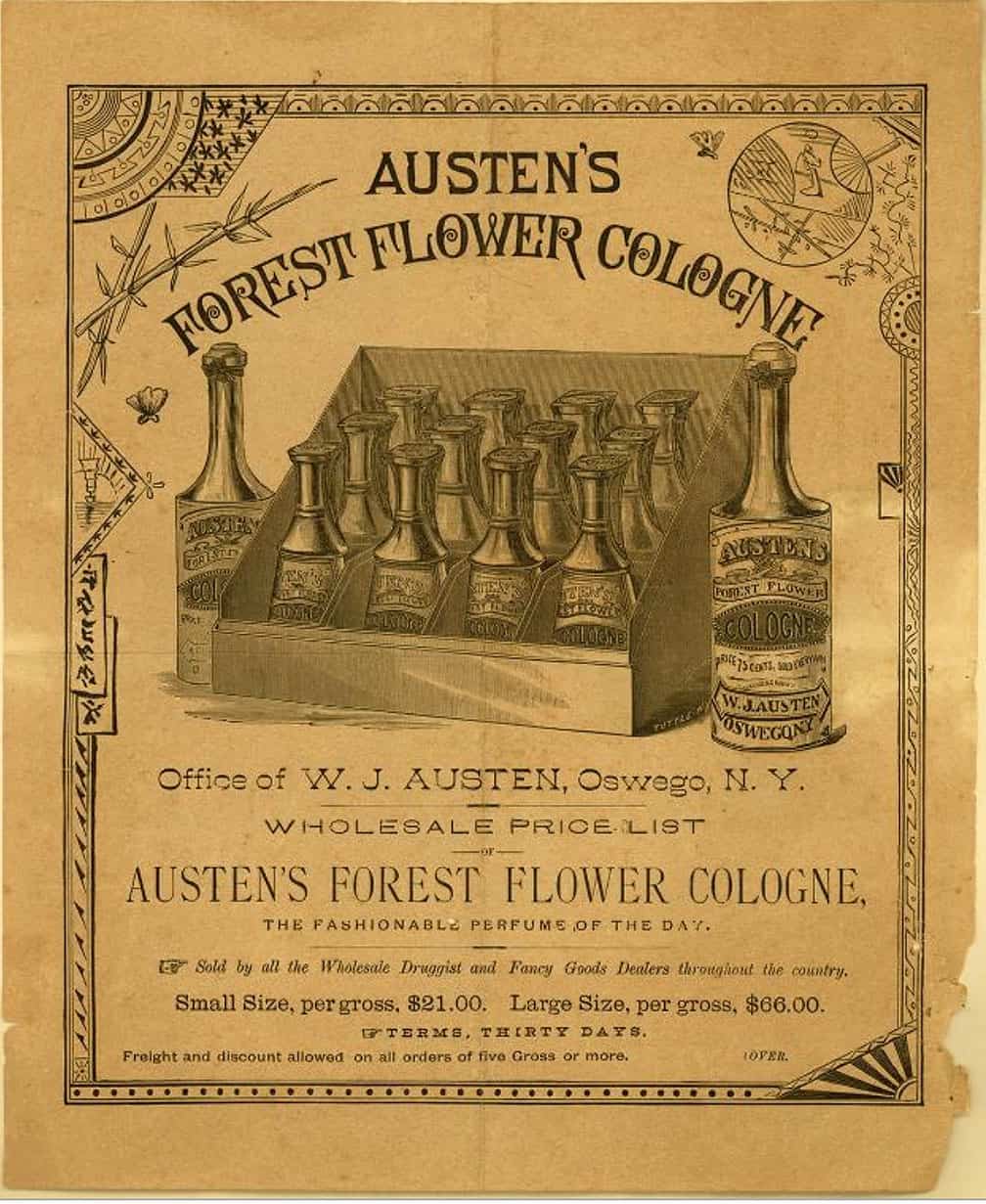
Austen’s Forest Flower Cologne was manufactured by W. J. Austen & Company, of Oswego, New York. The cologne was advertised as “The Most Fashionable Perfume of the Day” or “The Most Fashionable and Lasting Perfume of the Day.” Some of the widely celebrated Austen specialities were Forest Flower Cologne, Regina Bouquet Extract and Oriental Toilet Water etc. This brand was obviously marketed to women as many brands are, as they are the ‘buyers’ and ‘keepers’ of the house and family. Some of the cards were actually scented with the cologne, reading “Perfumed With” at the top of the card, which I find really interesting. Some of the cards say “not scented”. There were various sized bottles priced at 25 cents, 50 cents and a dollar.

Read: Florida Water – Murray & Lanman – New York

The word and symbol for “Forest Flower” was registered by W. J. Austen in September of 1878, according to an entry in “New Remedies, An Illustrated Monthly Trade Journal,” a publication of the day for American druggists.

AFFC_ReceiptART

W. J. Austen & Co. began operations in 1878 and failed in business in 1886 when it turned over all its stock to Thomson Kingsford (a previous partner of Austen) of Oswego. Prior to that, Mr. Austen had been in the drug business and the manufacture of baking powders. The company transition was managed by R. Van Valkenburgh who for many years ran Austen & Companies New York office. Some of the later trade cards actually say “Manufactured by T. Kingsford, successor to W. J. Austen & Co.” T. Kingsford was then noted as a Manufacturer of Perfume located at No. 106 Duane Street in Oswego, New York.

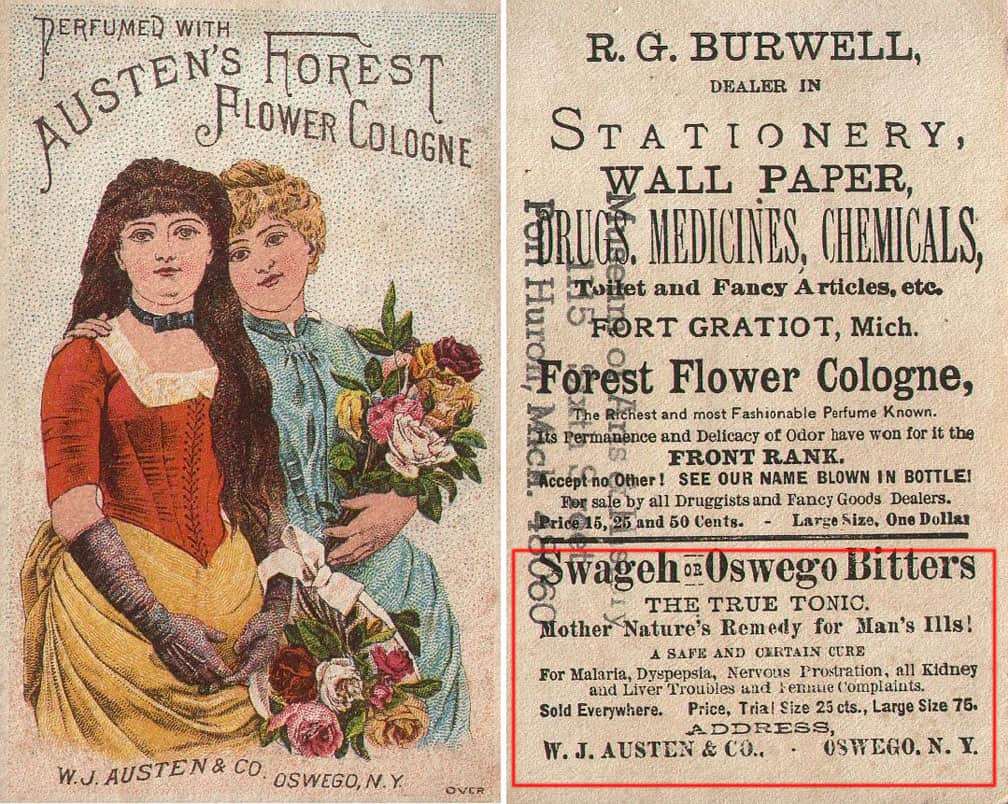
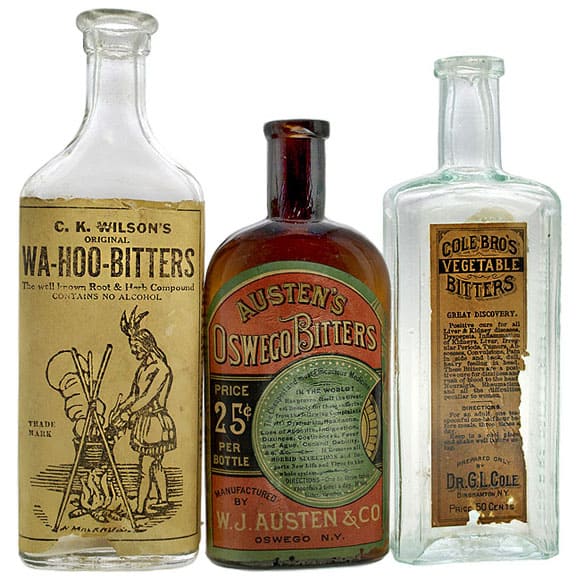
Here is another trade card, front and back, where a small portion of the back was used to push Austen’s Oswego Bitters. I have also pictured an example of a labeled Oswego Bitters that appeared in a recent Glass Works auction.

Austen’s “Swa-geh” Or Oswego Bitters: Has Now Been Before the Public as a Proprietary Medicine for Half a Score of Years, and Its Medicinal Qualities Have Been Tested by Thousands of People…. When this Medicine and the Valuable Vegetable Secrets of Its Composition Accidentally Came to the Knowledge of W. J. Austen & Co., Oswego, N.Y., They Cause it to be Tested in Numerous Cases, … Twenty-five Cents for Full Half Pint Bottles, which Brings it Within the Reach of All. Directions on the Bottle. For Sale by All Dealers in Medicines

AFFC_3

Austen’s Forest Flower Cologne trade card (front & back) – (note Swageh or Oswego Bitters advertisement – see bottle below)

Austen's Oswego Bitters

A fully labeled, Austen’s Oswego Bitters (center) – Glass Works Auctions

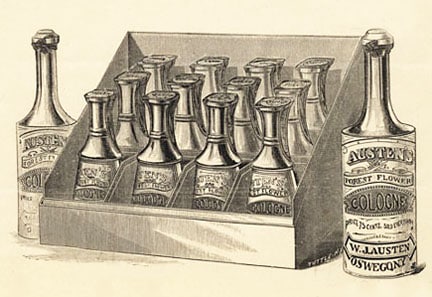
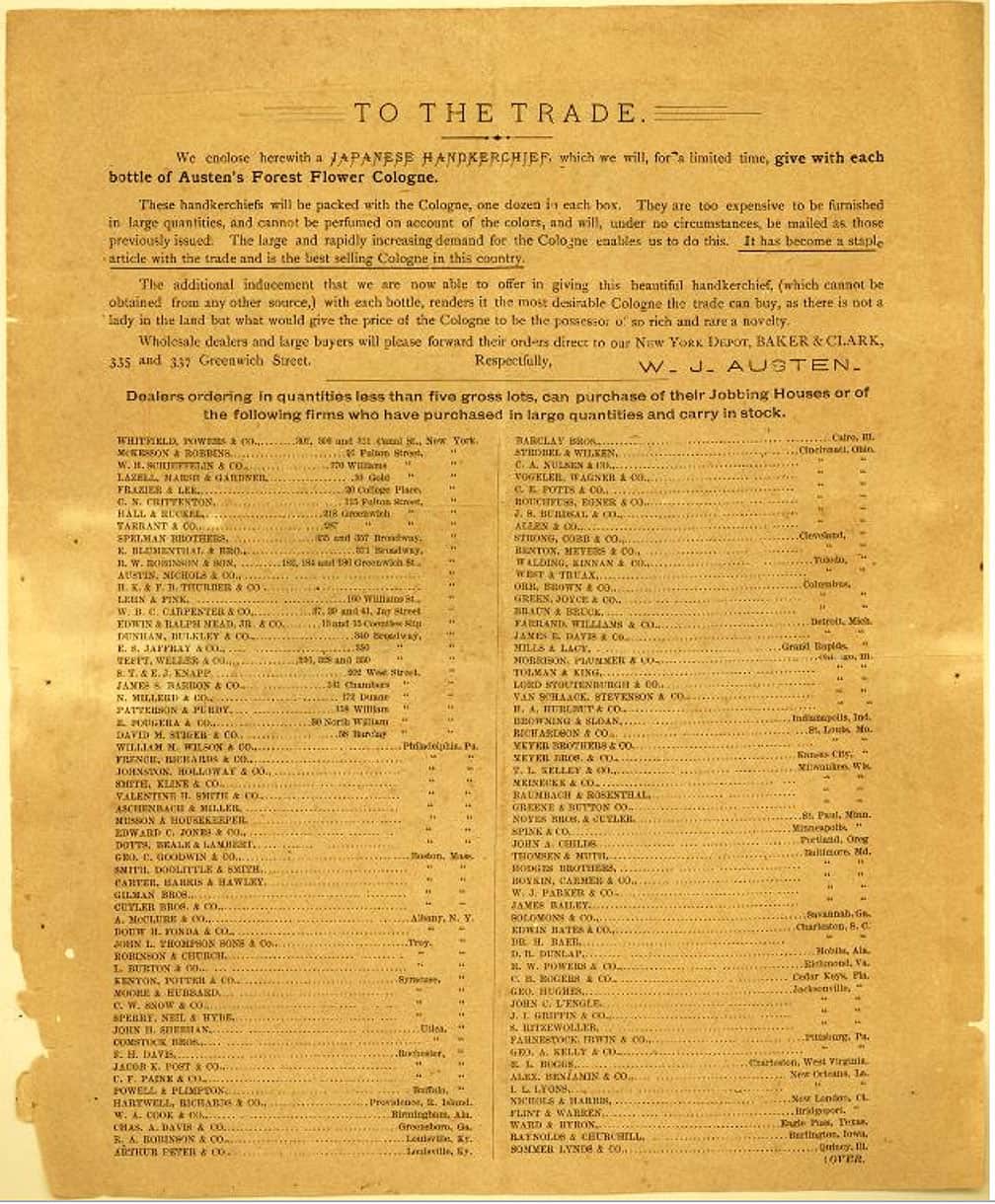
Austen’s Forest Flower Cologne Wholesale Price List

AUS_PriceList_F

Austen’s Forest Flower Cologne Wholesale Price List (front) – Duke Universities Libraries Digital Collection

Aus_PriceList_B

Austen’s Forest Flower Cologne Wholesale Price List (front) – Duke Universities Libraries Digital Collection

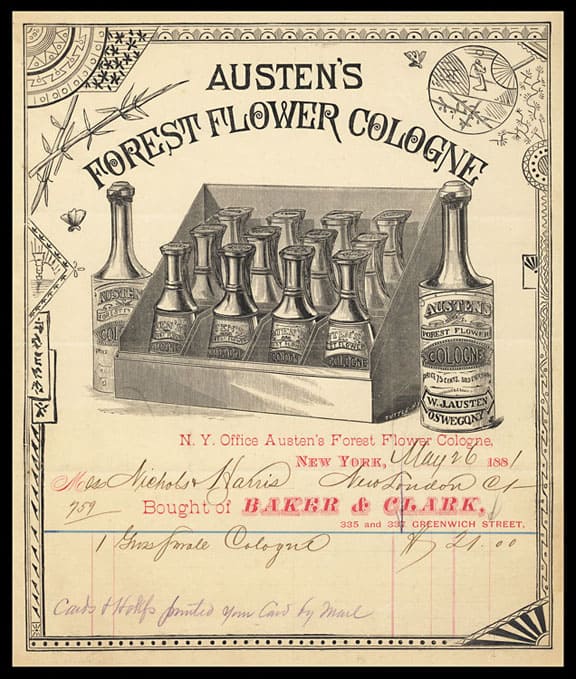
Austen’s Forest Flower Cologne Receipt

AFFC_Receipt

Austen’s Forest Flower Cologne Receipt, May 26 1881 – Sheaff

Austen’s Forest Flower Cologne Trade Cards

AFFC_5

Austen’s Forest Flower Cologne trade card

Advertising trade card, c. 1882. Austen's Forest Flower Cologne

Austen’s Forest Flower Cologne trade card

Advertising trade card, c. 1882. Austen's Forest Flower Cologne

Austen’s Forest Flower Cologne trade card

AFFC_12

Austen’s Forest Flower Cologne trade card.

AFFC_6

Austen’s Forest Flower Cologne trade card. Note that it says Manufactured by T. Kingsford, successor to W. J. Austen & Co.

AFFC_10

Austen’s Forest Flower Cologne trade card. Note that it says T. Kingsford, successor to W. J. Austen & Co.

AFFC_9

Austen’s Forest Flower Cologne trade card. Note that it says T. Kingsford, successor to W. J. Austen & Co.

AFFC_8

Austen’s Forest Flower Cologne trade card. Note that it says T. Kingsford, successor to W. J. Austen & Co.

AFFC_7

Austen’s Forest Flower Cologne trade card. Note that it says Manufactured by T. Kingsford, successor to W. J. Austen & Co.

Posted in Advertising, Bitters, Cologne, Druggist & Drugstore, Ephemera, History, Perfume, Scents | Tagged , , , , , , , , , , , , , | Leave a comment

John A. King – Druggist to Bank President

King's front

John A. King – Druggist to Bank President

KING’S LIVER AND KIDNEY BITTERS

10 January 2014

Apple-Touch-IconAI like trying to imagine the lives of some of the people I am researching. I mean, of all the people in the world, how did one bitters brand come to be associated with one individual throughout an entire lifespan? How is a bottle I am interesting in, relate to and intersect with a man who was a farmer, messenger, teller, bookkeeper, treasurer, clerk, druggist, brewer and bank president? I also wonder, if I was living in the latter part of the 1900s, would I have put out a Meyer’s Bitters? Probably so!

Today’s post was inspired by trade card authority Joe Gourd (Chicago, Illinois) where he baited me with images of a rare card (pictured in this post) and said, “Got one more King’s Bitters to add to your list. It is a K 54, ‘King’s Liver and Kidney Bitters’. The card is not in such great shape, but can be proud of it’s Chicago connection.”

What Joe is referring to are recent posts on various, different, “King” bitters brands such as King’s Hop Bitters, King’s 25 Cent Bitters, and King Solomon’s Stomach Bitters.

King's back

Looking at the front and back of the card, I see a draped women carrying a wreath and strand of roses with copy marketing Austen’s Forest Flower Cologne, W. J. Austen & Co., Oswego, New York. I think I will save that cologne for another post as on the back I see the name, John A. King & Co., 51 Lake Street, Chicago, Illinois. The brand he is marketing is King’s Liver and Kidney Bitters.

John A. King was born in DeWitt Township in Onondaga County, New York and was the son of Ingron L. and Hannah (Hadley) King, also of New York though his mother may have been from Vermont. John was reared on a farm and at the ripe young age of 15, entered employment at a grocery firm in Syracuse, New York and quickly moved on to be a messenger and teller at Mechanics’ Bank of Syracuse. This is interesting as he would later be a bank president! From 1859 to 1861, John was a bookkeeper and later a treasurer at S.M. Nicholson & Company, distillers in Toledo, Ohio. This experience would lead him to the retail and wholesale area of the grocery and drug business.

Around 1865, King went to work with Samuel A. Tolman at Tolman & Pinkham and then became a partner in Tolman, Crosby & Co. when the firm turned from groceries to the wholesale drug trade. From 1869 to 1882 King was a partner at Tolman & King, working at 51 Lake Street in Chicago. In 1882, Tolman would sell out to King and the firm became John A. King & Co. They were noted as druggists. This would be when the King’s Liver and Kidney Bitters was sold. Unfortunately, as far as I know, no bottles exist. Hopefully, someone will prove me wrong.

In 1888 and 1889, King bought a controlling interest in McAvoy Brewing Co., only to sell the property to an English syndicate in 1889. From 1889 to 1903, King was president of Fort Dearborn National Bank at 187 Dearborn, in Chicago.

King was a Democrat and was a trustee with the Chicago Sanitary District. He belonged to the Illinois, Iroquois and Union League clubs while he resided at 431 Ashland Boulevard. His wife was Julia L King. They had two children, Nellie and Agnes. He lived a full life and he had his own bitters.

Representative King Milestones

1834: John A. King, born DeWitt Tp. Onondaga Co., N.Y., son of Ingron L. and Hannah (Hadley) King; reared on farm.

1849: entered employment at grocery firm of Syracuse at 15., later messenger to teller Mechanics’ Bank of Syracuse.

1859 – 1861: John A. King in Toledo, Ohio as bookkeeper and later treasurer, S. M. Nicholson & Co., distillers.

1865: Samuel A. Tolman (initially a grocer turns to the drug business), Tolman & Pinkham (1 year)

1866 – 1867: Tolman, Crosby & Co., (Samuel A. Tolman, I. F. Crosby and J. A. King), whol. druggists, 35 S. Water – Chicago, Illinois City Directory

1869 – 1882: Tolman & King (Samuel A. Tolman and John A. King), drugs whol., 51 Lake – Chicago, Illinois City Directory

1870: John A. King, age 36, wholesale druggist clerk, born abt 1834 in New York, Living in Chicago, wife is Julie L. King, both parents born in New York, children Nellie and Agnes, 1870 Federal Census

1880: John A. King, age 46, druggist, born abt 1834 in New York, Living in Chicago, wife is Julie L. King, both parents born in New York, children Nellie and Agnes, 1880 Federal Census

1882: Samuel A. Tolman sells out to John A. King

1882: John A. King & Co., (John A. King and Julius C. Eliel), drugs, 51 Lake – Chicago, Illinois City Directory

1885 – 1888: John A. King & Co., (John A. King), whol. druggist, 51 Lake – Chicago, Illinois City Directory

1888 – 1889: bought controlling interest in McAvoy Brewing Co., selling property to English syndicate in 1889

1889 – 1903: John A. King, pres., Fort Dearborn Nat. Bank, 187 Dearborn, h. 276 Ashland av. – Chicago, Illinois City Directory

1889 – 1891: trustee Chicago Sanitary District.

1916: died, 12 September 1916

Posted in Advertising, Bitters, Cologne, Druggist & Drugstore, Ephemera, History, Medicines & Cures, Tonics, Trade Cards | Tagged , , , , , , , , , , , , | Leave a comment

Brophy’s Bitters – A Mailman and his Bitters

B217_D

Brophy’s Bitters – A Mailman and his Bitters

Nokomis, Montgomery County, Illinois

08 January 2014

NokomisStreet

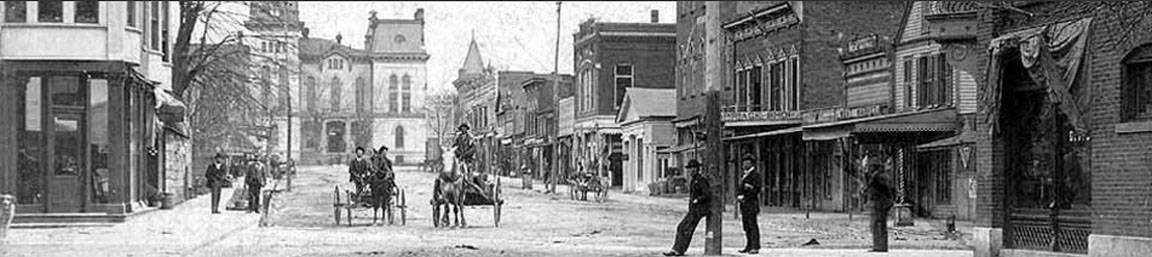
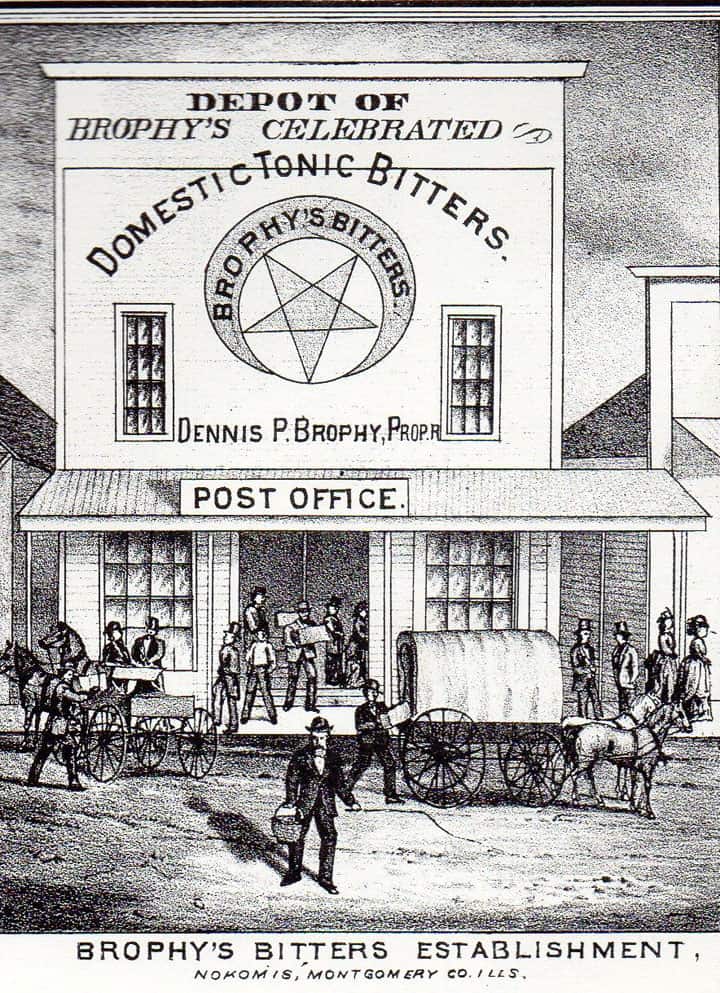
Apple-Touch-IconAThis post was inspired by an image provided by Jim May depicting Brophy’s Depot, which was a post office and establishment for selling Brophy’s Bitters. The brand is easily recognized by the large reversed star and crescent moon trademark painted on the façade, which advertised Brophy’s Bitters. Jim apparently lives in Nokomis, Montgomery County, Illinois.

BrophysIllus

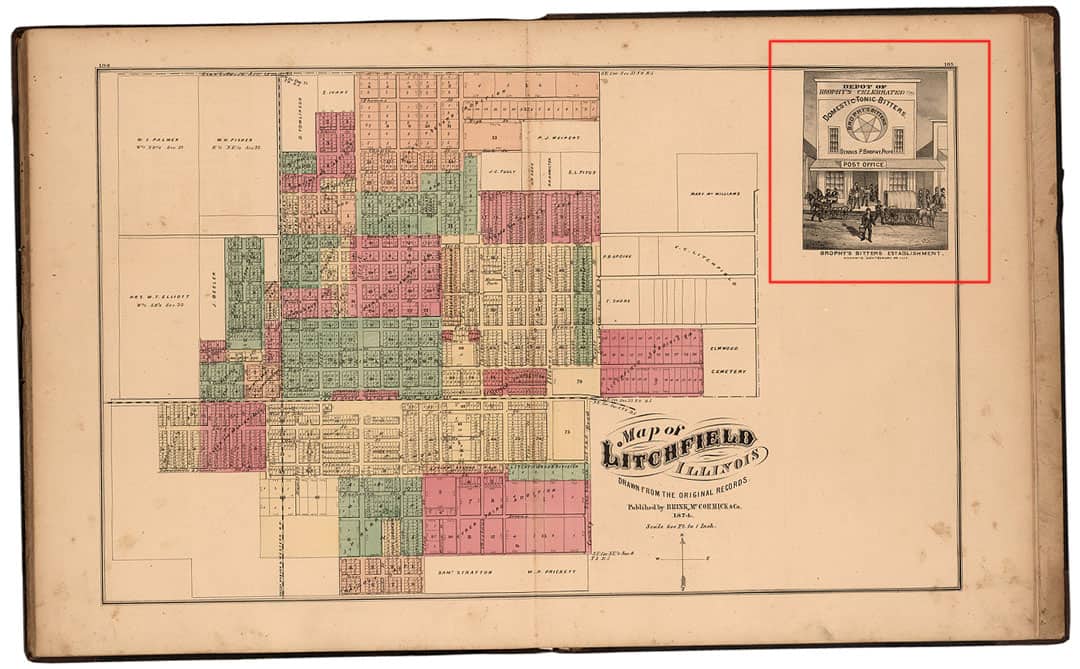
Advertisement showing the Brophy’s Bitters establishment – 1874 Atlas of Montgomery County, Illinois (submitted by Jim May) From corner illustration, Map of Litchfield, Illinois Drawn from the Original Records, Publishedby Brink, McCormick & Co. (see below map)

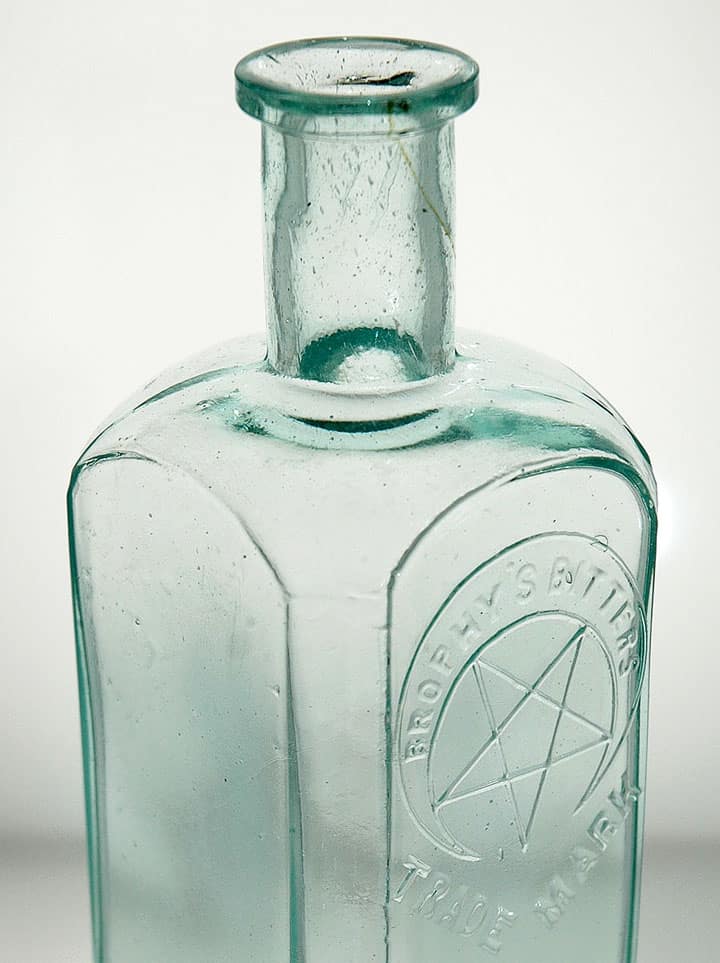
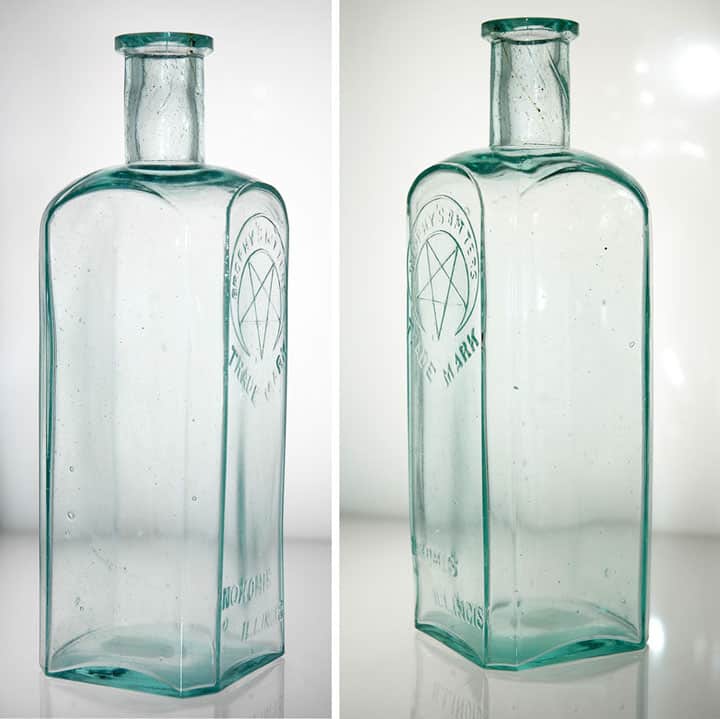
LitchfieldillinoisBrophyThe Carlyn Ring and W.C. Ham listing in Bitters Bottles is as follows:

B 217  BROPHY’S BITTERS

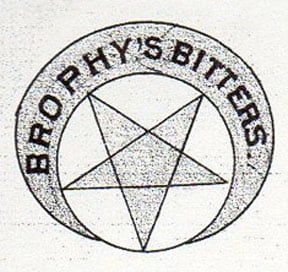
BROPHY’S BITTERS ( au ) motif – motif – name encased in crescent / 5 pointed
star within crescent / Trade ( sd ) MARK ( su ) / NOKOMIS ILLINOIS // f // f // f //
7 1/2 x 2 1/2 (5 1/2)
Square, Aqua, STC, Tooled lip, Rare

B217_Brophy'sBitters)

Brophy’s Bitters – Meyer Collection

Dennis P. Brophy

Dennis P. Brophy, son of Dennis and Julia (Galvan) Brophy, was born on March 3, 1832 in New York City. You can trace the Brophy ancestry back to Irish origin though both of his parents who were born in United States and came to New York City in 1762 and resided there until 1856.

Brophy lived in the city until about fourteen years old and received the basics of an early education. Upon the death of his mother in 1846, he moved to Philadelphia and engaged in the type foundry business as a mold maker. After about 18 months, he moved on to Baltimore and engaged in the same occupation, with Edwin Star, of the Sun Building (newspaper Baltimore Sun). Next he moved on to the Philadelphia Baltimore Rail Road (PBRR) as an assistant baggage master. He stayed at the railroad for about nine months and headed back to New York City and again worked in the type foundry business. Eventually Brophy had to quit his profession when his health declined from exposure to foundry acids. During this period he engaged in market gardening near Boston, working for James Young.

In the fall of 1856, Brophy, hoping for recovery, headed out west and stopped for a short time in Litchfield, Illinois (see map below) and worked for Calvin Howe and then worked in farming for Edwin C. Read, near Rosemond, Illinois. After six months he settled in the newly platted and surveyed central Illinois town of Nokomis.

Brophy, Dennis P

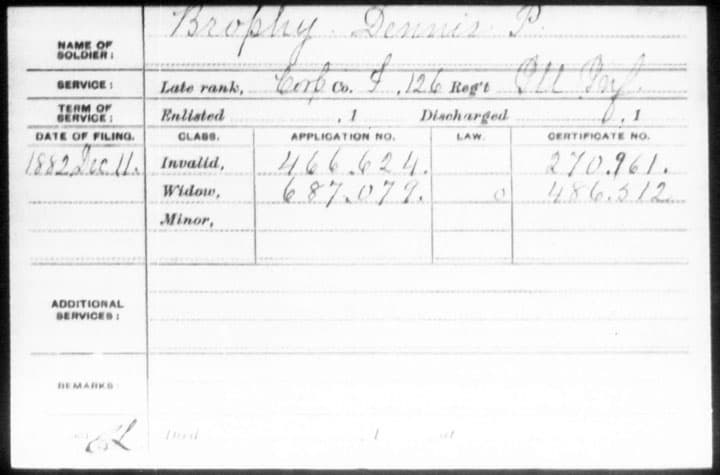
Dennis P. Brophy – Organization Index to Pension Files of Veterans Who Served Between 1861 and 1900.

With the war of the rebellion breaking out and responding to the call of troops, Brophy volunteered in the 126th Illinois Infantry Regiment, Company F on September 4, 1862 and become a Postmaster during the Civil War. He was promoted to Full Corporal. He mustered out on July 12 1865 at Pine Bluff, Arkansas. Finding himself in Washington D.C. he was given a presidential appointment by President Andrew Johnson as Postmaster of Nokomis on August 25, 1865. He held that office until November 1, 1886. Later he became secretary of the Farmers Insurance Company, and held that position for a few years.

On September 17, 1868 Brophy married Susan Battles and they had two children, Nathaniel B. and Jennie A. who died young. Brophy and his wife were both members of the Baptist Church.

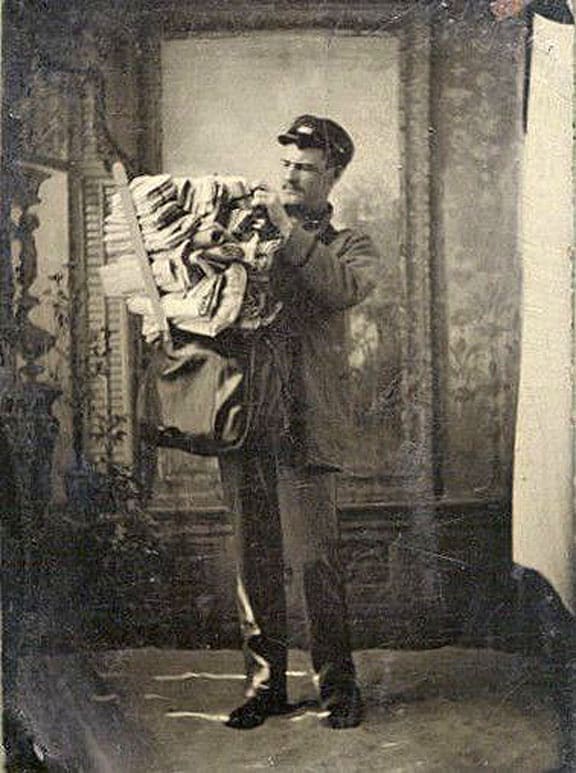
1880sMailMan

1880s tintype portrait of a mailman in uniform carrying leather satchel and a huge backpack of newspapers, parcels, etc. – Christopher Wahren Fine Photographs

By 1870, Brophy had become the proprietor of various medications, which he sold from his post office, also known as “Brophy’s Depot”. Even though he had the post office, the 1870 Federal Census lists his occupation as a druggist. Brophy’s Depot was easily recognized by the large reversed star and crescent trademark painted on the façade, which advertised his bitters. So now we have a mailman and his bitters. It is 1880 when the Federal Census lists him as a Postmaster.

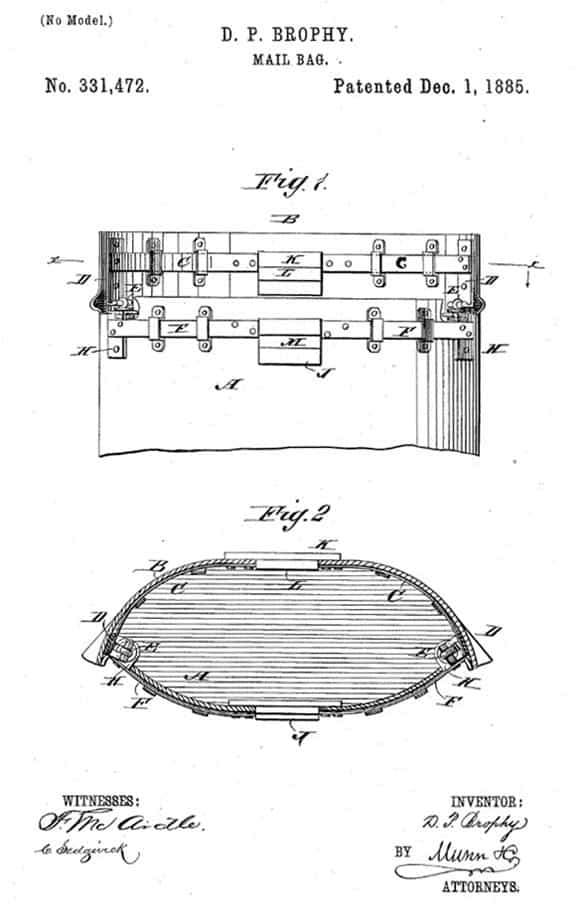
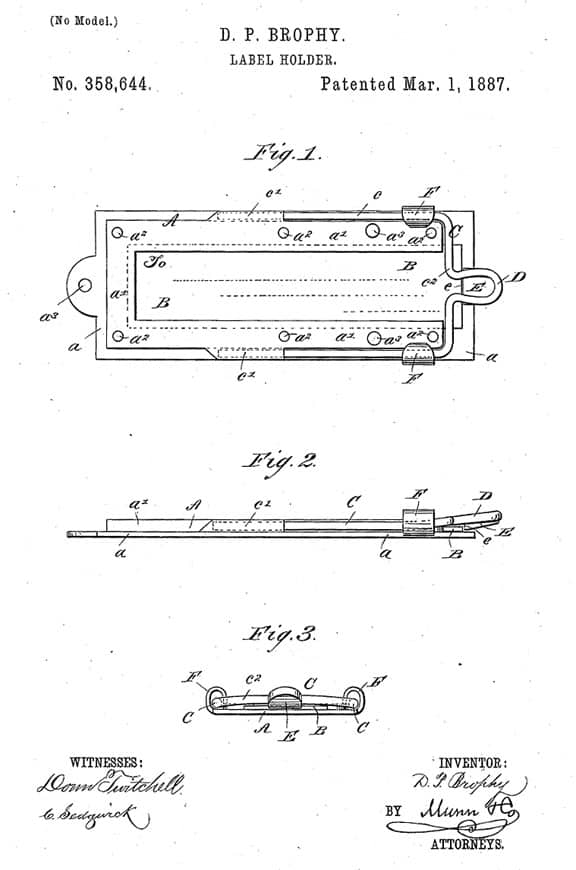
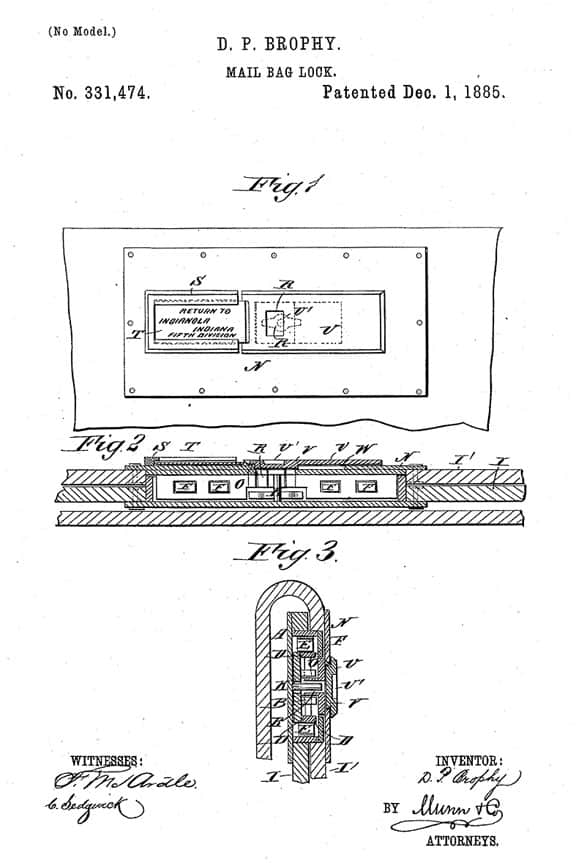
Brophy actually had a number of mail patents for a mail bag, mail bag lock and label holder (pictured below).

BrophyMailBagPatent

D. P. Brophy Patent 331,472 for a Mail Bag – December 1, 1885

Brophy_LabelHolder

D. P. Brophy Patent 358,644 for a Label Holder – March 1, 1887

Brophy_MailBagPatent

D. P. Brophy Patent 331,474 for a Mail Bag Lock – December 1, 1885

During his experience in compounding medicines, he succeeded in making new preparations of bitters, having a seductive character. The product was very highly spoken of and noted as an anti-febrile and an anti-dyspeptic. Marketing at the time said, “This preparation he puts up himself, from the best and purest drugs, and keeps a supply on hand for the benefit of the affected.”

BrophysIllusX

Brophy’s signature trademark included a star known as a reverse or upside down pentacle or pentagram. The symbol is a bit mysterious as it is depicted in a way rarely observed during this time period in the Midwest. Typically the pentacle is depicted with the star having one point upwards, as a symbol of God and the triumph of good over evil. The pentacle having one point down, like the mark on Brophy’s Bitters has traditionally been interpreted as symbolic of the devil or the infernal and used in black magic.

The Brophy’s Bitters bottles date from about 1875 to 1876 when Brophy relinquished his appointment as Postmaster. During his retirement he even put out a book on patriotic and semi-religious poems. Brophy died on September 14, 1898.

References:
Biographical Sketches of Citizens of Montgomery County, Illinois
Historical Encyclopedia of Illinois
Medical Mysticism on the Frontier: An Example from the Midwest
Posted in Advertising, Bitters, Civil War, Druggist & Drugstore, History, Medicines & Cures | Tagged , , , , , , , , , , , , , , , , , , , | Leave a comment

The Doyle’s & Soule’s Hop Bitters – Rochester, N.Y.

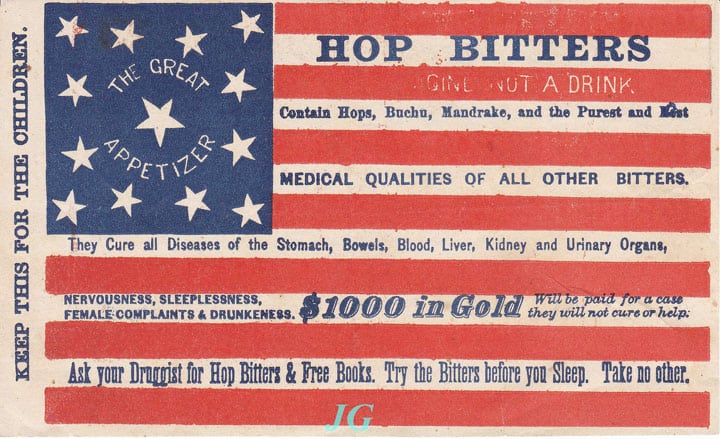
Flag1

Hop Bitters trade card – Joe Gourd Collection

The Doyle’s & Soule’s Hop Bitters

Rochester, New York

07 January 2014 (R•010814) (R•052315) (R•100518)
GoldCoins

$1,000 in gold will be paid for a case they will not cure or help.
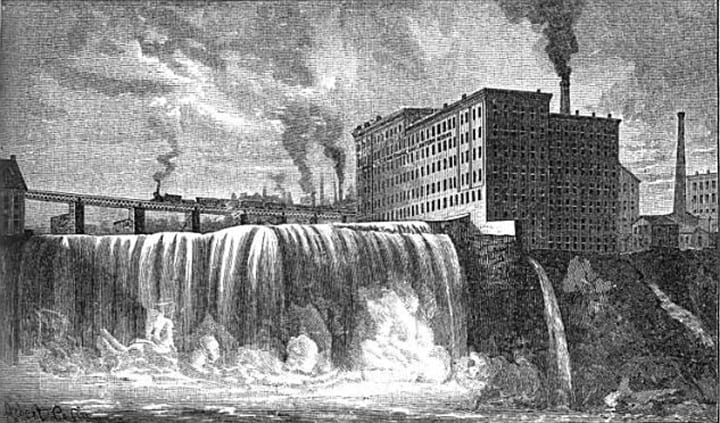

RochesterFalls

Apple-Touch-IconA

Bitters trade card collector and authority Joe Gourd, has provided a series of Hop Bitters trade cards, a postal card and a pamphlet from his collection allowing us to look at the sometimes confused, Doyle’s Hop Bitters and Dr. Soule’s Hop Bitters from Hop Bitters Manufacturing Company in Rochester, New York. Joe’s e-mail is noted below:

Ferd, saw your post for Doyle’s Hop Bitters. It got me checking with Ring and Ham (Bitters Bottles and Bitters Bottles Supplement).

I have a number of trade cards that just say “Hop Bitters”. Some also say “Hop Bitters Co., Rochester, N.Y.” According to your post, these cards could be for Doyle’s Hop Bitters (D 93), Hop Bitters (H 171 L), or Soule’s Hop Bitters (S 145). Since they didn’t specifically say “Doyle’s”, I had catalogued them as “Hop Bitters” (H 171 L). But now I think they are more likely Doyle’s Hop Bitters*. And, because most trade cards were printed between 1880 and 1900, these cards are most likely some of Soule’s advertising. What do you think?

Joe
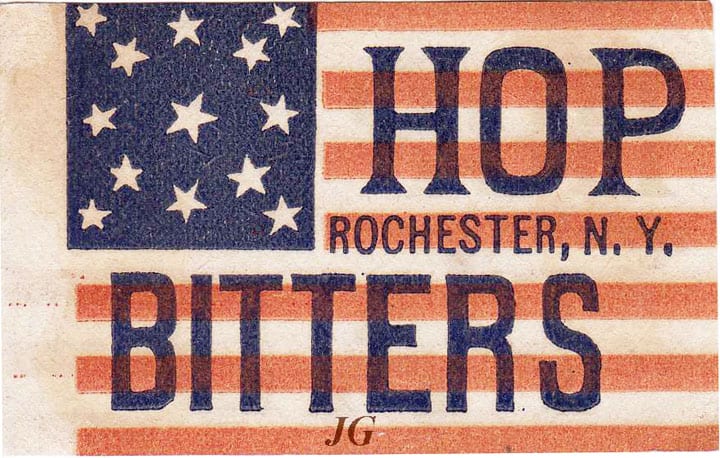
Flag2 front

Hop Bitters trade card front, Rochester, N.Y. – Joe Gourd Collection
Flag2 back

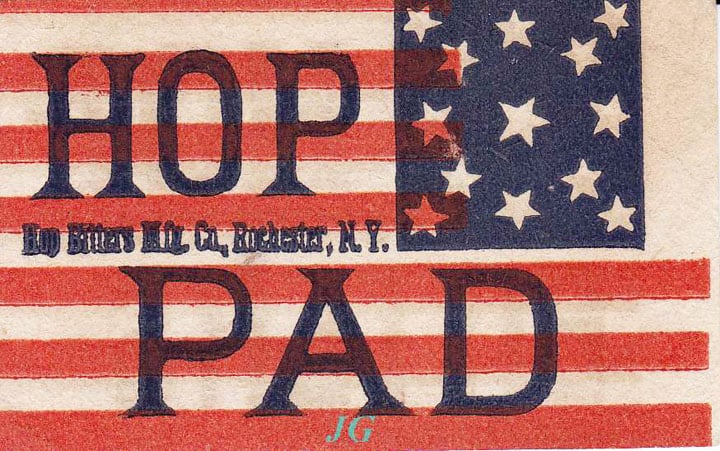
Hop Bitters trade card back, Hop Bitters Mfg. Co., Rochester, N.Y. – Joe Gourd Collection

PRG: Yes, Joe. These are Asa T. Soule cards from the Hop Bitters Manufacturing Company in Rochester, New York. Soule succeeded Doyle. Soulke also put out New York Hop Bitters.
Postcard

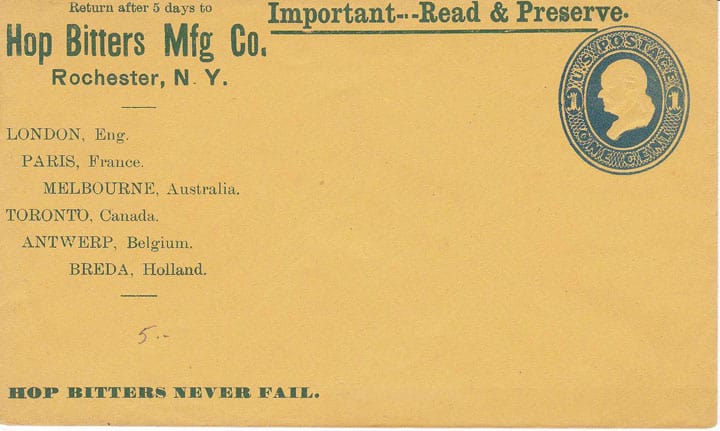
One Cent advertising postal card promoting Hop Bitters, Hop Bitters Mfg Co., Rochester, N.Y. – Joe Gourd Collection

DOYLE’S HOP BITTERS John D. Doyle

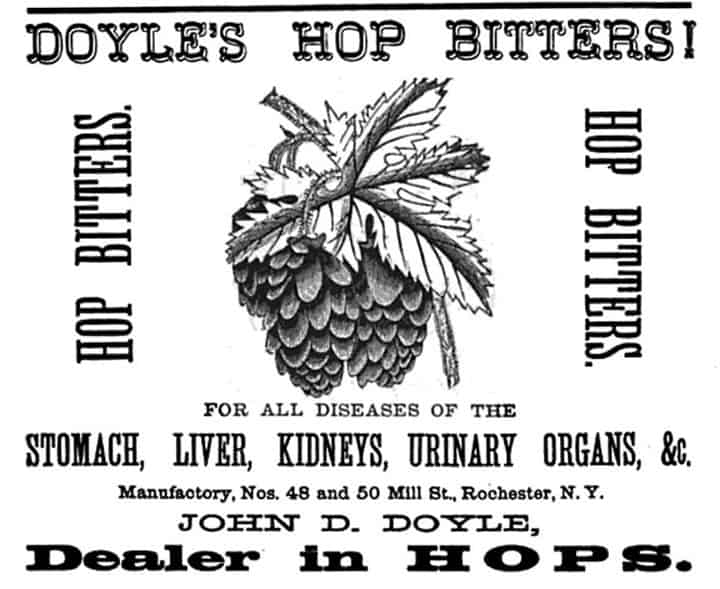
John D. Doyle of Rochester, New York patented Doyle’s Hop Bitters in 1872. That same year he gave sole proprietorship to Asa T. Soule, a Quaker and long-time patent medicine salesman. Asa and his son Wilson devoted all their energies and money to immediately promoting the brand and evidently bought ownership from Doyle the following year and became the primary owner of the Hop Bitters Manufacturing Co., with Doyle receiving a small royalty.

For general debility, biliousness, nervousness, neuralgia, indigestion, fever and ague, liver complaint, mental depression and all kidney and urinary diseases. Compounded from hops, buchu, mandrake, dandelion, etc. Under the best medical ability existing.
D 93 lhBBS

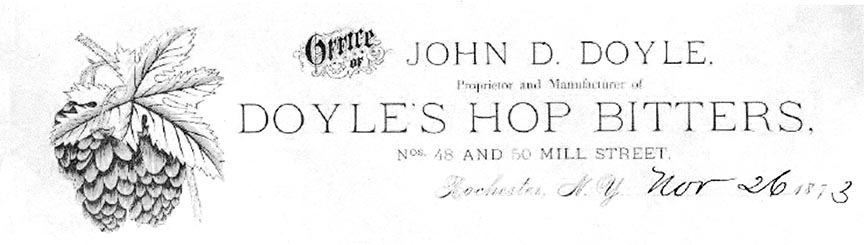
D 93 – John D. Doyle, Proprietor and Manufacturer, DOYLE’S HOP BITTERS, Nos. 48 and 50 Mill Street, Rochester, N.Y., Nov 26, 1873Bitters Bottles Supplement

Doyle's Hop Bitters - Meyer Collection

Doyle’s Hop Bitters tonal color and hop leaf study run – Meyer Collection

The Carlyn Ring and W.C. Ham listing in Bitters Bottles for the Doyle’s Hop Bitters is as follows:

D 93  DOYLES HOP BITTERS
// s // DOYLES // HOP // BITTERS // 1872 //
sp // sp // sp // motif hop berries with leaves //
Hop Bitters Manufacturing Co. Rochester, N.Y. Toronto, Ont. London, England
9 5/8 x 2 3/4 (6 1/4)
Square, DLTC, Applied mouth and Tooled lip, 4 sp, Amber – Common; Yellow and Yellow olive – Rare
Label: For general debility, biliousness, nervousness, neuralgia, indigestion, fever and ague, liver complaint, mental depression and all kidney and urinary diseases. Compounded from hops, buchu, mandrake, dandelion, etc. Under the best medical ability existing. Dosage in English and German.
DoylesHop_BaseE_Bender

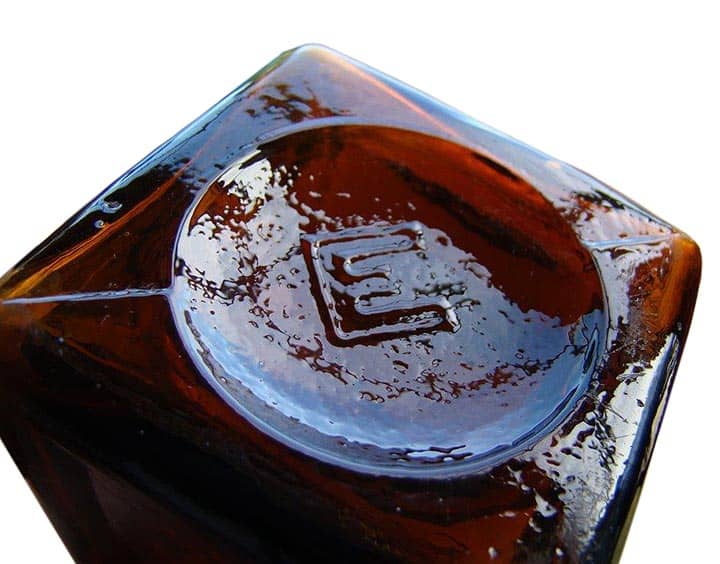
“Here’s a photo of my Hop Bitters. What is cool is the base has a large E embossed on it. I have never seen another one, have you? Not a rare find but still interesting.” –  Jim Bender

Read MoreDoyles Hop Bitters and some Exciting Variants
DoylesHopBitters_Roch_CD1873

Doyle’s Hop Bitters advertisement from John D. Doyle, Nos. 48 and 50 Mill St., Rochester, N.Y. – 1873 City of Rochester, NY Directory

John. D. Doyle

John D. Doyle of Rochester, New York patented Doyle’s Hop Bitters in 1872. That same year he gave sole proprietorship to Asa T. Soule, a Quaker and long-time patent medicine salesman. Asa and his son Wilson devoted all their energies and money to immediately promoting the brand and evidently bought ownership from Doyle the following year and became the primary owner of the Hop Bitters Manufacturing Co., with Doyle receiving a small royalty.

For general debility, biliousness, nervousness, neuralgia, indigestion, fever and ague, liver complaint, mental depression and all kidney and urinary diseases. Compounded from hops, buchu, mandrake, dandelion, etc. Under the best medical ability existing.


SOULE’S HOP BITTERS – Asa T. & Wilson Soule
AsaSoulemug

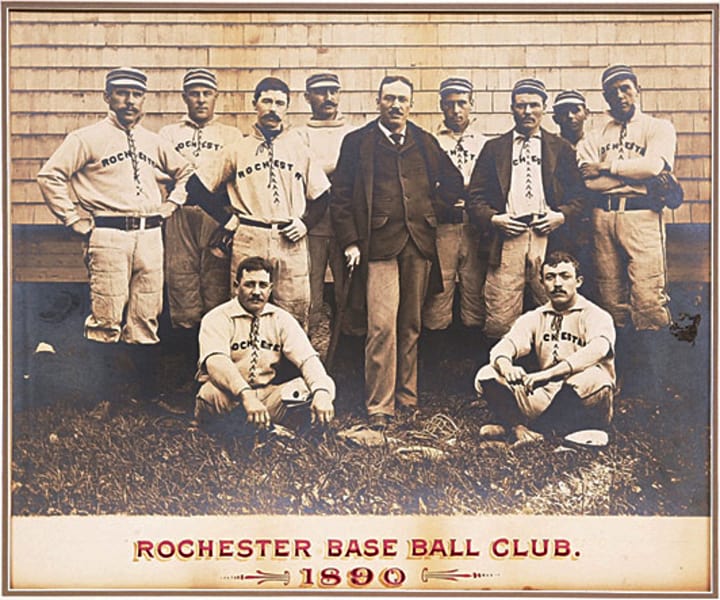
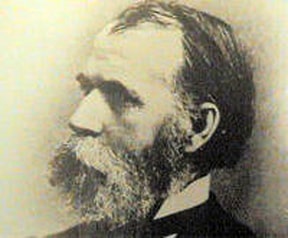
Asa Titus Soule was born in Duanesburg, New York on August 2, 1824 and died on January 17, 1890, at his home in Rochester. He was one of eleven children born to Enos and Mary Titus Soule. His early life was passed in comparative obscurity, but he became famous shortly after 1872, when he incorporated a company with a capital of $125,000 to manufacture a medicinal preparation, known as Hop Bitters. Soule strengthened the formula, changed the name to Hop Bitters, the invalid’s friend and hope, and moved the plant to Rochester in 1873. The product took off, and Soule eventually became a millionaire. He began to sponsor amateur sports, offering prizes. Baseball was gaining in popularity and Soule took on the city of Rochester team. Soon he bought the bankrupt club of Albany and re-named them the Rochester Hop Bitters; The local ballpark became “Hop Bitters Park”. Soule ventured into other sports promotions, none of which were very successful.

HopBitBB

Rochester Hop Bitters Base Ball Club photograph – Legendary Auctions

The sale of the Hop Bitters preparation reached astonishing proportions and led to the establishment of branch offices and laboratories in Toronto, London, Antwerp, Belgium and Melbourne, the sale being in turn stimulated by these agencies. Mr. Soule gained a fortune from his industry, which he invested mainly in lands in Kansas, where, at one time, he controlled a whole county.

Asa was married to Marilla S. Hubbard in September 1852. His son, Wilson Soule was born in South Butler, Wayne county, New York on September 4, 1854 and died in Rochester in July 25, 1894, in consequence of injuries received from a runaway accident. Wilson attended schools in the country and one at Lyons, New York, until nearly of age, and then in 1873 joined his father in the manufacture of Hop Bitters, becoming secretary of The Hop Bitters Co. After his father’s death in 1890, he retired to give his whole attention to the management of an estate, which included not only lands but the securities of irrigating canal companies, railroads and banks. Mr. Soule was a man of generous nature and gave liberally from, ample means to charities and education. Married in 1881 to Miss Frances Parkhurst, he became the father of Martha, Ethel and Asa Titus Soule. He was a member of the Rochester, Whist and Genesee clubs and of the Knights of the Mystic Shrine.
HopBittersOnWall

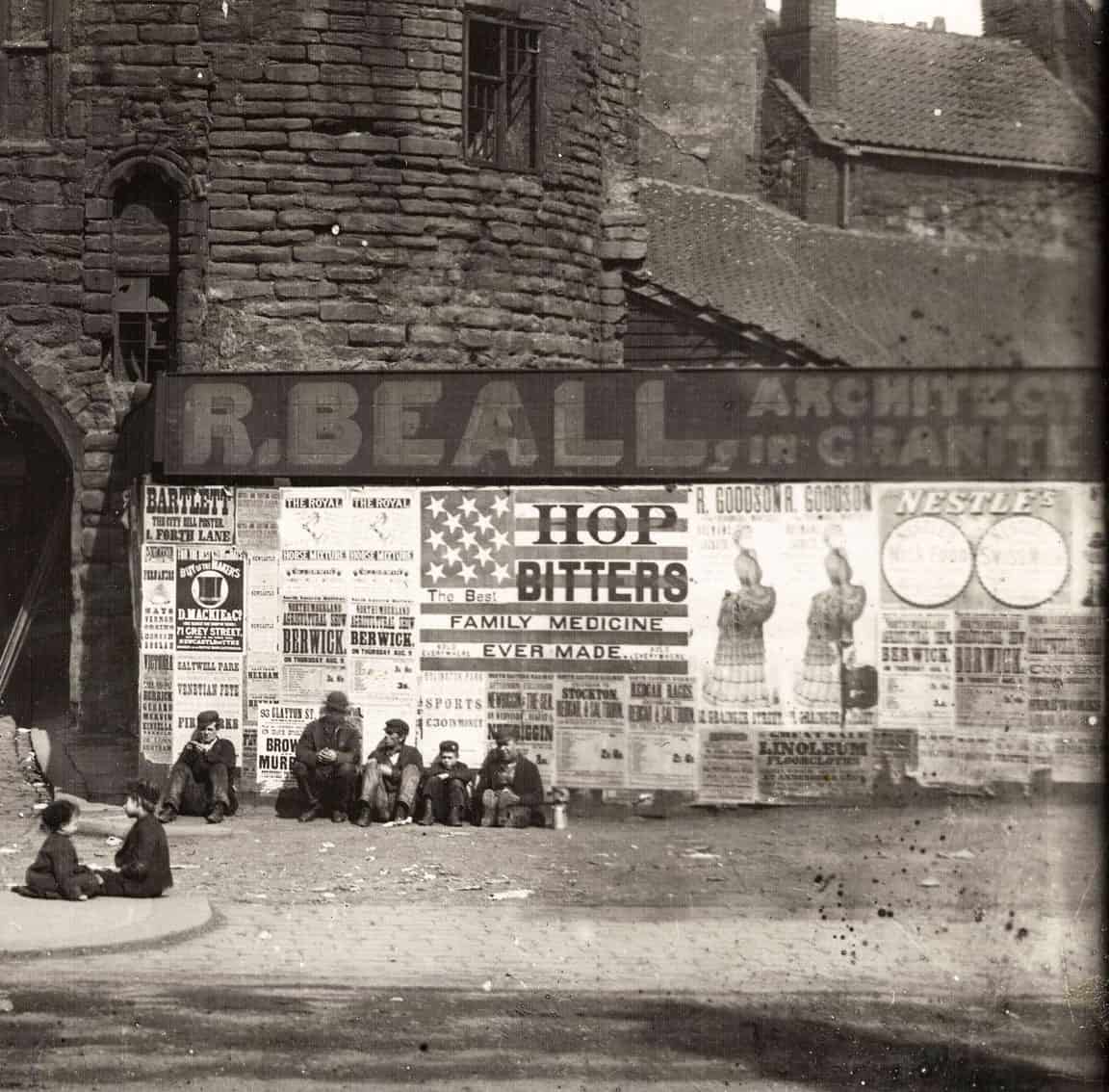
Hop Bitters poster at Newcastle on Tyne in England in 1880. – submitted by Billy Embleton

Asa was somewhat of an eccentric in many ways including the way he advertised their medicines and perhaps that’s what made him a fortune by the 1880s. Soule also had very large interests in Western Kansas ands thereunder of Soule College at Dodge City and the president and owner of the First National bank there. He also owned more than half the town of Ingalls, which became the county seat of Gray County. When H. H. Warner, out of Rochester began making inroads into his medicine business. Soule returned and went on to very successful.

The glass bill for bottles was $40,000 to $50,000 yearly, and from 70,000 to 80,000 boxes were used in the shipment of goods, which were handled by 30,000 dealers.

Hop Bitters Manufacturing Company
HBMC

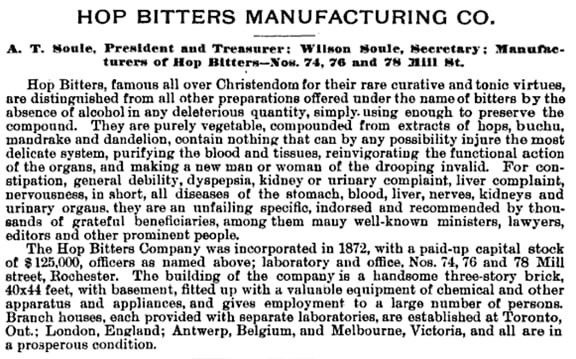
Hop Bitters Manufacturing Co. – The Industries of the City of Rochester, 1888

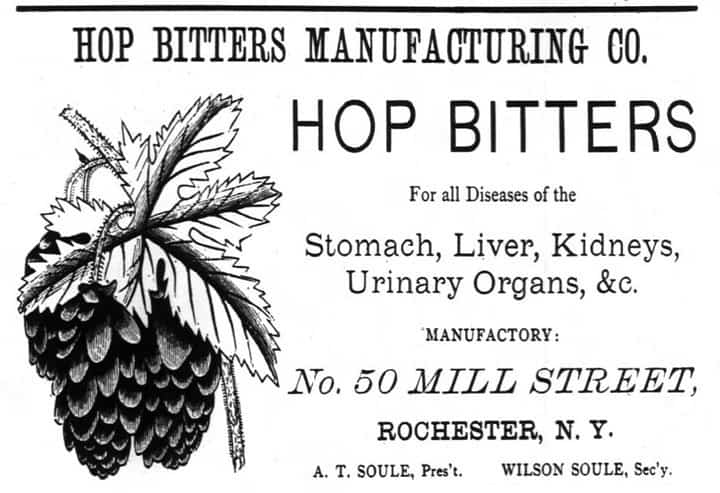
As noted above, Asa T. Soule was the president of the Hop Bitters Manufacturing Company and Wilson Soule was the secretary. This is noted on the advertisement below. Their company was located on Mill Street in Rochester, New York and occupied four floors. The trade was general, including England, France, Belgium, Holland, Australia and South America. The annual advertising bills were $170,000 to $180,000. The glass bill for bottles was $40,000 to $50,000 yearly, and from 70,000 to 80,000 boxes were used in the shipment of goods, which were handled by 30,000 dealers.
Soule_HopBittersAd_1878Rochester

Hop Bitters advertisement from Hop Bitters Manufacturing Co., A .T. Soule, Pres. and Wilson Soule, Sec’y, No 50 Mill St., Rochester, N.Y. – 1878 City of Rochester, NY Directory

The Carlyn Ring and W.C. Ham listing in Bitters Bottles is as follows:

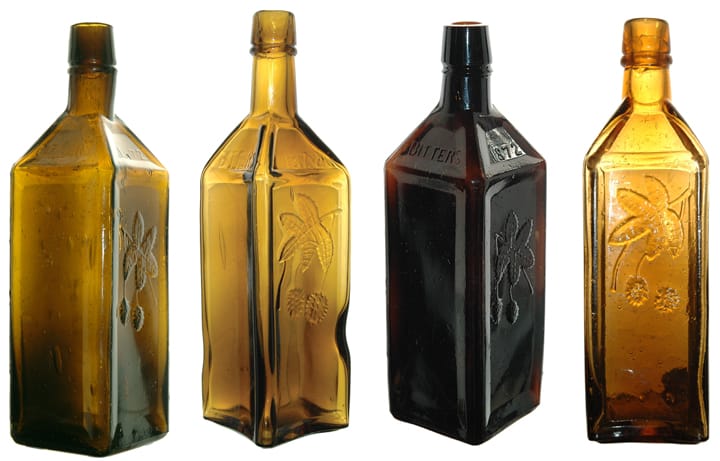
S 145  DR SOULES HOP BITTERS
// s // DR SOULES // HOP // BITTERS // 1872 //
sp // sp // sp // motif hop flowers & leaf // b // 5913 ( ) //
9 1/4 x 2 11/16 (6)
Square, Amber, Yellow and Yellow Olive, LTC, Applied mouth, 3 sp, Common
See note at Doyle’s. Also manufacturers of Dr. Soule’s Pills.
S145_DrSoules_X

The very similar, Dr. Soule’s Hop Bitters – Meyer Collection
Pamphlet

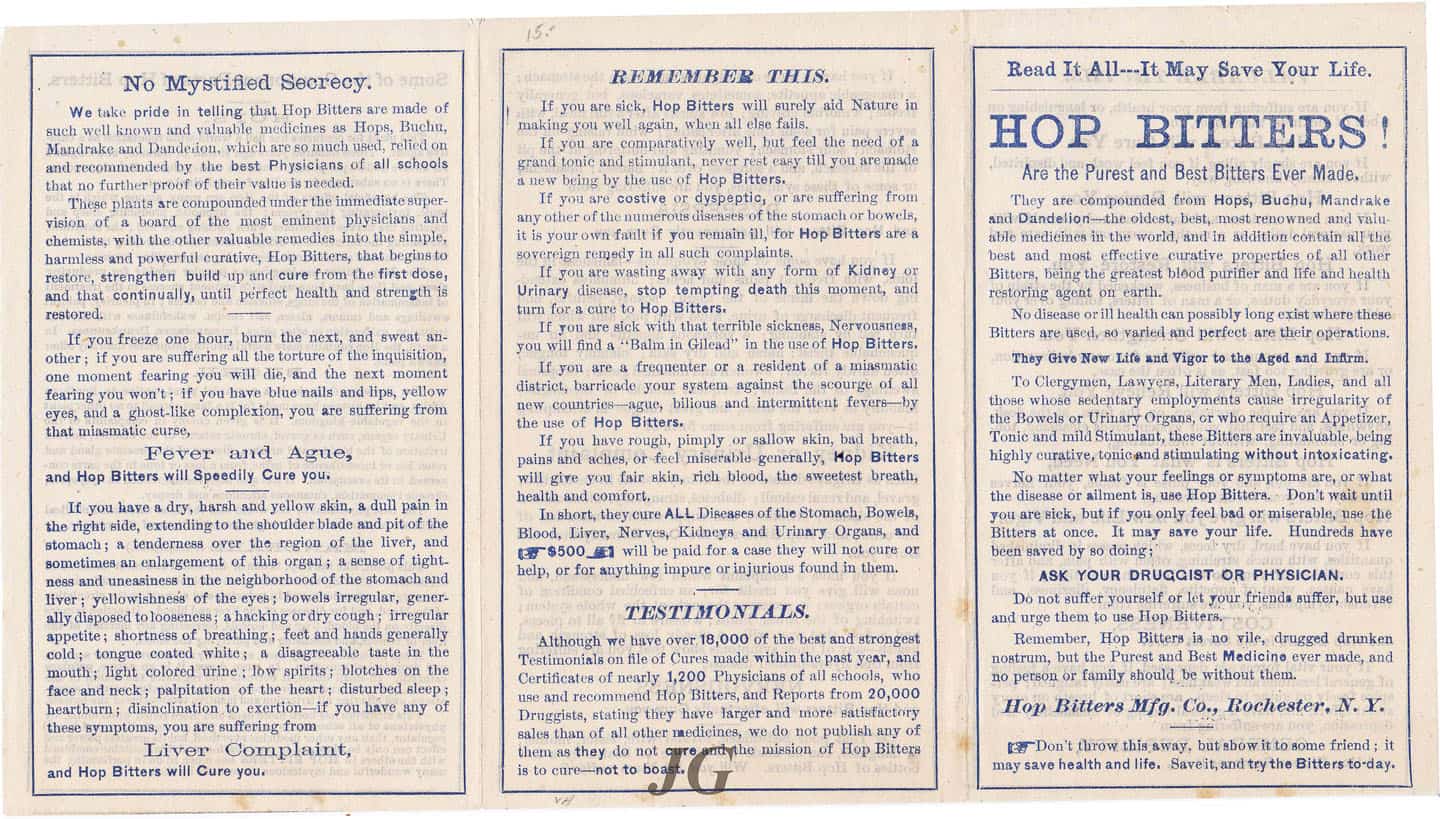
Promotion pamphlet for Hop Bitters, Hop Bitters Mfg,. Co., Rochester, N.Y. – Joe Gourd Collection.


New York Hop Bitters – New York Hop Bitters Manufacturing Company

New York Hop Bitters was made by Asa Soule and the New York Hop Bitters Company in Rochester New York. Many of the examples were made in Australia.

The Carlyn Ring and W.C. Ham listing in Bitters Bottles is as follows:

N 28  NEW YORK HOP BITTERS
Motif of American flag with 20 stars and 11 stripes / NEW YORK / HOP / BITTERS / COMPANY // f // f // f //
9 3/4 x 2 7/8
Square semi-cabin, LTC, Applied mouth, Aqua, Common
Pale green, Extremely rare; Yellow-olive, Very rare
Note: There are a number of variants of the New York Hop Bitters with variations in the flag, size of embossing and sizes, with the square beveled corner mold. Examples in colors other than shades of aqua and those with the raised rounded corners are rare.

New York Hop Bitters Manufacturing Company bottle – ABCR Auctions

New York Hop Bitters Company bottle in aqua – Meyer Collection

New York Hop Bitters Company bottle in aqua – Meyer Collection

Advertisement for Hop Bitters from Hop Bitters Manufacturing Co., Melbourne, Australia, Rochester, N.Y., Toronto, London, Antwerp and Paris – The Age (Melbourne, Victoria, Australia), Saturday, August 25, 1883


I am wondering if the next trade cards might be more directly related to the labeled Hop Bitters. Hard to tell…
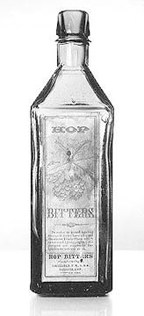
hopbitterslabeledH 171 LHop Bitters // s // DOYLE’S // HOP // BITTERS // 1872 //
Hop Bitters Manufacturing Co.
48 & 50 Mill Street, Rochester, New York
9 3/8 x 2 3/4 (6)
Square, Amber, LTCR, 4 sp
Label over motif of hop flowers
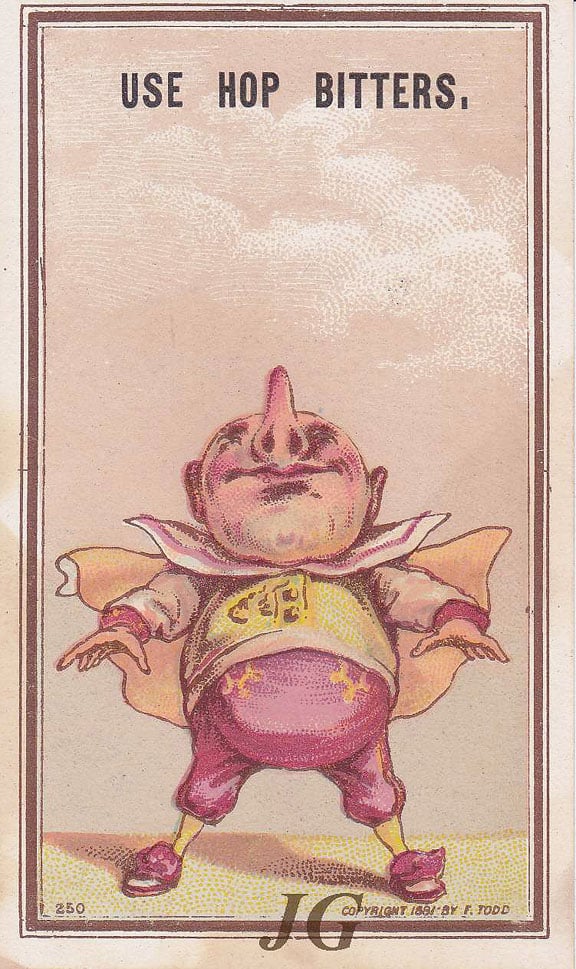
IMG_0029

Use Hop Bitters trade Card – Joe Gourd Collection
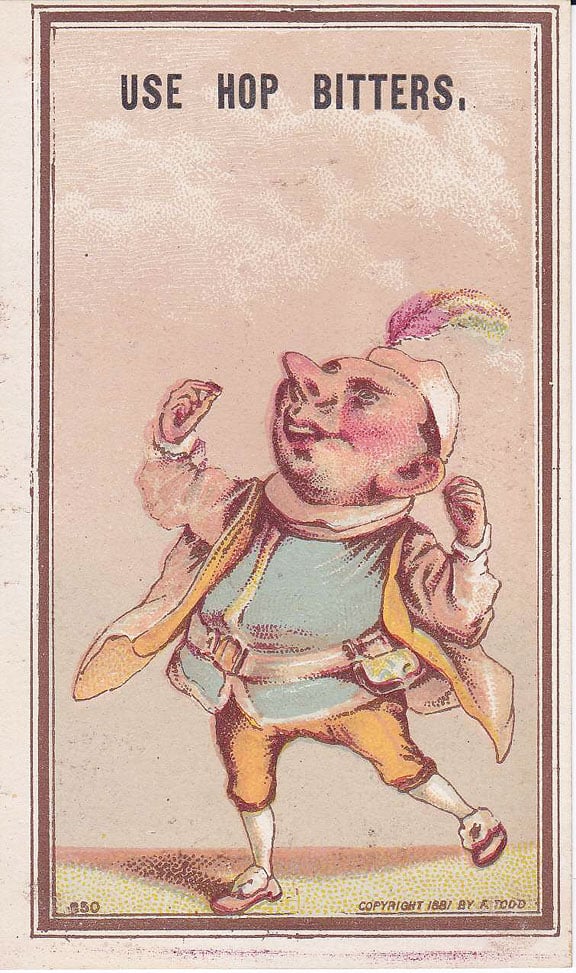
IMG_0030

Use Hop Bitters trade Card – Joe Gourd Collection
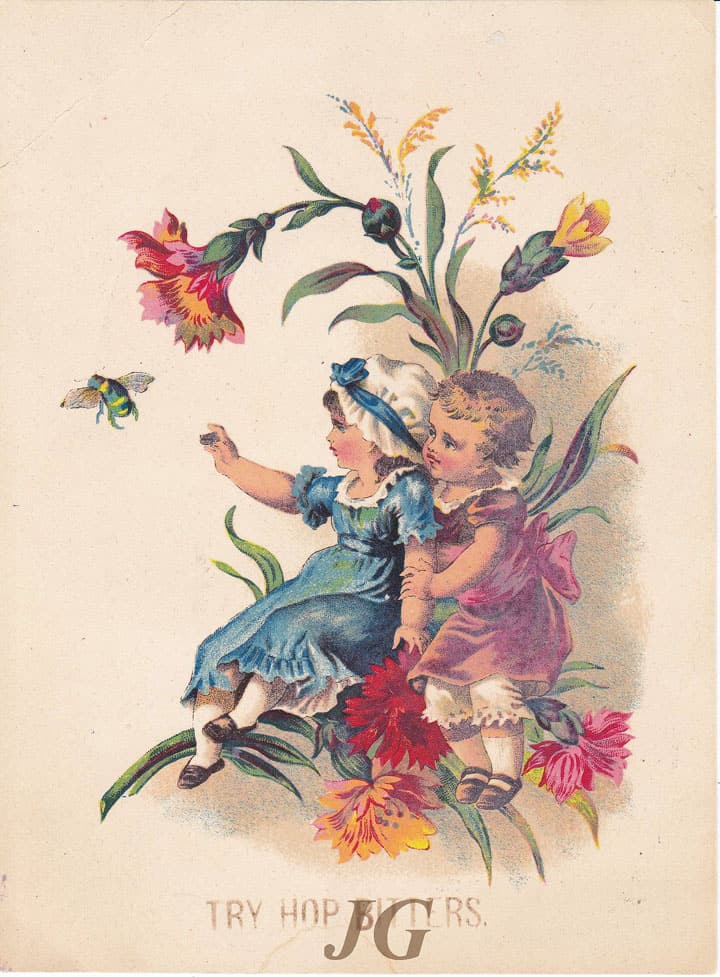
IMG_0037

Try Hop Bitters trade Card – Joe Gourd Collection

References: The Industries of the City of Rochester, The Sole SocietyAmerica’s successful men of affairs. An encyclopedia of contemporaneous biography

Select Listings: 

1824: Asa Titus Soule was born in Duanesburg, New York on August 2, 1824
1854: Wilson Soule was born in South Butler, Wayne county, New York on September 4, 1854
1872: John D. Doyle of Rochester, New York patented Doyle’s Hop Bitters in 1872.
1872: Asa and his son Wilson Soule start Hop Bitters Company in Rochester, New York.
1890: Notice (below): Asa T. Soule died on January 17, 1890, at his home in Rochester. – Springville Journal, Friday, January 24, 1890

Posted in Advertising, Bitters, Collectors & Collections, Ephemera, History, Medicines & Cures, Postage, Questions, Trade Cards | Tagged , , , , , , , , , , , | Leave a comment

Peachridge Glass: Mailbox Letters January – March 2014

www.studiomathewes.com

Apple-Touch-IconAPlease feel free to send any antique bottle or glass questions to ferdinand@peachridgeglass.com. The information will be posted if relevant or of interest to the readers. I will try to answer or wait for another reader to respond. Quality images are very important. Thanks! If you want to see previous questions,go to “Mailbox Letters” in “Categories” on the right column of each page.

Mailbox Letters

January – March 2014


Mystery bottle found buried in sand dune

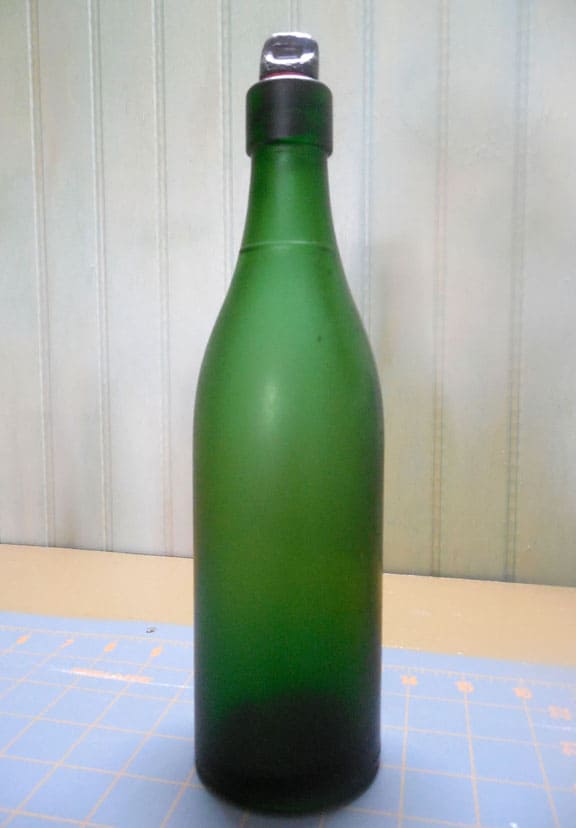
TruecoCanadaMay I ask for your assistance in identifying this bottle found on the northeast coast of Newfoundland, Canada? It has a plastic stopper with the word TREUCO on it. There’s an encircled capital B with a couple of waves beneath the B. Capital A at the top then Din then the B logo and 0,5 l ( written l) It has an internal treading too, I have more pics of it if you require. Thanks for your time and effort.

PRG: Not sure Tracey. Could be a later bottle from Dr. J. F. True & Co. from Auburn, Maine.


Masonic/Eagle flask

MasonicEagle

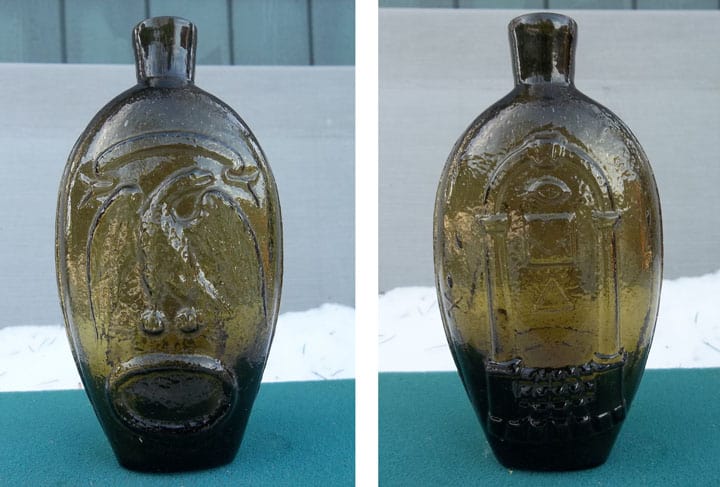
Dear Ferdinand, I found your website on line, and I have a really nice old bottle that I was hoping to get some more information about its worth and if you know of any collector who may be interested in it. I have been a bottle digger/collector for years, and I would like to sell this one before it accidentally gets broken . It is a Masonic/Eagle flask. Olive green, pontiled bottom, half pint. On the front it has an eagle with a banner above it’s head and an oval shape under it’s feet. There are no other markings on this side. (No initials in the oval, and no writing on the banner, nothing in eagles talons. On the reverse side are the Masonic arches, symbol of an eye, then under that, the Masonic symbol, then under that, a triangle with starburst around it. To the left of the left arch is a sunburst, then under that is what looks like a bubble, then under that is an “x” with a “bubble over the top. The main interest to me is that the Eagles head is turned to the left, and I could only find on internet, M&A flasks with eagle head turned to the right . Attached are the best photos that I took of the bottle. I look forward to hearing back from you.

Gary


Killer London Jockey Clubhouse Gin Bottle

LJ1

Hello Mr. Meyer,

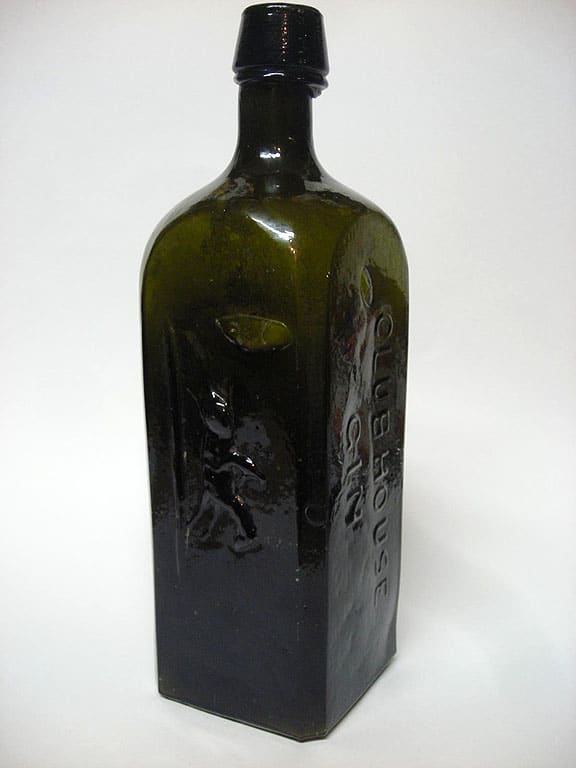
I’ve visited your website and read with interest the collection value of antique Clubhouse Gin bottles. I found one in southern Idaho years ago digging a well on our property. Recently I decided to see if it had any value and was surprised at what I found on the Internet. Here are a few photos of my dark green LONDON JOCKEY CLUBHOUSE GIN bottle.

PS:  You’ll probably notice this in the photos, but I forgot to mention the ‘N’s’ in the word – LONDON – are backward!  I assume this unique mistake would add to the value of the bottle.

Dale

Read: London Jockey Clubhouse Gin Bottle


Glass Whimsy Canes

glass_canexHello Ferdinand,

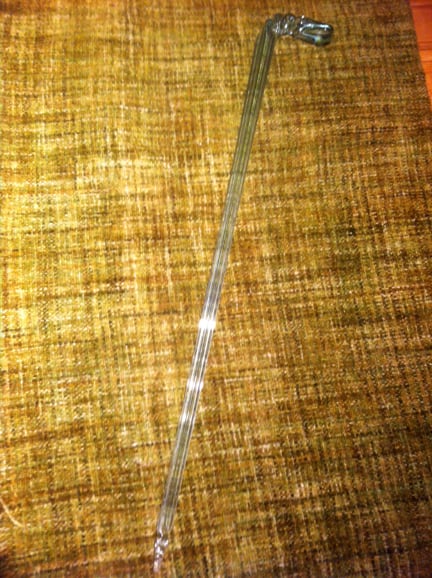
I found your post regarding glass whimsy canes (Glass Batons and Canes at Glass Works Auction #96 and Glass Cane Whimsies) and thought you might like to see the attached photos. The cane in the photos was purchased by my great-grandfather at the 1904 St. Louis World’s Fair. I have no idea how it survived all this time. I remember being allowed to play with the cane when I was a child, and I’m sure plenty of other ancestors and siblings did the same.

The cane currently resides on my piano, but my wife and I plan to display it more securely in the near future. Sorry for the quality of the photos (iPhone). If you are at all interested, I’d be glad to take some better ones with a decent camera. I just thought I’d let you take a look at these first.

Any idea what the cane is worth? I never know when to insure family heirlooms or not.

Tim DeMoss

PRG: Tim, the value here resides with memories. I doubt mush $ value.


Extensive collection of Barber Bottles

Mr. Meyer,

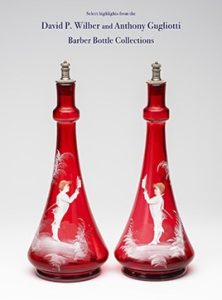
While searching the internet for information on Barber Bottle Collections I found your website. Recently our grandparents passed and our grandfather had an extensive collection of Barber Bottles. The collection started with his grandfather and has continued to be built upon. Our grandparents were also antique dealers for over 50 years so adding to the collection was not a hardship.

Do you know of any individuals who might be interested in purchasing such a collection or can you give me any ideas on who to contact to sell such a collection? The collection was insured for $50 K In addition to the bottles there is also an extensive barber mug collection. The collection is in Florida.

Any help you could give me would be much appreciated.

Sincerely,
Denise Mears


Labeled Royal Italian Bitters

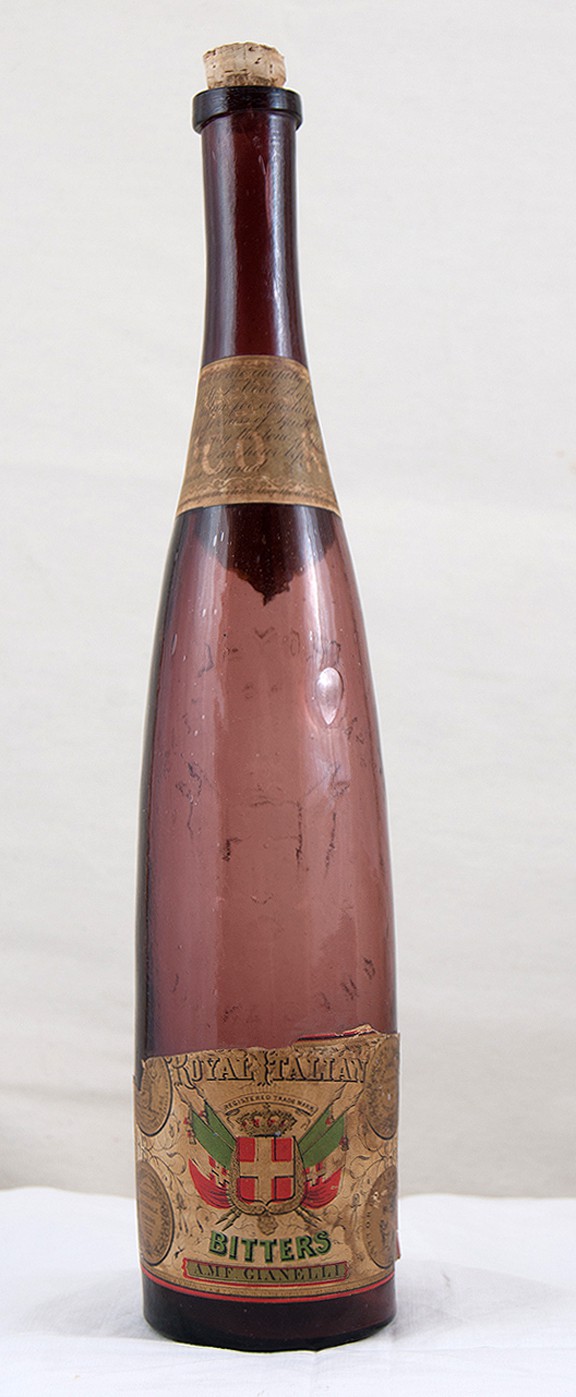
LabeledRoyalItalianHello, I recently found your site where you had posted some images of a bitters bottle which I also have. It is labelled Royal Italian Bitters, A.M.F. Gainelli Geneva. I have owned this bottle for 12 years, having found it in an attic of a very old Northern Vermont Farmhouse. There is quite a bit of label still legible as well as part of the cork. I have done nothing to clean it.It is as it was found, in excellent condition, no cracks, chips or stains.

I am wondering how one should price something like this, and if e-bay is the standard path to take for such sales or are there other places? Here is a photo of it, I have taken several and have very close up ones also that show it’s great condition.

Thank you so much for your help. – Annie

PRG: Wow, what I great bottle!. Have not seen a labeled example. Suggest one of the bottle auction houses.

Read: Royal Italian Bitters by A.M.F. Gianelli – Montreal


“Known Example” Question

book_cover

Hi, I found your website poking around on the internet and I was wondering if you could answer a question for me? Can you tell me how they know how many ‘known examples’ there are of any particular historical flask?  I noticed this reading on your website where there were references to “known examples” when talking about rare flasks. Is there a list somewhere that you can find out the number of examples of different historical flasks that are known? Thank you for your help. ~ Victoria

PRG: With extreme rarity it is possible to track known examples. There is not a list that I am aware of. There are a few Auction Price Guides that show what flasks have sold for over the years. Please check out this link on the FOHBC web site.


Dr. Von Hopfs, Curacoa Bitters found in 18th Century House

FoundChamberlain

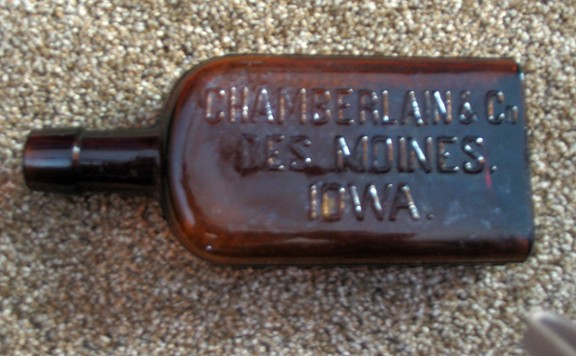
I have a glass bottle that is from Chamberlain and Co. Des Moines IA. Dr. Von Hopfs, Curacoa Bitters. On the bottom it says S B & C Co. The dimensions are 3 1/4 wide by 7 5/8 tall. It looks very similar to the V 28 DR VON HOPF’S CURACOA BITTERS, Circa 1890 that you have listed on your website. As far as we can see there are no cracks or chips, and it is in excellent condition. It does have a film that soapy water is not taking off. Do you have any suggestion as to what will take that film off? We found it in a 18-Century house that we tore down. We were wondering if you know any other history, like the dates it was made, and the value of the bottle? We look forward to hearing your response back.
Josh and Melinda

PRG: The bottle may need to be professionally cleaned. It may not be worth the cost as this is a fairly common bottle with a low price value.

Read: Dr. Von Hopf’s Curacoa or Curaco (or Curacao) Bitters


Posted in Advice, Mailbox Letters, Questions | Tagged , | Leave a comment

The Antique Bottle and Glass Facebook Sites

FOHBC_Friends

The Antique Bottle and Glass Facebook Sites

06 January 2014

Apple-Touch-IconAI remember giving a talk at one of the FOHBC membership meetings at a national show a few years back on the new generation of bottle collectors and how they communicate. When I mentioned ‘Facebook’, a few of the well respected, and well known collectors kind of bristled at the comment, basically saying, “don’t expect to see them on Facebook anytime soon”.

FacebookLogo_ART

Yes, I know, nothing may ever beat being at a bottle show and seeing glass in person wherever it may be, but we have to realize, you can basically immerse yourself with antique bottles and glass anytime and anywhere….online. It is, what it is. Times have changed.

I though I would spend a moment showing you some* of the Facebook sites related to our hobby. I realize many of you are aware of these sites but I also know, many of you are not. The numbers next to each destination represent the amount of ‘Facebook likes or members’ a page has, as of this date. If you are not a member of Facebook, it only takes a moment to become one. Join the other zillions of members on Earth.

* Yes, I know I have missed many Facebook sites and areas of our hobby. I just had to draw the line somewhere. It you feel like your page wants to be added, simply let me know.


Ricks BottleRoom – 881 Members

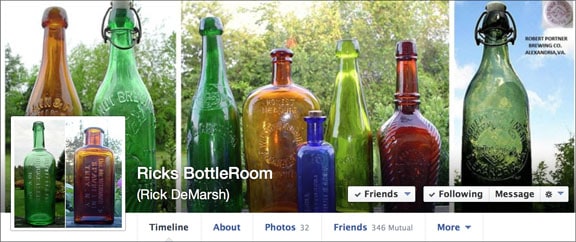
Rick DeMarsh has to be one of the very first to really explore the potential of Facebook and bottles. He is the ‘Go-To’ guy, in my opinion, with bottle questions. He is as helpful as can be and a possesses a wealth of information. This page also feeds Rick’s excellent web site of the same name. Visit

RicksBottleRoom_fb


The Federation of Historical Bottle Collectors (FOHBC) – 1,924 Members

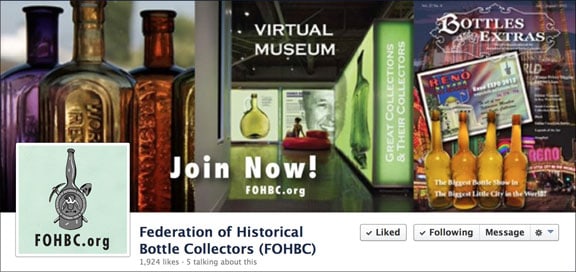
The official Facebook site is for the Federation of Historical Bottle Collectors. The site is typically used to capture the interest of new collectors and persons looking for bottle information and club information. A tremendous amount of information is posted on the site. Look for weekly antique bottle and glass news. The hope is that these new collectors will visit the FOHBC.org website and become members. Visit

FOHBC_fb


Peachridge Glass – 1,131 Members

This Facebook site is the ‘feeder’ page to the Peachridge Glass web site. The page is administered by Ferdinand Meyer V. Look for daily antique bottle and glass news. Visit

PRG_fb


Antique Bottle Collectors – 1,531 Members

Without a doubt, the fastest growing bottle and glass Facebook page. Started by Taylor McBurney and administered primarily by Rick DeMarsh. This group is open to anyone who collects antique (100+ year old) bottles or is interested in collecting antique bottles. There is a ton of material posted on here daily by veterans and newcomers alike. Visit

BottleCollectors_fb


Vintage Bottle Collectors – 566 Members

A Facebook site for the later, machine made bottles that are such an important part of our hobby. This group is for selling your vintage bottles and showing your vintage collection. Bottles newer than 1913 are considered vintage. Please ask Rick DeMarsh or Damonich your questions and they will be answered. Visit

Vintage_fb


Early American Glass Collectors – 352 Members

A wonderful Facebook site for early american glass especially, but not limited to rare glass items from historical American glass manufactorys. Headed up and attended by many eastern and New Englanders, like many of the sites, you can find a global audience. Visit

EAG_fb


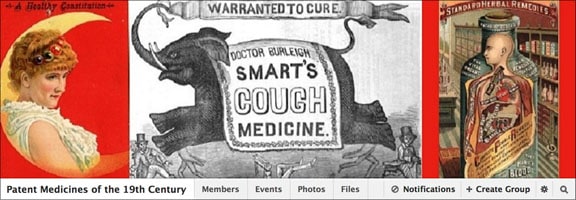
Patent Medicines of the 19th Century – 247 Members

This group is for discussing the history of early patent and proprietary medicines. Post photos of bottles, advertising, boxes, and other ralated items. The page is administered by Matthew Knapp. Visit

PatentMed_fb


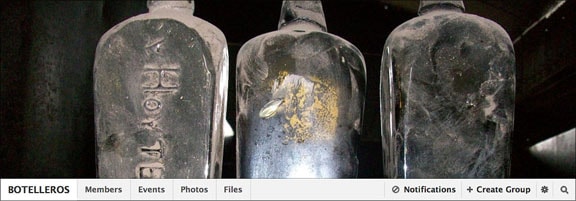
Botelleros – 329 Members

I thought I would include one of my favorite foreign bottle collecting pages. There are quite a few pages and the list seems to be growing all the time. If I am not mistaken, this site is administered by Martin Rodriquez. Visit

Bott_fb


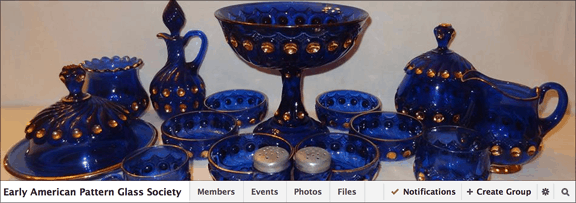
Early American Pattern Glass Society – 329 Members

A non-profit group of collectors and dealers who share an appreciation and love of pattern glass, to foster and encourage the collection, appreciation, study, preservation, and documentation of early American pattern glassware, and its place in American life, past and present. Website: www.eapgs.org Visit

Screen Shot 2014-01-06 at 7.34.53 AM


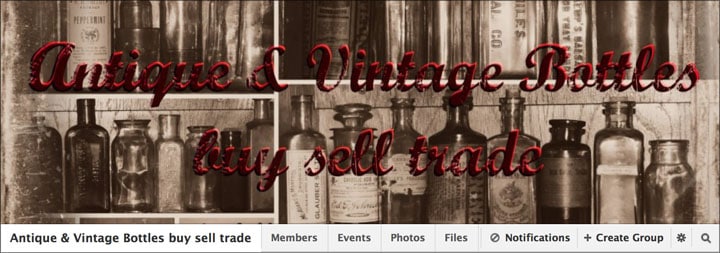
Antique & Vintage Bottles buy sell trade – 420 Members
Group for bottle collectors of all types..buy, sell or trade. Site administered by Michelle Chevallier. Visit

Vintage_fb


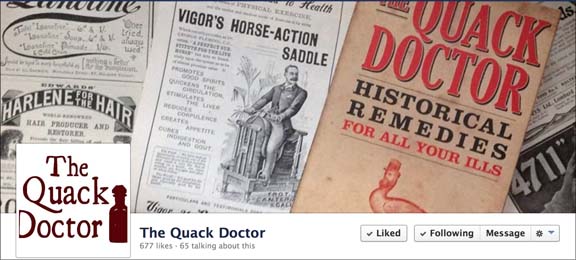
The Quack Doctor – 677 Members

The Quack Doctor is a blog about the strange history of patent remedies and the people who promoted them. The site feeds TheQuackDoctor.com Visit

Quack_fb


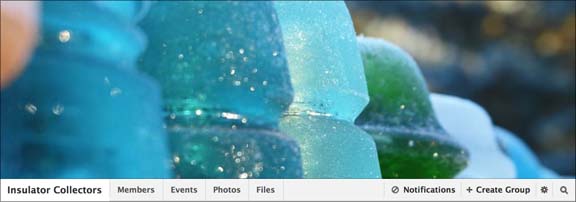
Insulator Collectors – 440 Members
Enthusiasts/collectors of antique glass or porcelain insulators. Visit

Insulators_fb


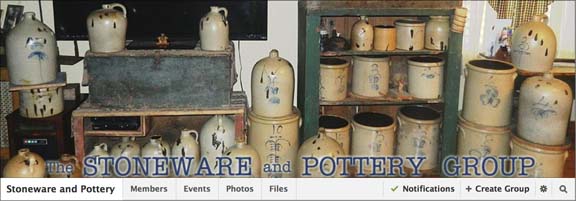
The Stoneware and Pottery Group – 612 Members

This is a discussion group for antique stoneware and pottery. A group that involves all types including early american, folk, ancient, etc. It is also for all types of jugs, crocks, bottles and other wares. Site administered by Rick Meech Burchfield. Visit

Stoneware_fb


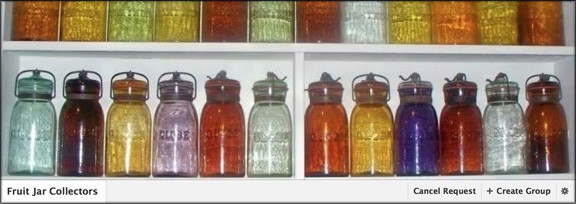
Fruit Jar Collectors – 67 Members

This is a group for people who collect antique fruit jars. Mason 1858, Ball Mason , etc etc. Visit

FruitJarCollectors


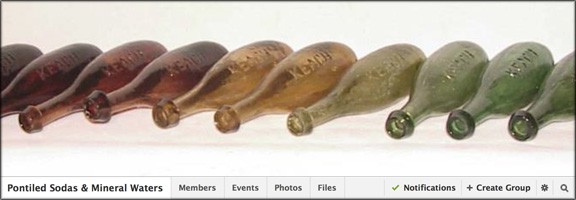
Pontiled Sodas and Mineral Waters – 114 Members

Pontiled Sodas and Mineral Waters Visit

Soda_FB


Posted in Advice, Facebook, FOHBC News, News, Peachridge Glass | Tagged , , , , , , , , , , , , , , | Leave a comment

I remember visiting the Sandwich Glass Museum

SWAll_SF

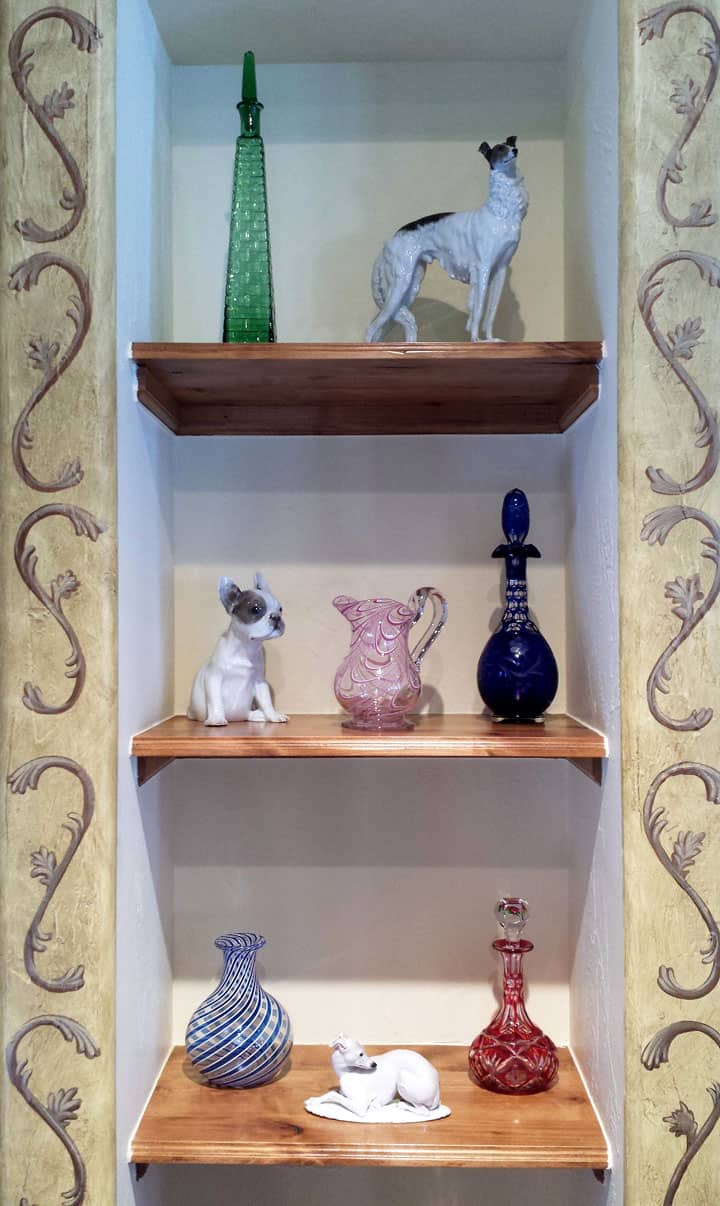
A mixture of some of my Sandwich glass as displayed in my living room along with some of my antique porcelain dog collection.

I remember visiting the Sandwich Glass Museum

06 January 2014

Apple-Touch-IconAIncoming e-mail and pictures from Denver, Colorado collector, Sandor Fuss. I had the privilege of seeing some of these pieces in person during a recent trip to see his historical flask and bitters collection prior to Christmas.

Hi Ferdinand,

Happy New Year!

Attached are several photos of some of my new Boston and Sandwich Glass Company objects. I grew up in the town of Chatham on Cape Cod and I remember visiting the Sandwich Glass Museum when I was a kid and really liking the material. The attached pictures represent a sample of my new collection, which I have incorporated into my home décor. These particular items are in my living room, where they are displayed with some of my antique porcelain dogs. I have to say that in my opinion antique glass and porcelain look very nice together!

The best thing about Sandwich glass is the beauty, rarity and relatively low prices considering these points. I actually own several unique objects that were very fairly priced. I would encourage anyone interested in collecting glass who is horrified at the prices of Historical Flasks and Figural Bitters to collect Sandwich glass and for that matter figural whiskeys, pattern molded and blown three mold to name just a few others.

Enjoy!

Sandor

SW1_SF

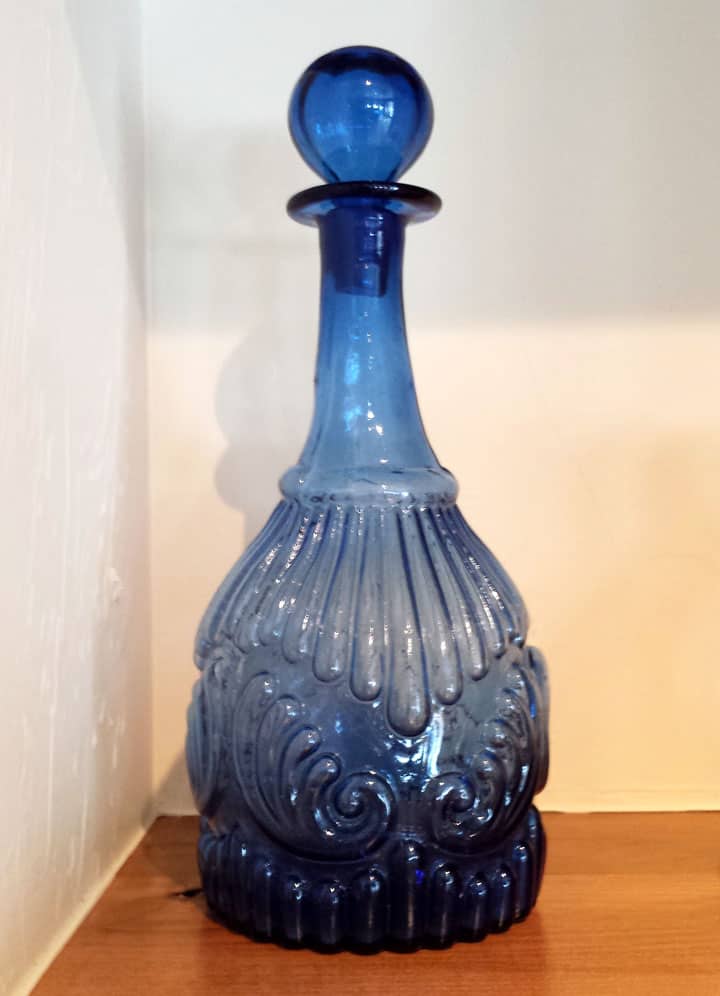
Blown Three Mold Decanter, Boston and Sandwich Glassworks, Sandwich, Massachusetts, 1825 – 1840. Medium sapphire blue, semi-barrel form with shell and rib pattern, tooled wide flared mouth with correct blown and ribbed stopper – glass tipped pontil scar, Qt, ht. 11 1/8” (including stopper), perfect. GV-8. Provenance: Ex. Frank E. Jedlicka collection. MW, plate 116, #2; BK #1334. A rare colored three mold decanter. – Fuss Collection

SW3_SF

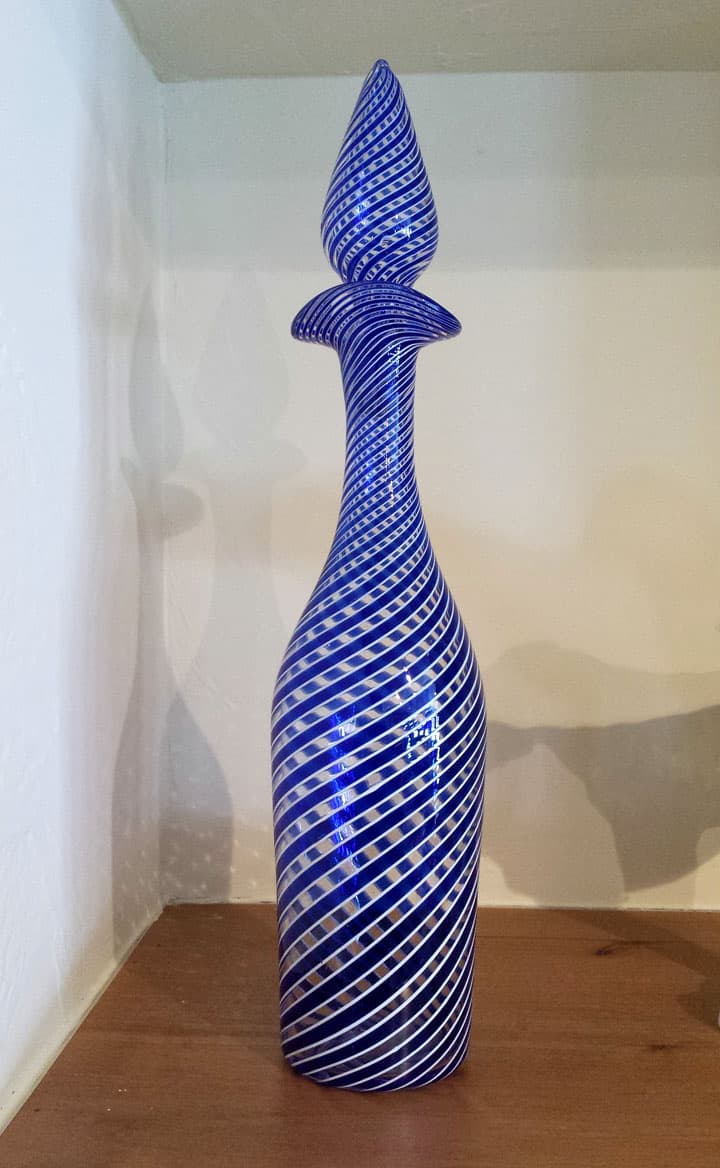
Blown Glass Decanter with Original Stopper, clear with blue and white striping, cylindrical, 15”H, polished pontil scar, tooled and flared mouth, mint. Blown at the Boston and Sandwich Glass Works, Sandwich, MA, C. 1865. Only known example. – Fuss Collection

SW5_SF

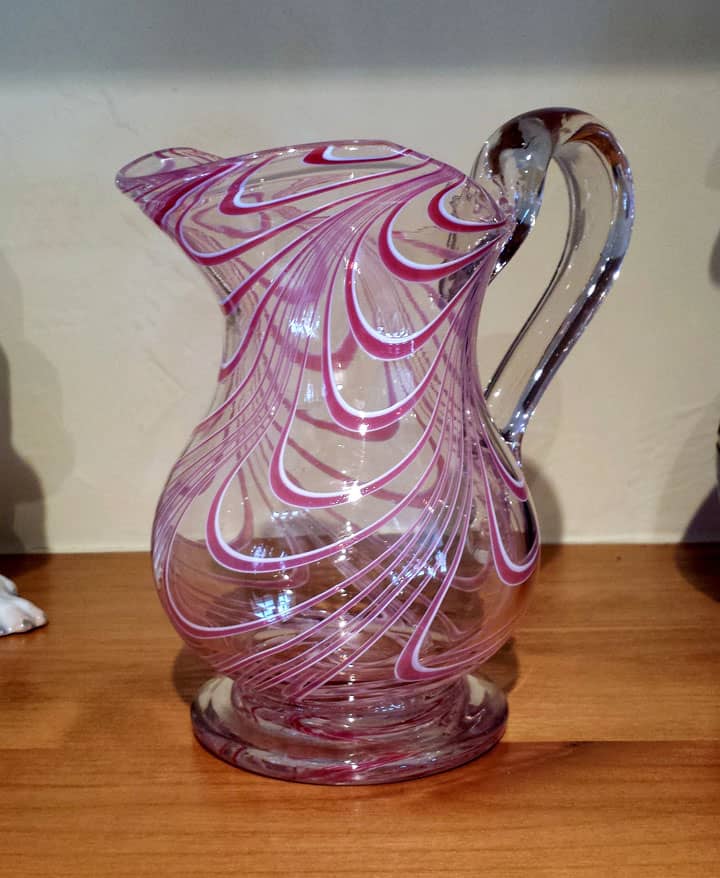
Blown Marbrie Pitcher, clear with red and white loopings, cylindrical with applied solid glass handle, 6 1/2”H , pontil scar, tooled mouth with exaggerated pour spout, mint. Blown at the Boston and Sandwich Glass Works, Sandwich, MA, C. 1855. Unique example. – Fuss Collection

SW4_SF

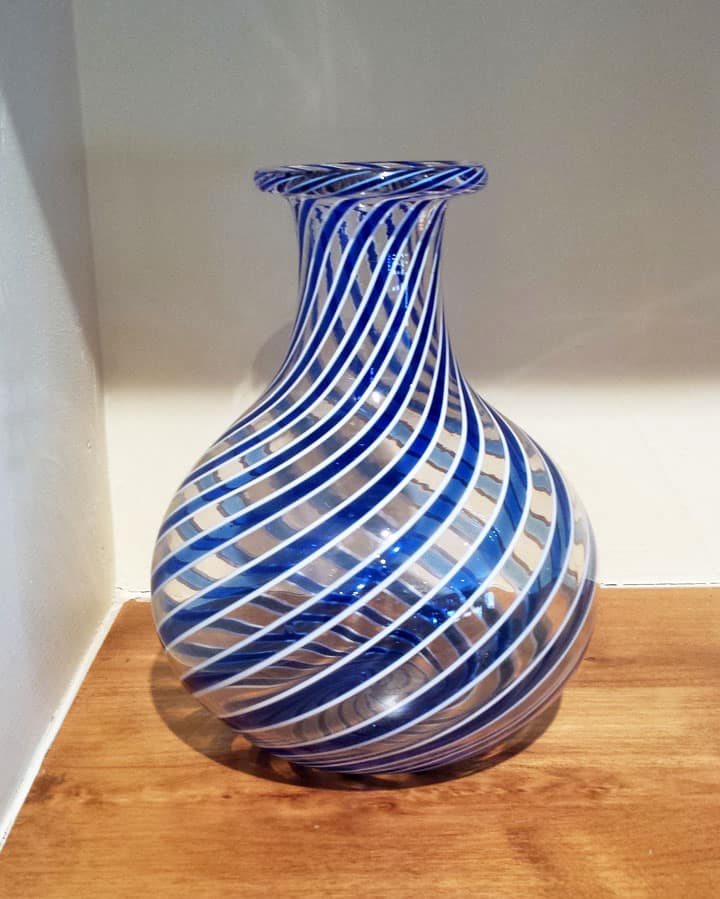
Blown Glass Latticino Carafe, clear with thirteen blue and white canes spiraling from left to right, 7”H, polished pontil, flared mouth, mint. Blown at the Boston and Sandwich Glass Works, Sandwich, MA, C. 1865. One of three known examples. The Sandwich Glass Museum does not own a specimen of this rare and important carafe. – Fuss Collection

Sandwich2_SF

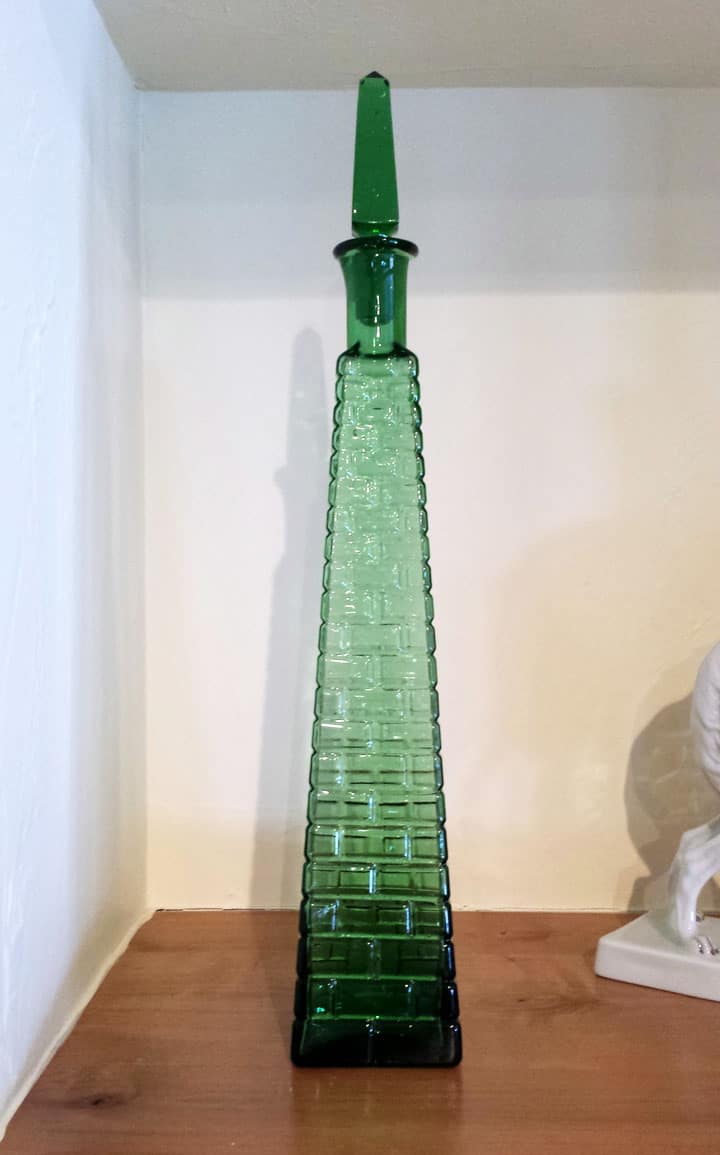
Figural Cologne Bottle, Boston and Sandwich Glass Works, Sandwich, Massachusetts, 1860-1888. Square monument form, brilliant medium grass green, tooled flared mouth with matching stopper – smooth base, ht. with stopper 14 1/2 inches. Similar in form to MW plate 114, #3. Ralph Finch collection. Unique with stopper. – Fuss Collection

Posted in Advice, Collectors & Collections, Cologne, Decanter, Display, Early American Glass, Glass Companies & Works, Glass Makers | Tagged , , , , , , , , , , , , | Leave a comment