Glass Works and Glass Factories Index
08 March 2012 (R•070314)
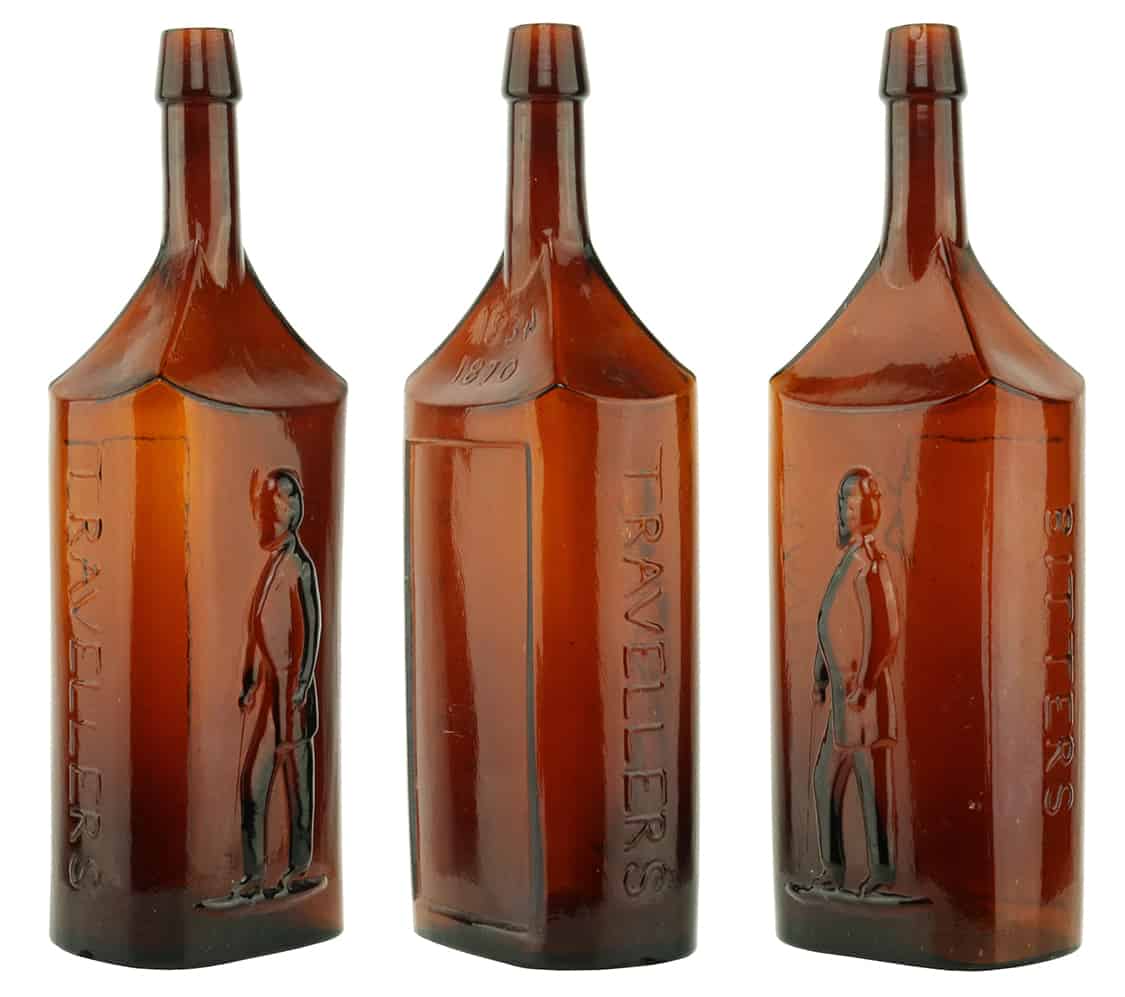
 I wanted to create an ongoing list a Glass Works and Factories with images, basic information and links. This is a work in progress. I really need to untangle this web in my mind of the myriad of glassworks and their development from their origins in South Jersey. Eventually I want to get a much better understanding of where the most Bitters Bottles were made. It seems that the Historical Flasks are fairly well documented.
Alexander and David H. Chambers Manufacturers (Pittsburgh, Pennsylvania) (1843-1889)
This was one of the most prolific glass companies in Pittsburgh during the mid-to-late 1800s. Huge quantities of bottles, flasks, and fruit jars were made, as well as window glass. Many local, regional, and nationally distributed sodas, mineral waters, beers, bitters, tonics, and other types of products were packaged in bottles made by A&DHC. Most commonly, bottles with this mark usually seem to date from the 1870s and 1880s, but the mark was probably in use at least from around the start of the Civil War, perhaps a bit earlier.
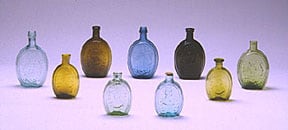
Historic Flasks – New Albany Glass Works
Albany Glassworks (Albany, New York)
The Albany Glassworks is believed to be one of the earliest glassworks operating in the United States. The glassworks was founded by Leonard de Neufville, who recruited experienced glass workers from Germany. In 1793 the firm advertised a reward of $50 for identification of any nearby source of sand suitable for use as raw material in glass making. Also, clay for making crucibles and sand for making glass were brought to Albany from Amboy and Port Elizabeth, New Jersey.
The Hamilton Manufacturing Society, also known as the Albany Glass Works, was one of the early glass houses in New York State, operating from 1785 to 1815 in the town of Guilderland, about six miles west of Albany. The Glass Works’ principal product was window glass, although they also manufactured bottles and flasks.
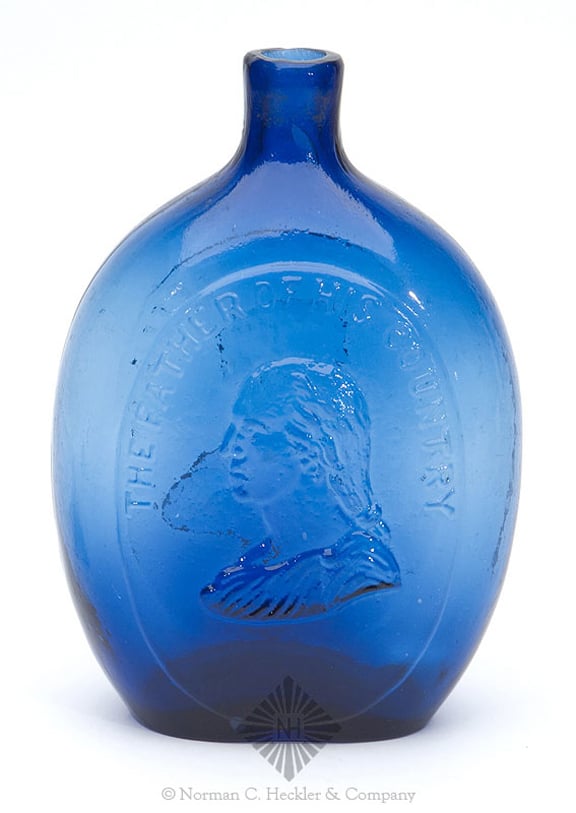
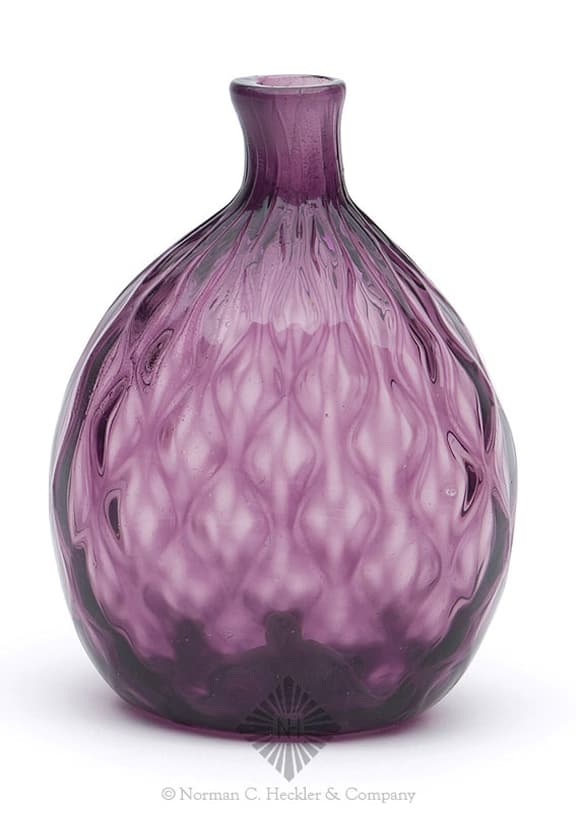
Mold-blown historic flasks of one-half-pint or one-quart capacity were made for rum and whisky. The bottles were made in various colors from pale green to almost purple, amethyst, rose yellow, amber, and white. Many have images of notable figures such as George Washington, Benjamin Franklin and Jenny Lind.
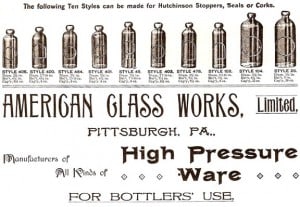
American Glass Works – Pittsburgh, PA – Hutchbook.com
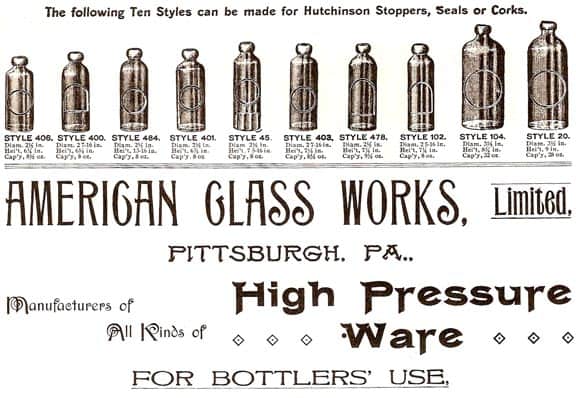
American Glass Works (Pittsburgh, Pennsylvania) 1866-1905.
This company, which was officially known as “American Glass Works, Limited” after 1880. American Glass Works, Limited, Pittsburgh, PA (1880-1905). Advertisements exist which show this company produced a large line of Hutchinson type soda bottles, as well as many other bottles including beers and mineral waters. The mark “A.G.W.L.” which appears on the heel of many Hutchinsons can be definitely attributed to this company.
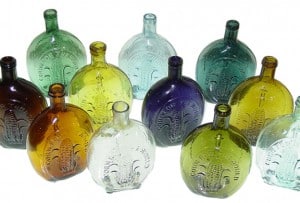
Corn for the World Historical Flasks – Baltimore Glass Works
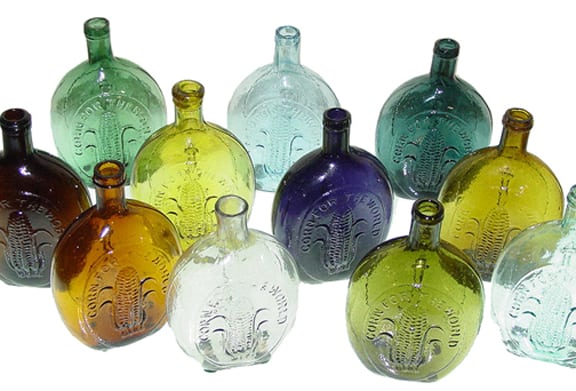
Baltimore Glass Works (Baltimore, Maryland) 1800-1905.
Includes a succession of firms. Various flasks and bottles are marked with the full factory name, and the majority of these probably date between 1830 and 1870.
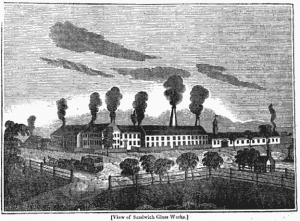
Sandwich Glass Works – 1835
Boston and Sandwich Glassworks (Sandwich, Massachusetts)
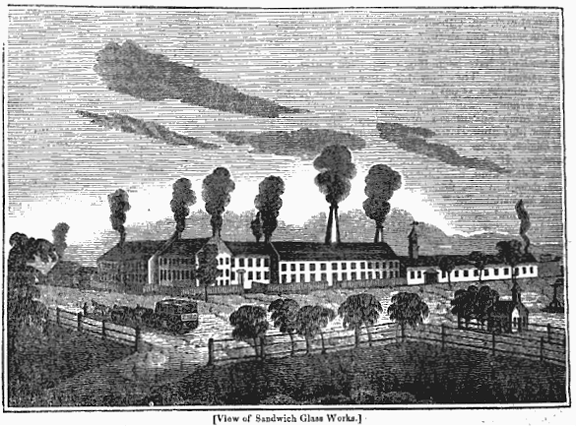
The Boston and Sandwich Glass Company was started by Deming Jarves in 1825. By 1827, it was one of three factories in the U.S. making pressed glass. By 1830, The Boston and Sandwich factory produced more pressed glass than blown ware. In 1858, Jarves resigned to start up the Cape Cod Glass Co., also located at Sandwich, MA. This was precipitated by differences of opinion between Jarves and some of the directors of the factory.
The Glass Workers union was initiated at Boston and Sandwich in 1879 and by 1887, a strike effectively closed the plant for good.
The term ‘sandwich glass’ has become a generic term for any lacy glass. Lacy glass is a very detailed, intricate pattern of old pressed flint glass during the mid-1800’s. The detailed patterns hid the imperfections in the glass that occurred during this time period. Boston and Sandwich never converted to the cheaper soda-lime formula for making glass and all of their glass is flint, or ‘leaded’ glass.
Brooklyn Glass Works (Brooklyn, New York)
 New Brooklyn, as a small village, is relatively unknown today except by glass collectors. It was originally known as Old Brooklyn and has disappeared from maps. All that remains is New Brooklyn Road (Route 536) from Williamstown to the Camden County border.
In 1831 John Marshall, aka Squire Marshall, started building a glass works in what was then called Seven Causeways. This later was known as Brooklyn and even later on as Old Brooklyn. Frederick Stanger had married the Squire’s daughter, Elizabeth Marshall. Frederick Stanger helped his father-in-law by supervising the building of the glassworks furnace, since Marshall was not a glassman. However, Frederick Stanger died on May 14, 1831 at age 45. Thomas W. Stanger, cousin of Frederick Stanger, joined the company and helped Squire Marshall to complete the glass works. The first blast of the Brooklyn Glass Works was in 1832. Three years later Thomas W. Stanger married his cousin’s widow, Elizabeth Marshall Stanger, who was 15 years older. The company was known as Marshall and Stanger until 1839 when Marshall withdrew at age 71.
By 1850 Thomas Stanger began building a new glass works containing 7 pots about a mile from the Brooklyn Glass Works. Thomas and Elizabeth Marshall Stanger were the parents of three daughters – Isabella, Frances and Elizabeth who died as a baby. Thomas Stanger named the glass works “Isabella Glass Works” after his daughter Isabella. Later it was called the New Brooklyn Glass Works to distinguish it from the original factory called “Old Brooklyn Glass Works.” Glassblowing commenced at the New Brooklyn Glass Works on September 9, 1850.
On a mid-1850s map of the area Thomas W. Stanger’s glassworks is shown located along a canal possibly dug by Stanger. A sawmill owned by George Marshall in 1828 is also shown along a pond created on Four Mile Branch. A company store opened in 1850.
In 1856 the Old Brooklyn Glass Works burned down. It was repaired and continued in use. Over the years due to depressions and labor strife the Isabella Glass Works was rented and sold at auction. Thomas W. Stanger remained as superintendent and had a continuing interest in the glass works.
Oddly an 1876 ledger noted “the Japanese govrnment sent one of their representatives to this factory to observe glassmaking there…he stayed about a year, observing, making sketches and drawings of the works and when he left he induced several of the blowers to accompany him back to Japan.”
Thomas W. Stanger died on February 23, 1892 and was buried in Glassboro. Isabella Stanger, for whom the glassworks was named, remained on the property. She lived in a small farmhouse and owned the land that once was the site of the glasshouse bearing her name. In 1933 Isabella Stanger was 94 years old and remembered the history of the glass works.
Presently the site of the Isabella Glass Works would have been located at the intersection of the Atlantic City Expressway and New Brooklyn Road in Monroe Township. It was located about 2,000 feet north of the New Brooklyn settlement.
Read: Brooklyn (Glass House Co.) 1754 – 1758
California Glass Works (San Francisco, California)
Another glassworks that little is known about is the California Glass Works, a concern that began in 1881 and seems to have slipped into oblivion some time after 1882. Research has only found three sources of information for this firm, the first coming from a book published in 1882; in it is written “The California Co-Operative Glass Works were established at San Francisco in 1881 by John L. Kelly & Co., with a capital of $7,000. The industry furnishes employment to 40 men and boys, who are turning out green, amber and white vials, bottles, and demijohns, to the value of $4,000 monthly. The works are located at the foot of Ninth Street.”
Camden Glass Works (Camden, New Jersey) 1875-1884
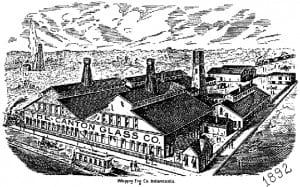
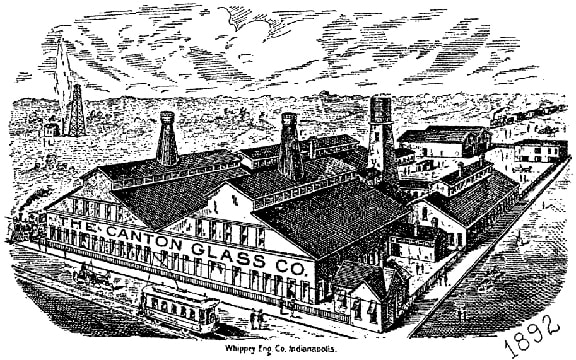
Canton Glass Company – 1892
Canton Glass Company (Canton, Ohio)
The Canton Glass Company had a long history of glass production – more than 80 years– in several locations in Ohio and Indiana. Known today mostly for their pressed glass tableware, they were also a maker of prism glass, claiming on their 1890’s letterhead, “The Largest Manufacturers in the World of Pressed Vault, Sidewalk & Sidelight Glass”.
Founded in 1883 on Marion Avenue in Canton, Ohio by Joseph K. Brown, A.M. Bacon, and noted designer David Barker, the Canton Glass Company produced a wide variety of glassware: lantern globes, bar goods, drug sundries, tableware, novelties, the patent Ribbed Filtering Funnel, and their Canton Domestic Fruit Jar (in clear and cobalt). Perhaps best known is their fruit jar, the cobalt version of which is a very rare, selling today for $5,000.
Clevenger Glass Works (Gloucester County, New Jersey) 1930 – 1999
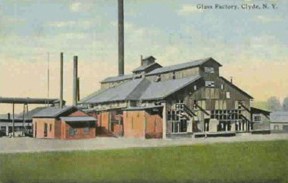
Clyde Glass Factory – Clyde, New York
Clyde Glass Works (Clyde, New York) 1868 – 1912
The Clyde Glass Works has quite a history. About the year 1820 William S. DeZeng purchased the land where the glass works is now located and with James R. Rees founded the present glass works in 1827.
It was then simply a window glass factory and the corner stone was laid March 27, 1828. under the superintendence of Major Frederick A. DeZeng. From 1828 to 1864 the window glass factory alone was run.
In 1864 the bottle factory was started, the firm being Southwick & Woods, then Southwick & Reed. Afterwards both factories were under the management of Southwick. Reed & Co. On July 24. 1873. the establishment was burned, but was at once rebuilt. In 1878 the buildings underwent repairs and the old corner stone was replaced by a new one August 10th.
In 1880 Mr. Reed retired and the firm became Ely Sons & Hoyt. After the death of Mr. Hoyt the name was changed to the Clyde Glass Works. Closed in mid 1914. [Rick DeMarsh]
Congressville Glass Works (Saratoga, New York)
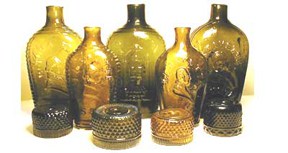
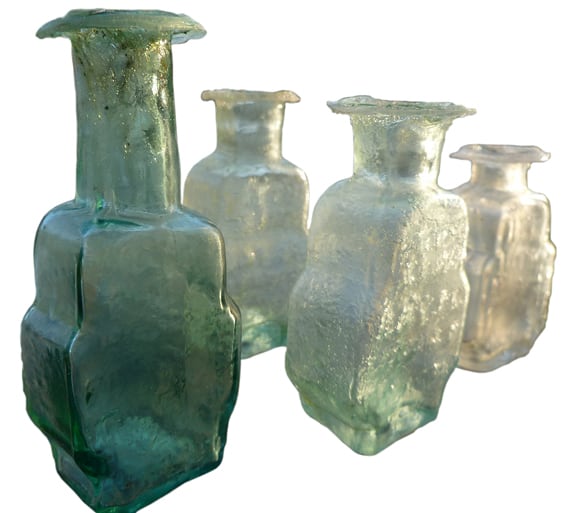
A grouping of Coventry Flasks and Inks
Coventry Glass Works (Coventry, Connecticut)
The Coventry Glassworks operated from 1815-1848. On January 14th, 1813, seven men signed an agreement to erect a glass factory at Coventry along the Boston Post Road. They were Captain Nathaniel Root Sr., Ebenezer Root Jr and Joseph A. Norton all of Coventry. Eli Evans, Thomas Bishop and Uriah Andrews were from East Hartford. By 1820, it is believed that Thomas Stebbins was operating the glassworks.
The Dowesburgh | Albany Glass House
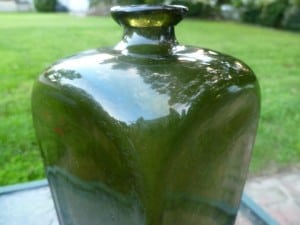 Leaving the town of Albany, New York, heading west on Route 20, you will arrive in Guilderland, about six miles west of Albany. Not much remains from the colonial era however, just after the Revolutionary War, Leenert De’Nuefville, who had raised a half million pounds towards the Colonists cause against England, was in need of cash again. Read: The Dowesburgh/Albany Glass House 1785-1815
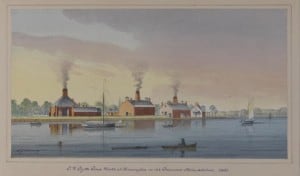
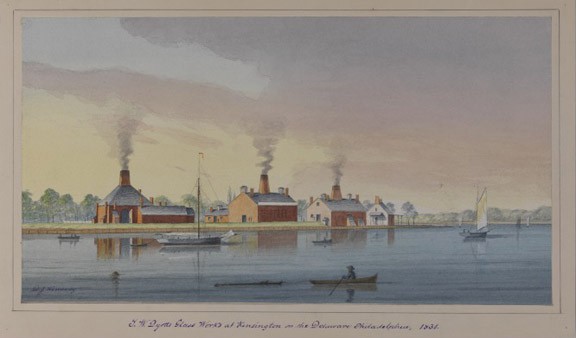
T. W. Dyott’s Glass Works at Richmond & Beach, as seen from the Delaware River, 1831
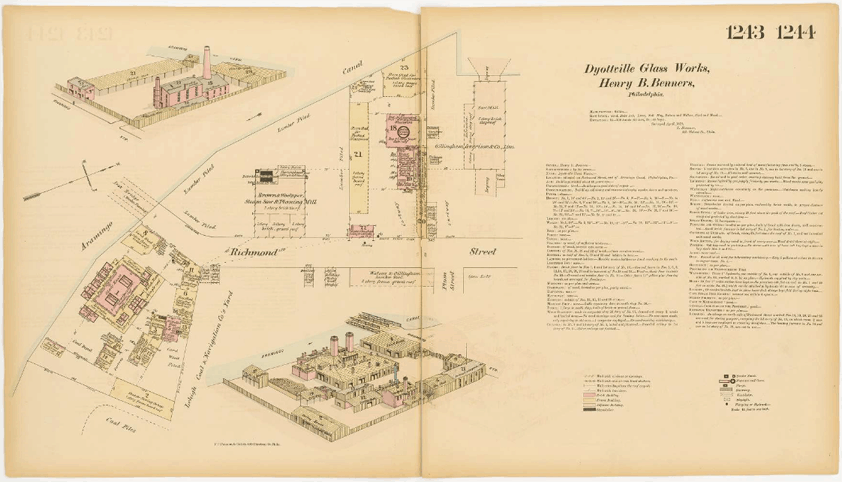
Dyottville Glass Works (Philadelphia, Pennsylvania) (see map of Dyottville Glass Works) 1833-1900+.
Factory had long been in operation, previously known as the Kensington Glass Works, before becoming known as Dyottville. Besides their early pictorial flasks (on which the name is found on the front or reverse of the bottle), other bottles found with this marking on the base are the cylinder whiskies which probably date mostly from the 1850s-1880s period.
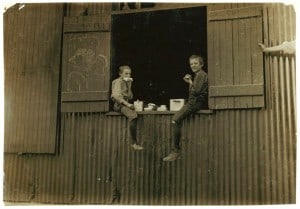
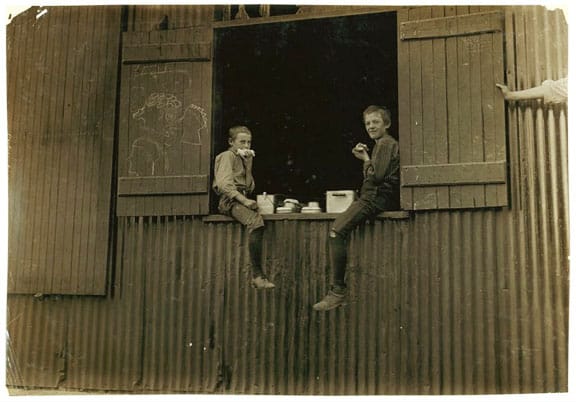
Lunch Time – Morgantown Glass Works, West Virginia
Economy Glass Works (Morgantown, West Virginia)
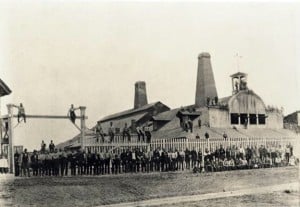
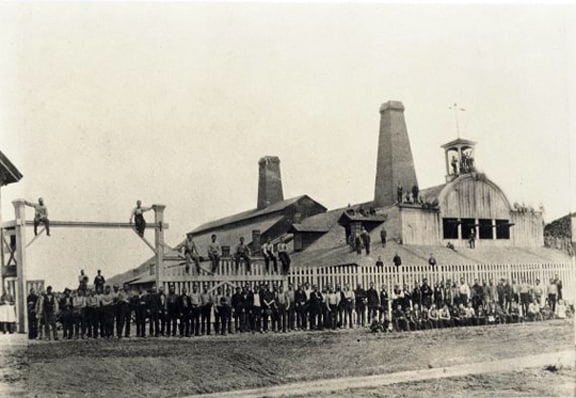
Workers in front of Ellenville Glass Factory, New York circa 1853.
Ellenville Glass Company | Ellenville Glass Works (Ellenville, New York)
The Ellenville Glass Company was organized in 1836 by a group of glass makers from Coventry and Willington, Connecticut, headed by Jasper Gilbert. The site was on Sandbergh Creek, where the New York, Ontario & Western station now stands, and in October, 1837, they began to make bottles, carboys and demijohns, using for fuel as much as ten thousand cords of hard wood a year from nearby forest land which they purchased. They had a company store on Canal Street. Ellenville bottles came to be in common use throughout the country and business flourished until the Civil War, which affected them adversely, so that in 1866 a new company was organized and incorporated, the Ellenville Glass Works, which took over the lands and factories of the old concern.
In 1869 this was said to be the largest establishment of its kind in the United States, giving employment to about 540 persons, including many women and children, who covered the bottles with a basket work of willow twigs raised on the company’s Willow Lot. In 1871 the glass works covered twelve acres of ground and had an outlet store in New York City, but was knocked out by the depression of 1873, foreclosed and, in 1882, its property was finally sold to Charles A. Edwards. A new company, the Ellenville Glass Factory, was organized, in which many of the glass blowers bought shares. They made green and amber glassware, flasks, wine and beer bottles and one and five-gallon demijohns. In 1886 they started making white glass for insulators and fruit jars, with silica ground from Shawangunk Creek. A huge stone bowl used for grinding the rock now forms the base of a fountain set up by the railroad company.
On November 20, 1886, a strike promoted by the Knights of Labor for higher wages and the elimination of apprentices was partially successful and on December 24 the strikers resumed their work. However, business declined and in spite of heroic efforts by the trustees, ended in 1896 by foreclosure.
Although the chief product of the various factories was bottles, paper weights and ornamental objects were also made. Mrs. Roy W. Ball, of Ellenville, has about twenty-five rare pieces of great interest to old glass collectors.
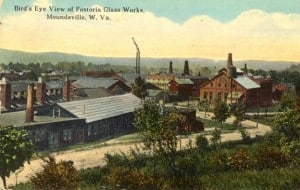
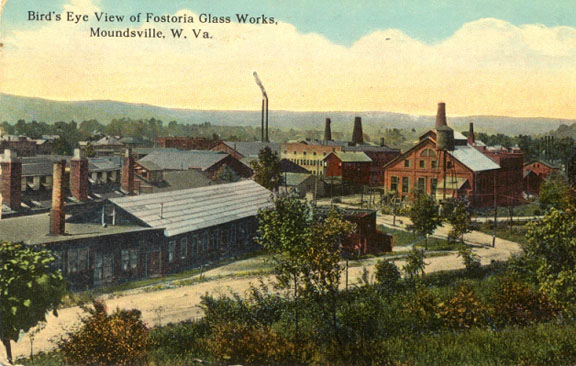
Fostoria Glass Works Post Card
Fostoria Glass Works (Moundsville, West Virginia) The Fostoria Glass Company manufactured pressed, blown and hand-molded glassware and tableware for almost 90 years. It began operations in Fostoria, Ohio, on December 15, 1887, at South Vine Street, near Railroad, on free land donated by the townspeople. When natural resources declined in Fostoria, the company moved to Moundsville, West Virginia, in 1891.
Glass House Farm (Glass House Co.)
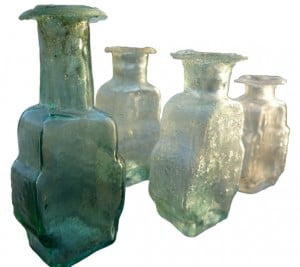 A farm that ran from Fitzroy Road to the Hudson River in what is now the West 30′s in New York City was the site of the last Colonial glass works. It was called The Glass House Farm because of a glass-bottle factory established there in 1758. The factory lasted ten years, but the Glass House Tavern, on the same property, was a popular roadhouse and stage coach stop, up until the Revolutionary War and after. Read: Glass House Farm (Glass House Co) 1758 – 1772
Hamilton Glass Works – 1864-1898 – Hamilton, Ontario – Hamilton Glass Works founded in 1864 by four men: Lyman Moore, John Winer, George Rutherford, and Nathan Gatchell (who was the only co-founder with previous experience, having owned the ( Lancaster Glass Works in Lancaster, New York ). The following year Nathan Gatchell left the company and his interest was subsequently acquired by George E. Tuckett and John Billings. However, these two men didn’t find the glass business very exciting and in 1866 they returned to the tobacco business instead. The Hamilton Glass Works was originally located at the eastern end of the block surrounded by Macauley Street, James Street East, Hughson Street, and Picton Street. By 1874 the company had acquired the entire block, illustrating how successful it had become. The following year, however, some competition had developed in the form of the Burlington Glass Works. Founded by Edward Kent, this new company was located at the intersection of Burlington and MacNab Streets in Hamilton. Though the Burlington Glass Works was arguably the most prolific glass works of its day, this did not prevent it from being purchased by the Hamilton Glass Works in 1885. Though this event effectively ended competition between the two companies, in the end it was of little consequence since both glass works were bought up by the Diamond Glass Company in 1891.
Hilltown Glass Works – Bucks County, Pennsylvania
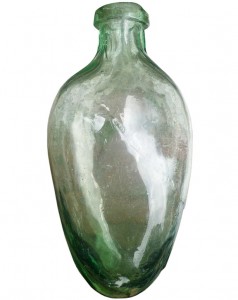 Read: Hilltown Glass Works site in Bucks County, Pennsylvania 1753-1784
Isabella Glass Works (New Brooklyn, New Jersey) In 1850 Thomas Stanger began building a new glass works containing 7 pots about a mile from the Brooklyn Glass Works. Thomas and Elizabeth Marshall Stanger were the parents of three daughters – Isabella, Frances and Elizabeth who died as a baby. Thomas Stanger named the glass works “Isabella Glass Works” after his daughter Isabella. Later it was called the New Brooklyn Glass Works to distinguish it from the original factory called “Old Brooklyn Glass Works.” Glassblowing commenced at the New Brooklyn Glass Works on September 9, 1850.
On a mid-1850s map of the area Thomas W. Stanger’s glassworks is shown located along a canal possibly dug by Stanger. A sawmill owned by George Marshall in 1828 is also shown along a pond created on Four Mile Branch. A company store opened in 1850.
In 1856 the Old Brooklyn Glass Works burned down. It was repaired and continued in use. Over the years due to depressions and labor strife the Isabella Glass Works was rented and sold at auction. Thomas W. Stanger remained as superintendent and had a continuing interest in the glass works.
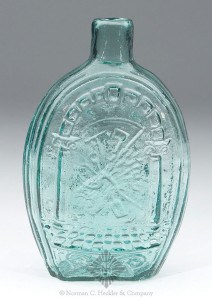
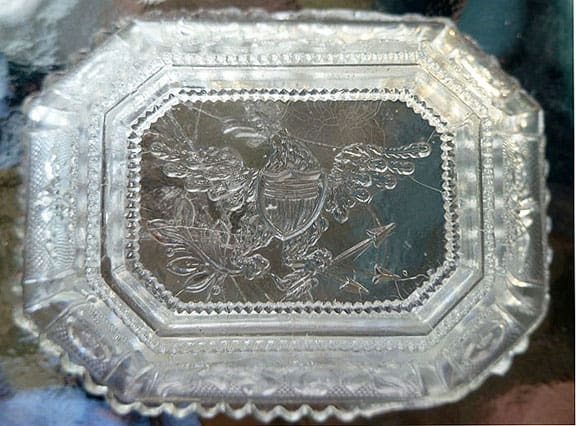
Masonic Arch and Emblems – Eagle “Zanesville / Ohio/ J. Shepard & Co” Historical Flask, J. Shepard and Company Manufacturers, Zanesville, Ohio, 1820-1830. Pale blue green, sheared mouth – pontil scar, pint. GIV-32 – Heckler Auction
J Shepard and Company Manufacturers (Zanesville, Ohio)
Keene Marlboro Street Glassworks (Keene, New Hampshire)
Kensington Glass Works (Philadelphia, Pennsylvania) 1833-. Factory had long been in operation, before becoming known as Dyottville.
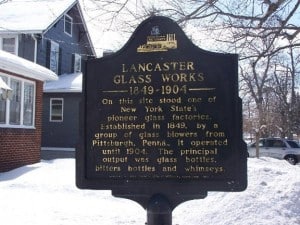
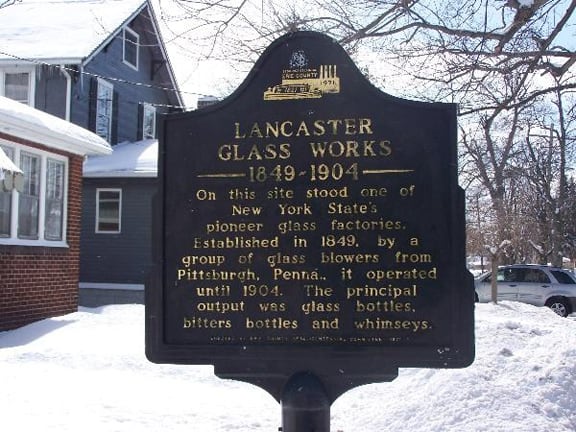
Lancaster Glass Works Historical Marker
Lancaster Glass Works (Lancaster, New York) Lancaster Glass Works operated from 1849-1904. The marker reads “On this site stood one of New York State’s pioneer glass factories. Established in 1849, by a group of glass blowers from Pittsburgh, Penna., it operated until 1904. The principal output was glass bottles, bitters bottles and whimseys”.
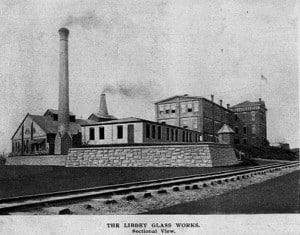
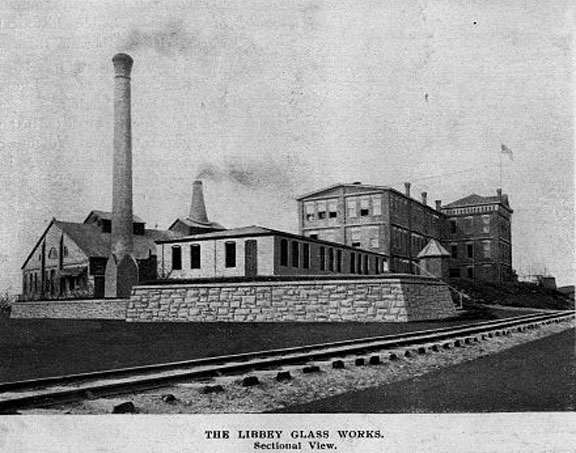
Libbey Glass Works – Toledo, Ohio
Libbey Glass Company (Toledo, Ohio) William L. Libbey took over the New England Glass Company in 1878 and renamed it the New England Glass Works, Wm. L. Libbey & Sons Props. In 1888 Edward Drummond Libbey moved the company to Toledo, Ohio. In 1892, the name was changed to The Libbey Glass Company.
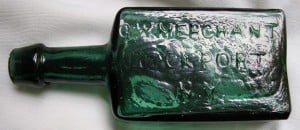
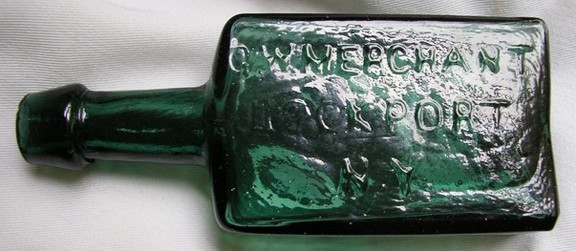
Dr. George W. Merchant Celebrated Gargling Oil – Lockport
Lockport Glass Works (Lockport, New York) Dr. George W. Merchant started making his Celebrated Gargling Oil in 1833 in Lockport NY.
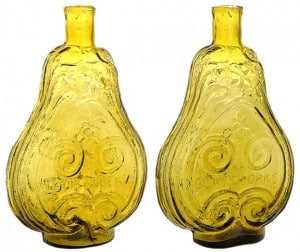
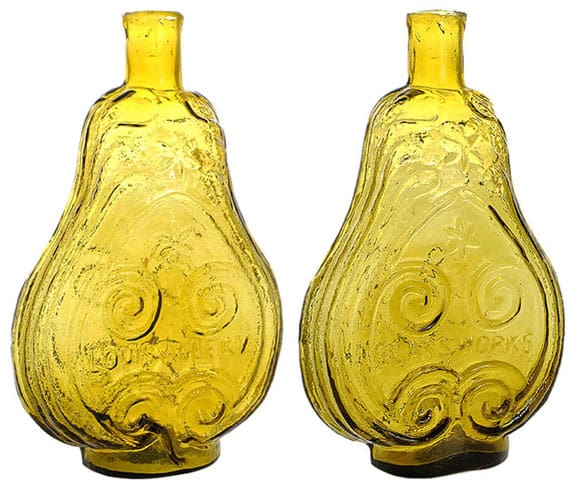
GIX-6 Louisville Glass Works Scroll Flask
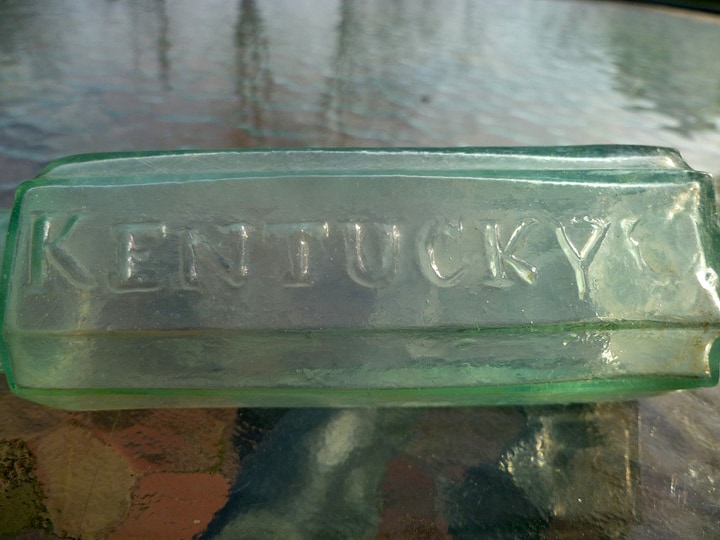
Louisville Glass Works (Louisville, Kentucky)
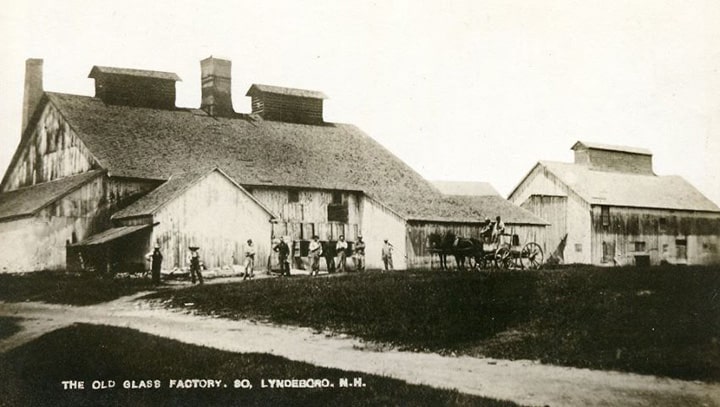
The Lyndeborough Glass Company
The Lyndeborough Glass Company (New Hampshire) Incorporated June 1866, Capital, $200,000 ; Shares, $100 ; Principal Office, South Lyndeborough, N.H. Read: The Lyndeborough Glass Company
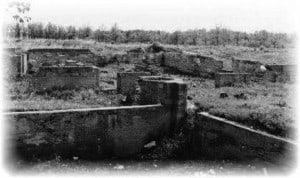
The Manitoba Glass Works Historic Site
Manitoba Glass Works (Western, Canada) The Manitoba Glass Works historic site is the site of the first glass container factory in Western Canada. It was built in 1906 by Joseph Keilback and his partners. Glass-blowers from Poland and the United States, aided by local labor, used silica sands to produce bottles for breweries and soft drink companies in Winnipeg, which served the prairie market. Semi-automatic machines were soon installed to increase production. Winnipeg businessmen took over and enlarged the plant between 1909 and 1911. The new company expanded its production to include jars, medicine and ink bottles. At its peak it employed 350 workers. Download PDF article.
Mantua Glass Works (Mantua, Ohio)
Maysville Glass Works
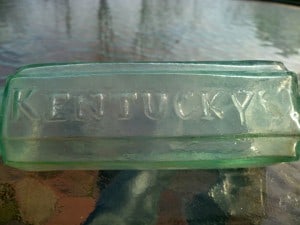 The Kentucky glass industry begins with a gentleman with a colorfull past named John Henry Bolinger (known as Henry). Henry was born in 1761 in Lancaster County, Pennsylvania. In 1803, he was married in the First Reformed Church in Lancaster, Pennsylvania to Susan Anna Wigman who was born 1780. She was the daughter of Joachim Wigman. By 1805, the couple had moved west over the Alleghenies. They settled in Pittsburgh and Henry began to work for Colonel O’Hara at the glass works south of Pittsburgh. Soon Henry became involved in politics and he was elected as the High Constable of the city of Pittsburgh in the general election on March 15, 1806. Read: Henry Bolingers Maysville Glass-Works 1814-1825
Mechanic Glass Works (Philadelphia, Pennsylvania)
Mount Vernon Glass Works (Vernon, New York) An act for incorporating the stockholders of the Mount Vernon Glass Company was passed by the New York State Legislature on February 17, 1810. The originating stockholders were Abraham Van Eps, William Root, Benjamin Pierson, Robert Richardson, Isaac Coe, Daniel Cook, Benjamin Hubble, David Pierson, Oliver Lewis and other local businessmen from Utica, NY and the surrounding area.
While other glassworks in the area concentrated on the production of window glass, Mount Vernon produced bottles and hollow ware. Products of this glass works were primarily made from olive-green and aqua glass. Eventually flint glass was added to their line and blown three mold and some pressed table wares were produced.
The glassworks was sold to Charles Granger in 1823. In 1828 the incorporation expired and the operations were continued as C. Granger & Co. Charles operated the glass factory with various partners until 1841 when he sold 3/4 of the company to his brother Oscar, Walter S. Todd and Henry Chapman. The following year Chapman sold his share to Oscar and Walter and in 1843 Charles sold them his remaining share. Between the years 1844 and 1846 Oscar Granger and Walter S. Todd moved the factory to Mt. Pleasant, NY. It is assumed that the factory was moved due to a shortage of wood.
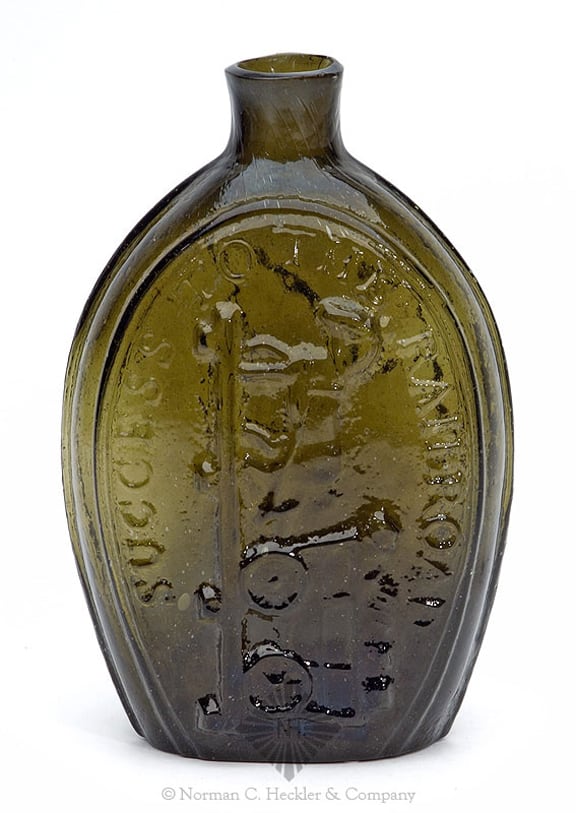
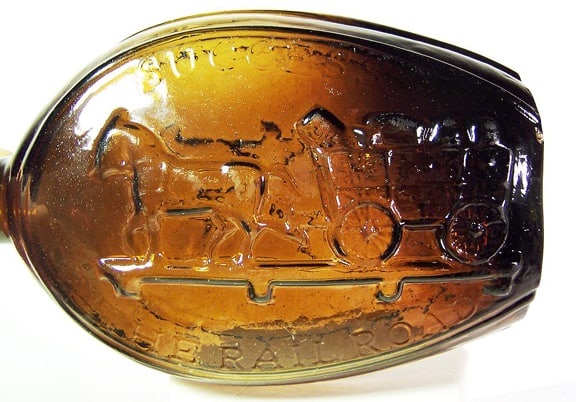
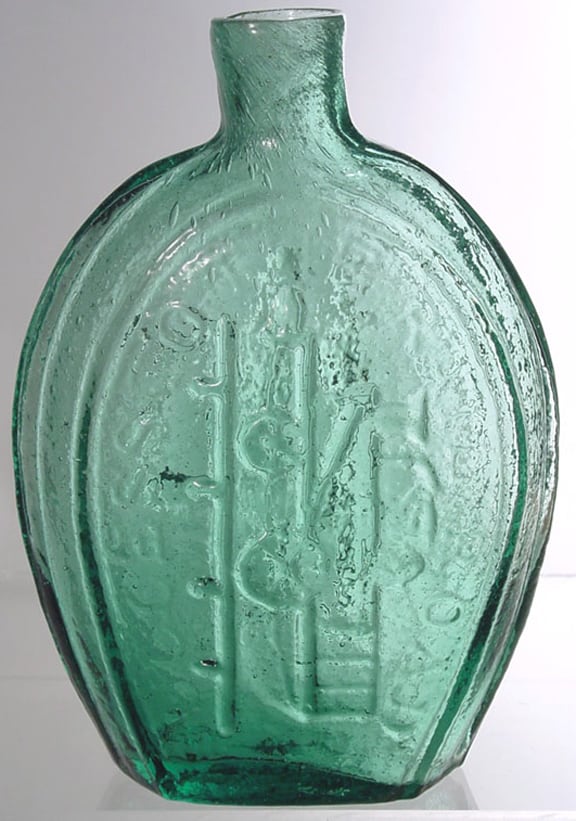
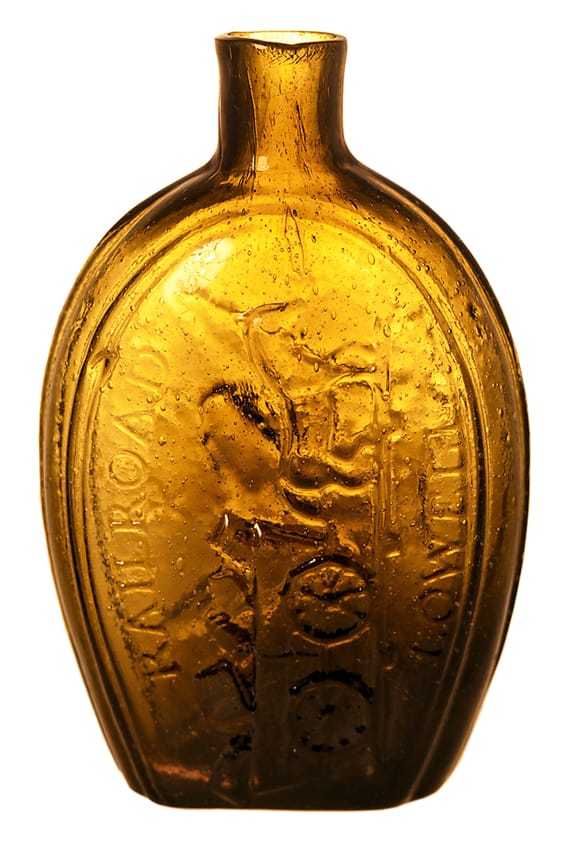
Known specimens from Mt. Vernon include the GIII-2 Type 1 decanter, the GV-5 Success To The Railroad flask, the GIII-11 Cornucopia/Urn flask, the GI-88 & 89 Lafayette/Masonic flasks and the GVII-1 and GVII-2 Tippecanoe cabin bottles to name a few. (source Brian Wolff)
Newburgh – The Glass House Company
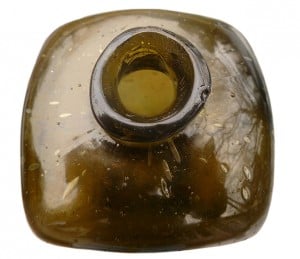 The manufacture of glass was commenced in the village of New Windsor near present day Newburgh, 66 miles north of New York City, sometime mid to late 1751 by a company from New York City of which Christian Hertell, Samuel Bayard, Lodewyck (or Lodewick) Bamper and Mathias (or Matthew) Ernest were partners, the first named being the resident manager. This group hired master gaffer, Johann Martin Greiner of Saxe-Weimar in the Palatinate region of present day Germany to design, help construct the glass works, be the master gaffer and train the new help. Read: Newburgh (Glass House Co.) 1751-1759
New England Glass Company (Cambridge, Massachusetts) The New England Glass Company (1818-1878) of Cambridge, Massachusetts, was established by Amos Binney, Edmund Munroe, Daniel Hastings and Deming Jarves on February 16, 1818. It produced both blown and pressed glass objects in a variety of colors, which had engraved, cut, etched and gilded decorations. The firm was one of the first glass companies to use a steam engine to operate its cutting machines, and it built the only oven in the country that could manufacture red lead, a key ingredient in the making of flint glass. By the middle of the nineteenth century, the New England Glass Company was considered one of the leading glasshouses in the United States, best known for its cut and engraved glass. William L. Libbey took over the company in 1878 and renamed it the New England Glass Works, Wm. L. Libbey & Sons Props. In 1888 Edward Drummond Libbey moved the company to Toledo, Ohio. In 1892, the name was changed to The Libbey Glass Company.
New Granite Glass Works (Stoddard, New Hampshire)
New London Glass Works (New London, Connecticut)
Oakland Glass Works (Oakland, California)
Olive Glass Works (Glassboro, New Jersey) In 1779 several glass blowers, all of the Stanger family, left the Wistar Works of Allowaystown, New Jersey to establish a “glass works in the woods” of Gloucester County. The quality of the sands, the abundance of trees for fuel, and the proximity of the Philadelphia market made the area now known as Glassboro ideal for their new venture. Though the Stanger Glass Works was successful, the company closed in 1781 as Revolutionary War money was devalued. In 1786 Colonels Thomas Heston and Thomas Carpenter purchased the factory.
During the following years the Heston-Carpenter Glass Works was succeeded by the Olive Works, the Harmony Glass Works, the Temperanceville Glass Works, the Whitney Brothers Glass Works, the Owens Bottle Company, and the Owens Illinois Glass Company. Though Owens still operates here, the company now produces closures for glass and metal containers. The glass industry in Glassboro was once the nations most extensive and best equipped, producing the greatest variety of styles and colors.
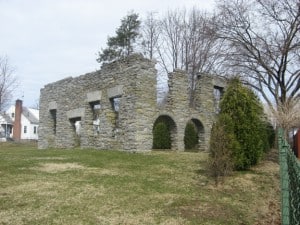
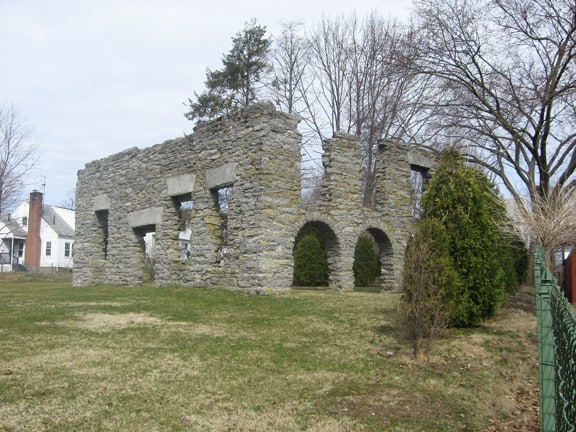
Pitkin Glassworks ruins – Manchester, CT
Pitkin Glass Works (Manchester, Connecticut)
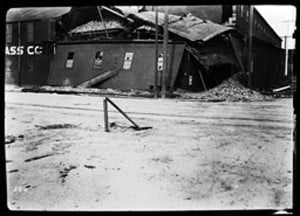
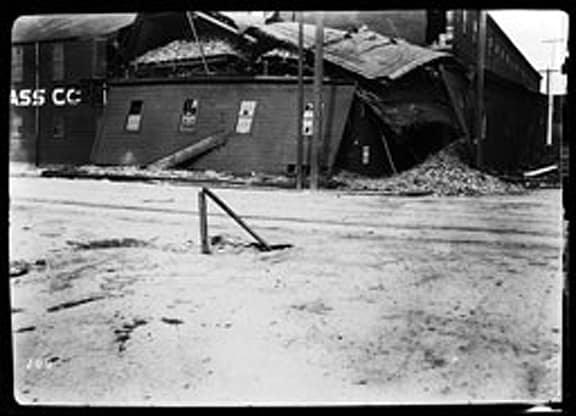
Pacific Coast Glass Works Company after earthquake – circa 1906. Photo courtesy of University of Southern California’s digital archives library.
Pacific Coast Glass Works (San Francisco, California) Picture of the Pacific Coast Glass Co that emerged after the ending of the S.F. & Pacific Glass Works in 1900. Pacific Coast Glass Works were started by Carlton Newman’s son George in 1902 and ran thru 1925. These pictures were taken by Charles Pierce a San Francisco photographer just after the 1906 earthquake.
This was the glass works responsible for such bitters bottles as Marshall’s Bitters, Star Kidney and Liver Bitters, Wait’s Wild Cherry Tonic, Wait’s Kidney and Liver Bitters, Lash’s Liver Bitters, Wm. Johnson’s Pure Herb Tonic Sure Cure for All Malarial Diseases and other collectible “squares”. A glassblower who was 90 years old in the early ’70’s was interviewed and he said that they were still blowing glass bottles by hand at this glass works when he worked there.
Pacific Glass Works (San Francisco, California) In 1862, Carlton Newman founded Pacific Glass Works with Patrick Brennan and began producing glass the next year at the corner of Iowa and Mariposa Streets in San Francisco. By 1865 the two glassblowers left Pacific Glass Works to start their own company, San Francisco Glass Works.
In 1868, it burned to the ground and within two years Newman built a new factory located on King Street near Fourth for production of green, blue and amber glassware. In 1876, San Francisco Glass Works bought out the stock of the fledgling Pacific Glass Works and renamed the company San Francisco and Pacific Glass Works (SFPGW) with Newman serving as president. It was during this time that some of the most beautiful Western bottles were made. To this day, it is hard to determine which examples of particular bottles belong to which glass house. There are some revealing clues however the most prevalent being the distinctiveness to the characters, or embossing, on the glass. SFPGW is attributed with having a particular and consistent curved “R” on bottles that were made by their mold makers. This trademark identifies the fact that it was not only blown in the West, but by the SFPGW, makers of the most popular Western bottles collected today.
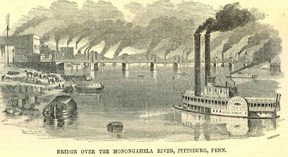
Bridges over the Monogahela River
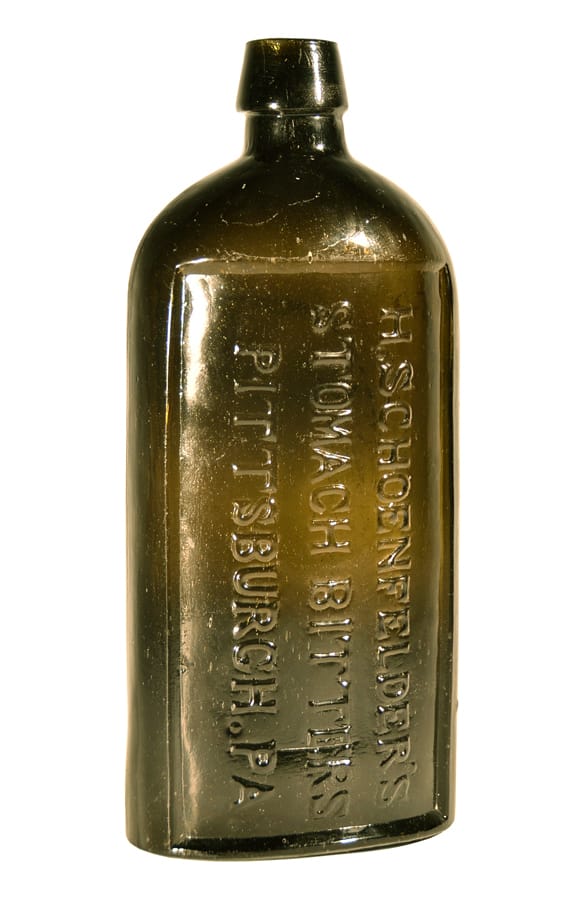
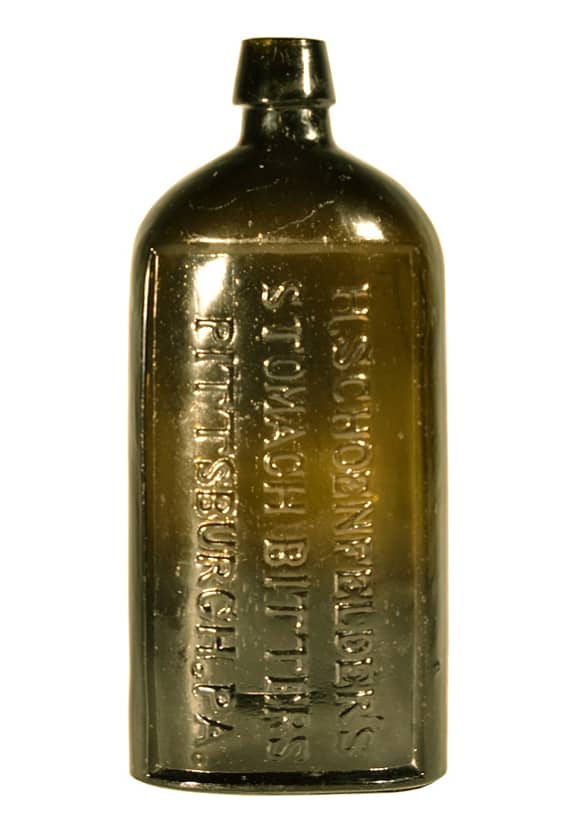
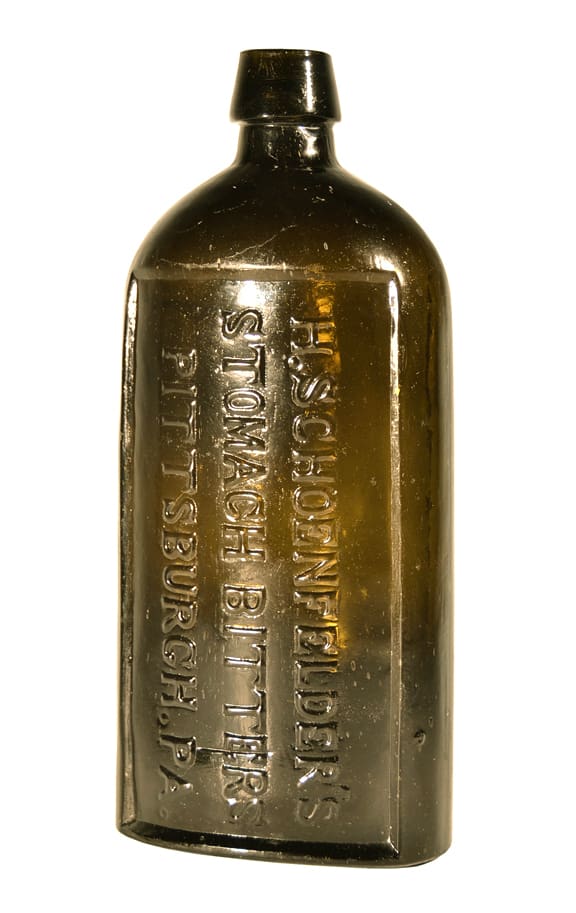
Pittsburgh District (Pittsburgh, Pennsylvania)
Providence Flint Glass Company
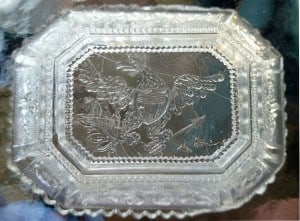 Providence Flint Glass Co. manufacturers of every description of fine Flint Glass, Jacony Salts, tableware, whale oil lamps, DeCanters, Creamer Pots, Perfume bottles, Bath water bottles, Twisted pungent Bosom bottles and every sort and size of common bottles. Read: The Providence Flint Glass Company 1831-1834
Ravenna Glass Works (Ravenna, Ohio)
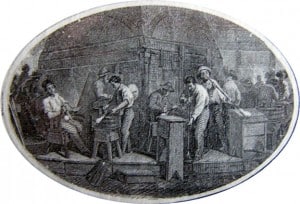
Salem Glass Works, c.1863-1874. Photograph courtesy OldSouthJerseyGlass.com
Salem Glass Works (Salem County, New Jersey) The Salem Glass Works is now located on Griffith Street along the water front. It started in 1862, when Henry Hall, Joseph Pancoast, and John V. Craven formed a partnership and built a single furnace on Third Street in the City of Salem. They made mold blown bottles, including squat mineral waters and porters for John P. Robinson, and John C. Brown of Salem, blue porter squats and squat ales for John Ryan of Savannah Ga., squat porters and mineral waters for Wm. Morton of Trenton, and squat porters for Twitchel of Phila. This information comes from a company mould book for the years 1865, 1866, and 1867. They made the Banner, Worcester, Wm. Pogue, W.W. Lyman, and Willoughby fruit jars and the U.H. Dudley Fruit bottle. They also made Attwoods Bitters, Carterís inks, Lea & Perkins Worcestershire Sauce, cone inks, Old Sachem Barrel Bitters, Jenny Linds, Poland Springs ìMosesî bottle, Paineís Celery Compound, Lydia Pinkham’s Vegetable Compound, Turlington Balsam, Drakes Plantation Bitters to name a few from the mould book.
San Francisco Glass Works (San Francisco, California) In 1862, Carlton Newman founded Pacific Glass Works with Patrick Brennan and began producing glass the next year at the corner of Iowa and Mariposa Streets in San Francisco. By 1865 the two glassblowers left Pacific Glass Works to start their own company, San Francisco Glass Works.
In 1868, it burned to the ground and within two years Newman built a new factory located on King Street near Fourth for production of green, blue and amber glassware. In 1876, San Francisco Glass Works bought out the stock of the fledgling Pacific Glass Works and renamed the company San Francisco and Pacific Glass Works (SFPGW) with Newman serving as president. It was during this time that some of the most beautiful Western bottles were made. To this day, it is hard to determine which examples of particular bottles belong to which glass house. There are some revealing clues however the most prevalent being the distinctiveness to the characters, or embossing, on the glass. SFPGW is attributed with having a particular and consistent curved “R” on bottles that were made by their mold makers. This trademark identifies the fact that it was not only blown in the West, but by the SFPGW, makers of the most popular Western bottles collected today.
Saratoga Glass Works at Mount Pleasant (Saratoga, County, New York) In the 1866 Atlas of Saratoga County Sylvester wrote the following: “About the year 1850 a glass factory was started on the mountains in the northwest part of the town (Greenfield) a little village of about one hundred inhabitants sprung up around it. It was named Mount Pleasant. Some years ago the factory was removed to Saratoga Springs, and the village followed it to its new location.”
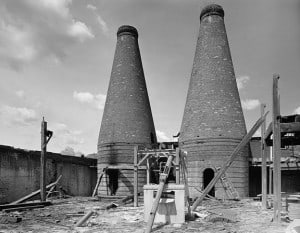
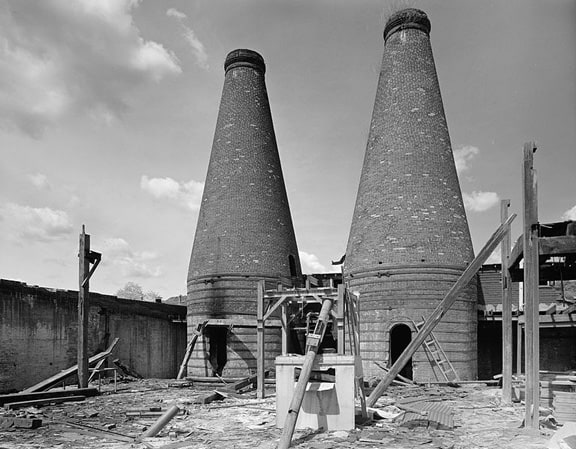
Seneca Glass Company Factory Ovens
Seneca Glass Company
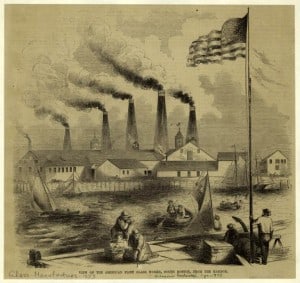
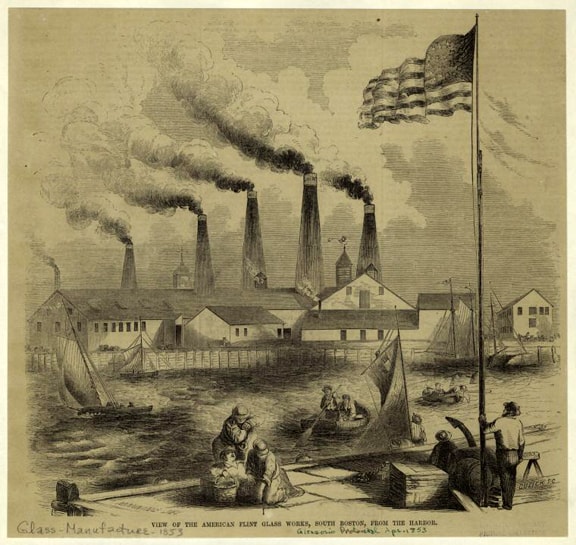
View of the American Flint Glass Works, South Boston, from the harbor. (1853)
South Boston Flint Glass Works (Cambridge, Massachusetts)
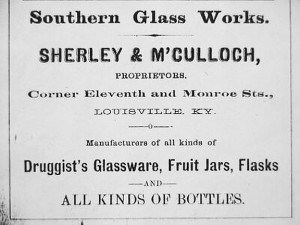
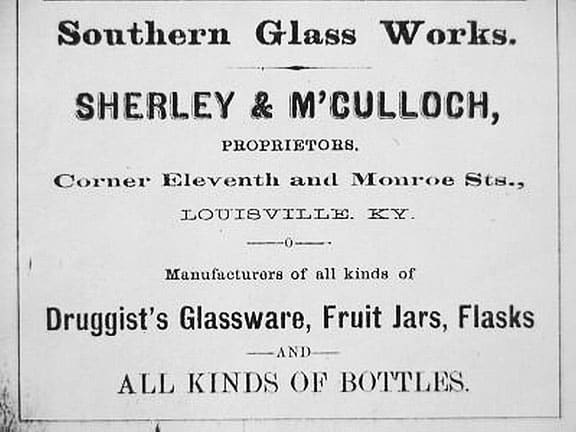
Southern Glass Works Advertisement
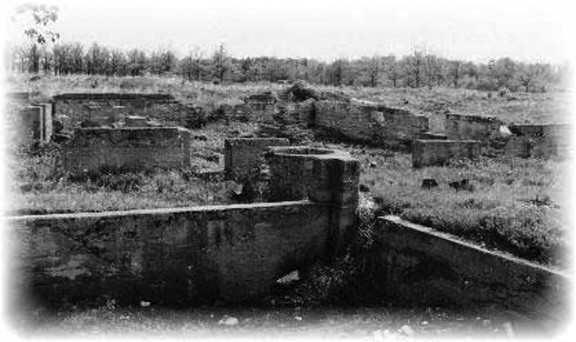
Southern Glass Works (Louisville, Kentucky) 1877 – 1885. Southern Glass Works (also called Southern Glass Company, especially in the first two years of operation) started making glass in September of 1877. It was also known as “Stanger & Company“, with some of the same employees of the Louisville Glass Works that had shut down 4 years earlier. Within 2 years the firm was reorganized and the firm name then became “Sherley & McCulloch“. The most prosperous years of this operation seem to have been from about 1880 to 1883. In about 1885 the factory became idle, only to re-open again in 1886 as the “Louisville Glass Works Company“, a name confusingly similar to other factories in the area. It was not listed in the 1887 or later directories, so this reopening evidently lasted only a few months. The 1892 Sanborn fire insurance maps show that the glass factory was by then in “ruins”. The factory site was razed sometime between 1892 and 1905 as it was no longer standing according to Sanborn maps of 1905.
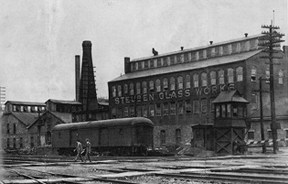
Steuben Glass Works – Corning, New York
Steuben Glass Works (Corning, New York)
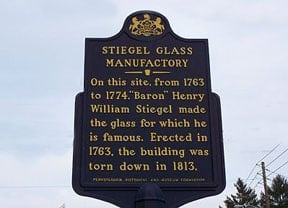 Stiegel’s American Glass Manufactory (Manheim, Pennsylvania) Founded in 1762, the town of Manheim rightfully belongs in that select list of Pennsylvania towns which antedate the Revolutionary War. Of additional interest historically is the fact that the land on which the town was laid out has a close connection with the family of the colony’s founder, William Penn. Explicitly, it was in 1734 that this tract of acres in Donegal Township (1741 in Rapho Township) was given as a gift to Penn’s faithful secretary, James Logan, by Penn’s widow, Hannah, and her sons. In 1762 this same tract was purchased from Logan’s granddaughter, Mary Morris, by Henry William Stiegel and his two business associates, Charles and Alexander Stedman.
Stiegel prospered as an ironmaster, becoming prominent at the same time in church and civic affairs. Then actuated with visions of success in a totally different field, he began experiments in glass making, which led to the actual manufacture of window glass and bottles at Elizabeth Furnace. The purchase of the tract in Rapho Township and the laying out of the town of Manheim in 1762 was the next step in Stiegel’s ambitious planning. There can be no doubt that in establishing a town, he had a clear and definite idea of making it the seat of an industrial empire.
The plan of the town of Manheim provided for a wide open space in the center which was originally named High Street, but is now known as Market Square. On the square, Stiegel, caused to be erected for himself, an imposing mansion and an office building, while on the northwest corner of Stiegel and Charlotte Streets, he directed the construction of a manufacturing plant where he could continue the glassmaking begun at his iron furnace to such a degree that his undertaking would make him the outstanding industrialist of colonial Pennsylvania. Called a “glasshouse” by Stiegel, the first glass was blown there in late 1764 and then for the next ten years.
Stiegel carried on the operation of the Manheim glassworks which eventually was given the name of the American Flint Glass Manufactory. He enlarged the plant several times and hired skilled workmen from the European glassmaking centers, which contributed materially to the quality and variety of tableware, as well as chemical ware, turned out at the works. Extensive newspaper advertising brought increased patronage from the cities of Philadelphia, New York, and Boston, as well as from nearby towns in Pennsylvania. Stiegel had to literally fight for recognition and in time had the satisfaction of hearing authorities adjudge his glass equal to that imported from Europe. He had truly become as eminently successful in glassmaking as he was already prominent in the iron industry. Henry William Stiegel led a rather colorful and somewhat eccentric life. We are certain he lived on a scale far more elaborate than that of his neighbors. For this reason Stiegel was dubbed “Baron” and the title has persisted, and even to this day he is spoken of and written of, as Baron Von Stiegel.
Stoddard Glasshouse (Stoddard, New Hampshire)
Stanger Glass Works (Glouchester County, New Jersey) In 1779 several glass blowers, all of the Stanger family, left the Wistar works of Allowaystown, New Jersey to establish a “glass works in the woods” of Gloucester County. The quality of the sands, the abundance of trees for fuel, and the proximity of the Philadelphia market made the area now known as Glassboro ideal for their new venture.
Though the Stanger Glass Works was successful, the company closed in 1781 as Revolutionary War money was devalued. In 1786 Colonels Thomas Heston and Thomas Carpenter purchased the factory.
Union Glass Works (Philadelphia, Pennsylvania)
United Glass Works
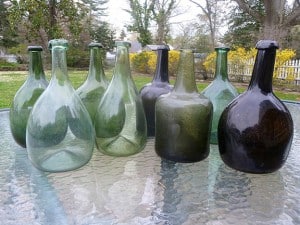 In 1739, the United Glass Company, located at Wistarburgh, was America’s first successful glass factory and the first cooperative manufacturing business venture in the Colonies. Read: The United Glass Company located at Wistarburgh
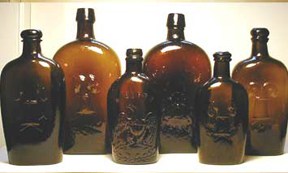
Goup of flasks marked WESTFORD GLASS CO WESTFORD CONN.
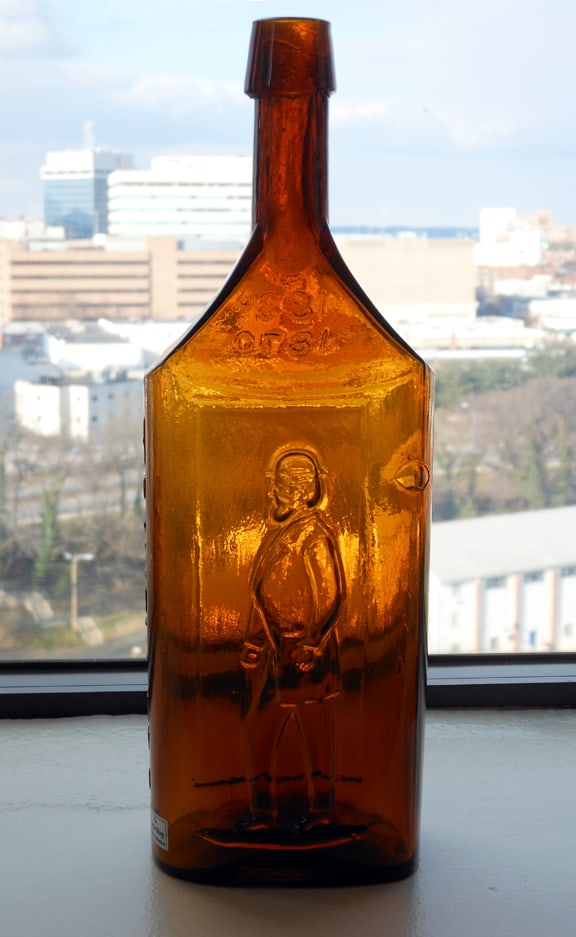
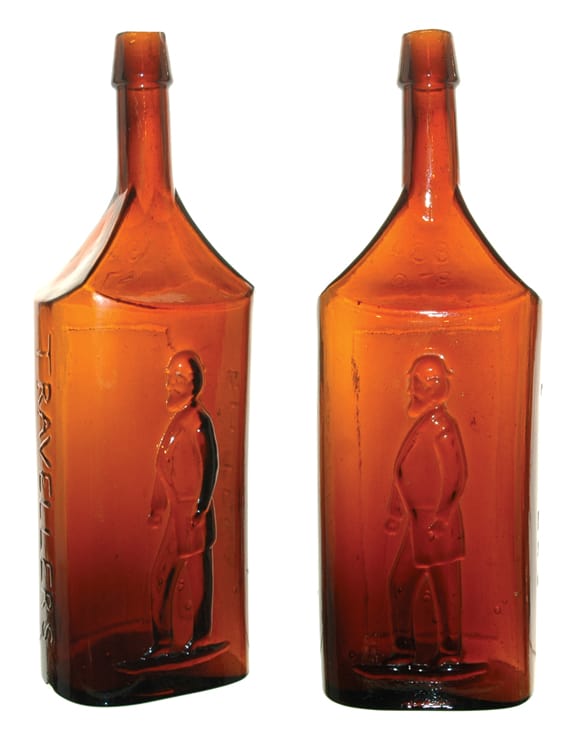
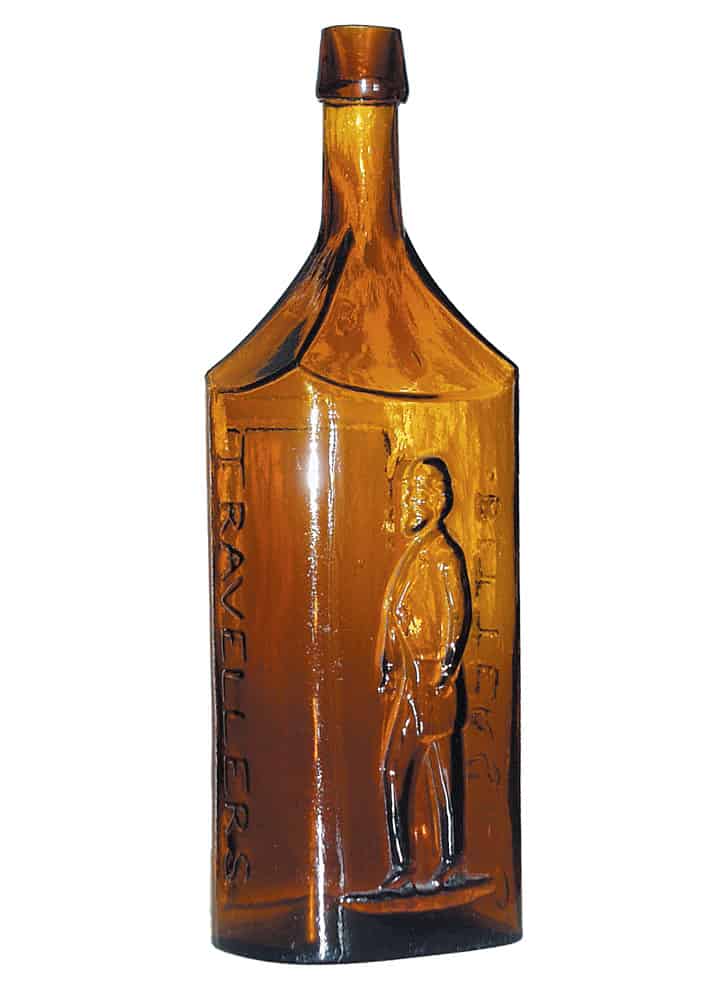
Westford Glass Works (Westford, Connecticut) In 1857, thirteen stockholders put up $18,000 in capital and formed the company. Among the largest holders were Thomas C. Cary, John S. Dean, C.L. Dean, Dan Chaffee, Edwin A. Buck and James Richmond. The factory produced a variety of bottles, jars, containers, demijohns and flasks, then in demand, very much like those made at the West Willington glassworks. They also produced quart ink bottles, wine bottles in varying sizes, demijohns from 1/4-gallon to 5-gallon, flasks in 1/2-pint to pint and quart sizes, handled jugs, schnapps pint and quart bottles, 1/2-pint to pint and quart porters. Tableware pieces included candlesticks. There is evidence to show they shared moulds with Willington. The most popular Westford bottles are the marked flasks in 1/2-pint and pint molds, GII-65, GXIII-36 and GXIII-37. They reportedly made the GXIV-1 Travelers Companion quart mold also. The colors associated with Westford were olive-amber, deep red-amber, medium amber, pale-green, deep olive-green and yellow-olive green.
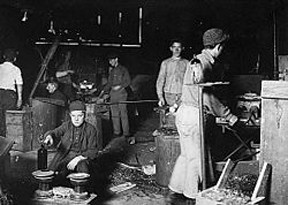
Child workers at Wheaton Glass Works – circa 1909 – Lewis Hine
Wheaton Glass Works (Millville, New Jersey) Theodore Corson Wheaton, the founder of the T.C. Wheaton Company, was born in Tuckahoe, New Jersey, in 1852. He received his MD degree in 1879 and three years later moved to Millville, New Jersey. Wheaton had become interested in pharmacists and physicians glassware, and as a result, he bought out Fred Van Stadens share in the already existing Shull-Goodwin Glass Company in Millville. By 1890, Wheaton had bought out his remaining partners and renamed the company the T.C. Wheaton Company.
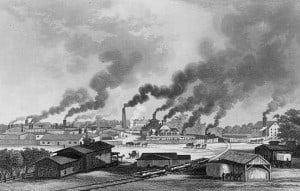
Whitney Glass Works (Glassboro, New Jersey)
Whitney Glass Works (Glassboro, New Jersey)
Willington Glass Works (West Willington, Connecticut)

Historical Marker – Williamstown Glass Works
Williamstown Glass Works (Williamstown, New Jersey) The first glassworks located in Squankum (Williamstown) was built at the suggestion of a man named William Nicholson in 1835. The company was formed without a charter and was called “Free Will Glass Manufactory.” The site of the glasshouse was selected by Israel Ewing, Richard H. Tice and J. DeHart. A six-acre plot of land along present day Chestnut Street, Main Street and Bluebell Road was purchased. It was reported that the main building was 44 feet square. A mill and pot house were also constructed. By the fall of 1835, the company was ready for business. The company had molds for making two-gallon demijohns to half-dram vials, as well as pint and half-pint flasks. Godfrey’s Cordial, London Mustard, Turlington’s Balsom and Opodeldoc Bitters were also blown.
The company lasted for only one “fire.” The owners decided to sell the glassworks and dissolve the company. The assets of the company were purchased by William Nicholson for $5,700. The company was reorganized with new investors. As a result of the Depression of 1838, the company failed again. In 1839, Joel Bodine erected a new glass plant across the street (Chestnut Street) called the Washington Glass Works. Then, in 1846, Bodine and his three sons, Joel A., William H. and John F. founded the firm of Joel Bodine and Sons. Joel Bodine withdrew from the company in 1855 and his three sons continued to operate the firm until 1864, in spite of the disruptions of the Civil War.
Finally in 1864, John F. Bodine and Walter R. Thomas created Bodine, Thomas and Company. In 1866 they incorporated as the Williamstown Glass Manufacturing Company. This company continued to make blown glass bottles until 1871. Glassmaking under the Bodines went through three periods. These periods were based on the fuel that was used to melt or fuse the raw materials to produce glass. Initially wood was used to fuel the furnaces. The abundance of glass factories in South Jersey was due to the abundance and cheapness of the wood supply. With the building of the railroads in South Jersey, coal as a source of fuel became available to the glass industry. The Williamstown Railroad Company was chartered in 1873. The railroad ran from Atco to Williamstown for a total of 9 1/2 miles. This section of the rail line was built through the efforts generated by John F. Bodine and the interest of the Williamstown Glass Works. The last fuel used at the glassworks was gas and fuel oil.
In 1865, the J.V. Sharp Company requested that the Williamstown Glass Works blow a glass container with a large mouth to permit the canning of tomatoes. The Sharp Company was based in Williamstown. The high point of the Williamstown Glass Works was in 1883. That year, the company did a wide range of business, making not only Godfrey and Turlington bottles but also bottles for Swiss Cologne, Aqua de Florida, wines, schnapps, porter, soda, snuff, inks, flasks, yeast powder, cod liver oil, etc.
Beginning in the early 1900s, the automatic bottle machine was invented by Michael Owens. The development of the Owens machine marked the beginning of the end of the mouth blown glass production in South Jersey. By 1915 the Williamstown Glass Works was owned by the Garfield family and employed 600 men. It specialized in the manufacture of liquor and beer bottles. This company ended production in November of 1917. [source Bill and Mary Kephart]
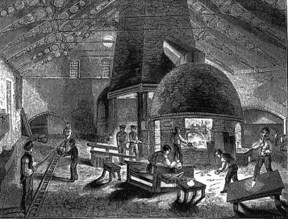
Furnace at the Wistar Glass Factory
Wistar (Wistarburgh) Glass Works (Alloways, New Jersey) The Glass Industry began at Wistar Glass Factory in Alloway, Salem County, New Jersey. But it really got a boost with the arrival of Jacob and Catherine Stanger and their seven sons.
The sons worked at Wistar, but soon started Olive Glass Works in Glassboro. Read: The United Glass Company located at Wistarburgh